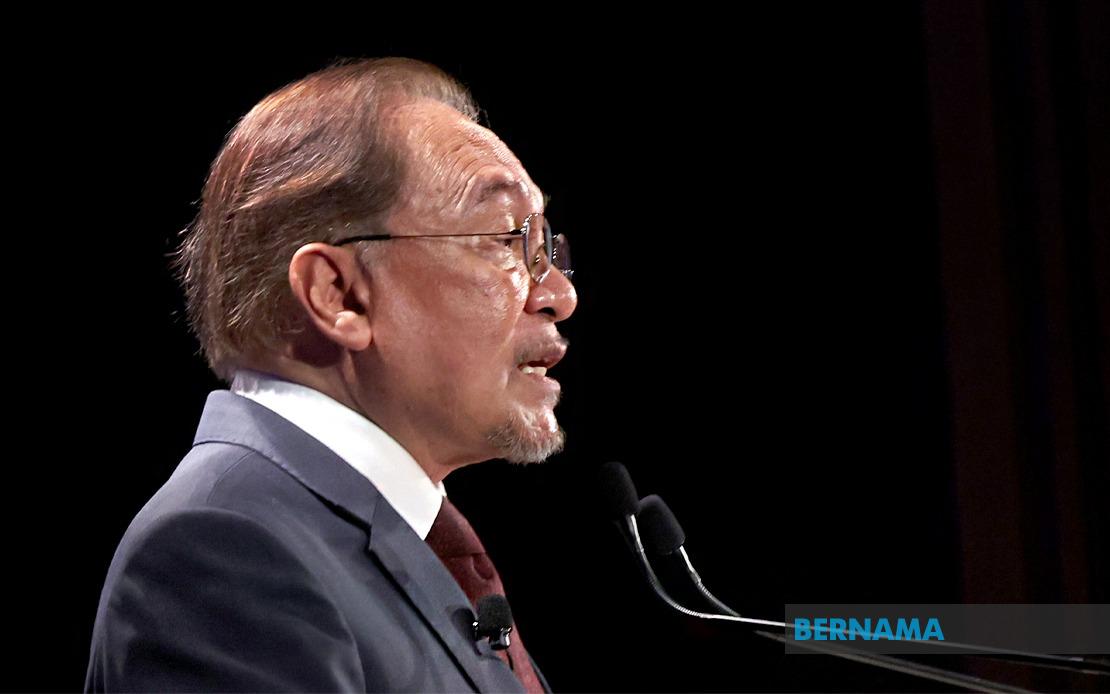
Malaysia has thrown its support behind the nascent understanding taking shape between the United States and Iran following months of escalating tension in the region, with Prime Minister Datuk Seri Anwar Ibrahim publicly commending the diplomatic efforts that brought both nations to the negotiating table. Speaking at the 39th Asia-Pacific Roundtable in Kuala Lumpur on July 2, Anwar acknowledged the instrumental role played by Gulf states, Türkiye, Pakistan and other regional powers in brokering the memorandum of understanding, reflecting Malaysia's commitment to multilateral peacemaking in Asia-Pacific affairs.
Yet beneath the measured optimism of Malaysia's endorsement lies a sobering assessment of the fragility underpinning any agreement. Anwar stressed that the prospects for sustained peace remain vulnerable to disruption, suggesting that the understanding, though significant, represents merely a tentative first step rather than a durable settlement. This measured tone reflects the reality that regional tensions, while temporarily eased through dialogue, continue to pose risks of renewed confrontation if the terms of the accord are not scrupulously observed.
Central to Malaysia's concerns is the imperative to restore normal traffic through the Strait of Hormuz, one of the world's most strategically vital chokepoints for energy supplies. Before the recent hostilities, the waterway facilitated approximately one-fifth of global oil shipments, making its unimpeded passage essential for international commerce and price stability. Anwar identified the reopening of the strait to unrestricted international shipping as an urgent priority, underscoring that Malaysia views this not merely as a technical outcome but as a barometer of whether both parties genuinely intend to de-escalate.
The economic ramifications of the prolonged tensions have rippled across global markets, imposing substantial costs on countries worldwide. Both food and energy prices have remained elevated as nations compete to secure adequate supplies, a phenomenon that extends beyond the immediate region to affect commodity-dependent economies throughout Southeast Asia. Anwar articulated the human dimension of these supply disruptions, noting that astronomical sums that ought to have been channelled into social infrastructure, healthcare, and economic development have instead been consumed by the geopolitical crisis.
For Malaysia and its Southeast Asian neighbours, the implications are particularly acute. Rising food and fuel costs directly erode purchasing power among lower-income populations and constrain government budgets already stretched by competing demands. The inflation that accompanies extended supply chain disruptions can undermine macroeconomic stability, deterring foreign investment and complicating monetary policy decisions. By emphasizing that abstract statistics mask real consequences for ordinary people's livelihoods, Anwar connected the abstract diplomacy of great-power negotiations to the tangible experiences of Malaysian households struggling with cost-of-living pressures.
Quatar's mediation efforts culminated in what officials characterized as positive momentum following three days of indirect talks between American and Iranian delegations. Qatar's role as an intermediary reflects its established position as a trusted diplomatic interlocutor capable of maintaining channels between adversaries. The indirect format itself testifies to the lingering tensions and mutual distrust that persist despite the recent understanding, suggesting that direct negotiations remain politically fraught for both Washington and Tehran.
The Asia-Pacific Roundtable, organized by the Institute of Strategic and International Studies (ISIS) Malaysia, provided an authoritative platform for Malaysia to calibrate its regional messaging on this development. By delivering his keynote address to assembled policymakers, academics, and strategists from across the region, Anwar positioned Malaysia as a constructive voice advocating for durable peace while resisting triumphalism about what remains a preliminary accord. This approach aligns with Malaysia's historical foreign policy preference for quiet diplomacy and multilateral engagement over public confrontation.
For Southeast Asian governments, the US-Iran understanding carries broader implications extending beyond immediate energy security. The region's economic health depends substantially on open sea lanes, stable energy markets, and the absence of major-power conflict that could disrupt trade routes or trigger proxy conflicts closer to home. Malaysia and its neighbours have invested heavily in maintaining equidistant relations with both Western and Eastern powers, a balancing act that becomes considerably more delicate if tensions between the United States and Iran reignite.
The challenge now confronting the international community, as Anwar's remarks suggest, involves translating the preliminary understanding into concrete implementation mechanisms with sufficient monitoring and enforcement provisions to deter violation. History demonstrates that such agreements frequently encounter obstacles during implementation phases, as internal political pressures within each signatory state test commitment to the terms. Anwar's emphasis on strict adherence to ceasefire conditions reflects awareness of this risk and the need for international vigilance to maintain the momentum toward de-escalation.
Malaysia's public endorsement serves dual purposes: affirming its commitment to international peace and stability while signalling to its regional partners that dialogue remains preferable to confrontation even amid profound geopolitical differences. As a moderate Muslim-majority nation with interests in both Western trade relationships and Islamic world solidarity, Malaysia occupies a distinctive diplomatic position that allows it to validate this understanding without appearing to favour either party. The coming weeks will prove whether the tentative understanding proves resilient enough to withstand the pressures that will inevitably test its durability.

