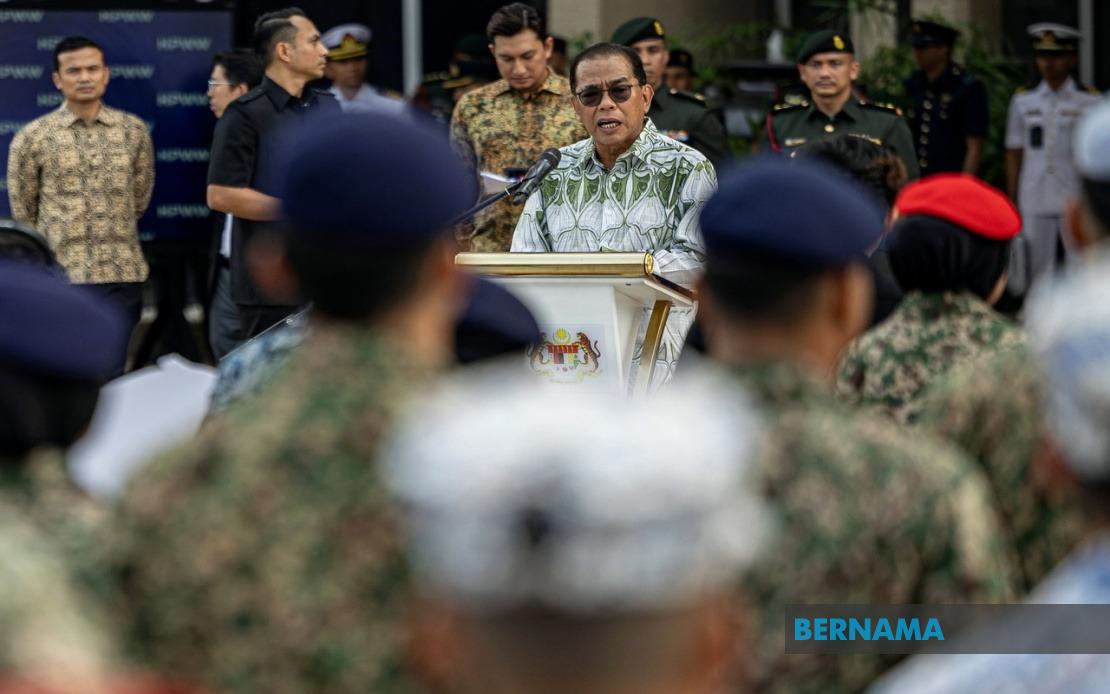
The Malaysian government is in a holding pattern as it awaits a response from Norwegian defence contractor Kongsberg Defence & Aerospace AS (KDA) regarding compensation claims stemming from the abrupt cancellation of a major naval weapons procurement. Defence Minister Datuk Seri Mohamed Khaled Nordin disclosed that discussions have already taken place with the supplier and that a formal claim has been lodged, but the administration cannot proceed to the next phase until KDA provides its position on the matter.
The procurement in question represents a significant strategic gap for Malaysia's maritime capabilities. The original 2018 agreement between the Royal Malaysian Navy and KDA involved an investment of €124 million (approximately RM571.9 million) intended to arm six newly constructed Littoral Combat Ships with Naval Strike Missile systems. These vessels form a cornerstone of Malaysia's efforts to modernise its naval fleet and strengthen surveillance and deterrence capabilities across the South China Sea and surrounding waters.
Norway's decision to revoke the export licence shocked Malaysian defence planners and created an unexpected diplomatic complication in the bilateral relationship. The Norwegian government justified the extraordinary step by invoking national security concerns, a relatively uncommon rationale for blocking military sales to a regional partner and fellow Muslim-majority democracy. This reasoning has raised questions about whether Norway faced pressure from other quarters or identified specific technical vulnerabilities it wished to prevent from being deployed in Southeast Asian waters.
The implications of this cancellation extend well beyond the immediate financial loss. The Littoral Combat Ships represent Malaysia's primary investment in modern surface warfare capabilities, and their intended weaponry was carefully selected through lengthy evaluation processes. Without the NSM systems, the LCS fleet operates with significant capability gaps, reducing their effectiveness in both peacetime operations and potential conflict scenarios. The delays in resolving this issue also underscore broader challenges facing Southeast Asian nations in acquiring advanced military systems amid geopolitical tensions.
Defence Minister Mohamed Khaled's measured approach suggests the government is attempting to balance diplomatic sensitivities with legitimate commercial concerns. By publicly confirming that a claim has been submitted and awaiting KDA's response, the ministry signals seriousness about the matter while leaving room for negotiation. The distinction between engaging with the supplier and subsequently seeking government approval is crucial—it suggests multiple layers of decision-making remain before Malaysia commits to legal action or escalates the dispute through official channels.
The supplier's response will likely determine the trajectory of this dispute. KDA faces a delicate situation: the company executed a contract with a NATO-aligned supplier nation that subsequently withdrew authorisation, placing the contractor in an untenable position between its Norwegian government and its Malaysian customer. The firm may argue it bears limited responsibility for regulatory decisions made at the government level, or conversely, it might propose alternative solutions such as partial compensation, substitute systems, or renegotiated terms.
Regional observers have noted that this incident reflects growing complications in military procurement across Southeast Asia. Nations seeking to modernise their defence capabilities face an increasingly fragmented market where geopolitical alignments, supply chain vulnerabilities, and shifting security priorities can derail major projects. Malaysia's experience demonstrates that even established partnerships and completed contracts offer no guarantee of delivery when government-level concerns override commercial arrangements.
The waiting period also coincides with Malaysia's broader defence modernisation agenda. Other procurement programmes—ranging from air defence systems to submarine capabilities—proceed through their own evaluation and approval cycles. Should the NSM situation result in significant financial losses or protracted compensation disputes, it could influence budgetary allocations for competing defence priorities and potentially slow the timeline for other critical acquisitions.
International maritime law and defence procurement protocols offer various remedies for such situations, though pursuing them can prove costly and time-consuming. Malaysia might ultimately seek damages through arbitration, accept partial compensation, pursue alternative systems from other suppliers, or negotiate a resolution that restores delivery under modified terms. Each pathway carries different financial, diplomatic, and operational consequences that the Defence Ministry must carefully weigh.
The transparent acknowledgment of this dispute by Malaysia's Defence Minister reflects a shift toward greater openness about military procurement challenges. Rather than allowing speculation to dominate, the government has chosen to inform the public that engagement is underway and resolution mechanisms are being pursued. This approach builds confidence that the matter receives appropriate attention while managing expectations about the timeline for resolution.
Looking forward, this episode may prompt Malaysia and other Southeast Asian nations to reassess their defence procurement strategies, potentially diversifying supplier relationships and negotiating stronger contractual protections against government-level cancellations. The experience with the NSM systems will likely inform how future major defence acquisitions are structured, particularly regarding penalty clauses and dispute resolution mechanisms that account for possible regulatory or political reversals by supplier nations.
The Defence Ministry has indicated that updates on delivery schedules and the broader resolution of missile supply issues will be communicated as developments occur. For now, the emphasis remains on receiving KDA's formal response and then referring the matter through appropriate government channels for decision-making. This measured sequence suggests Malaysia is pursuing a structured resolution rather than rushing toward confrontation, while simultaneously signalling that the nation takes seriously its legitimate claims for compensation arising from the cancelled procurement.

