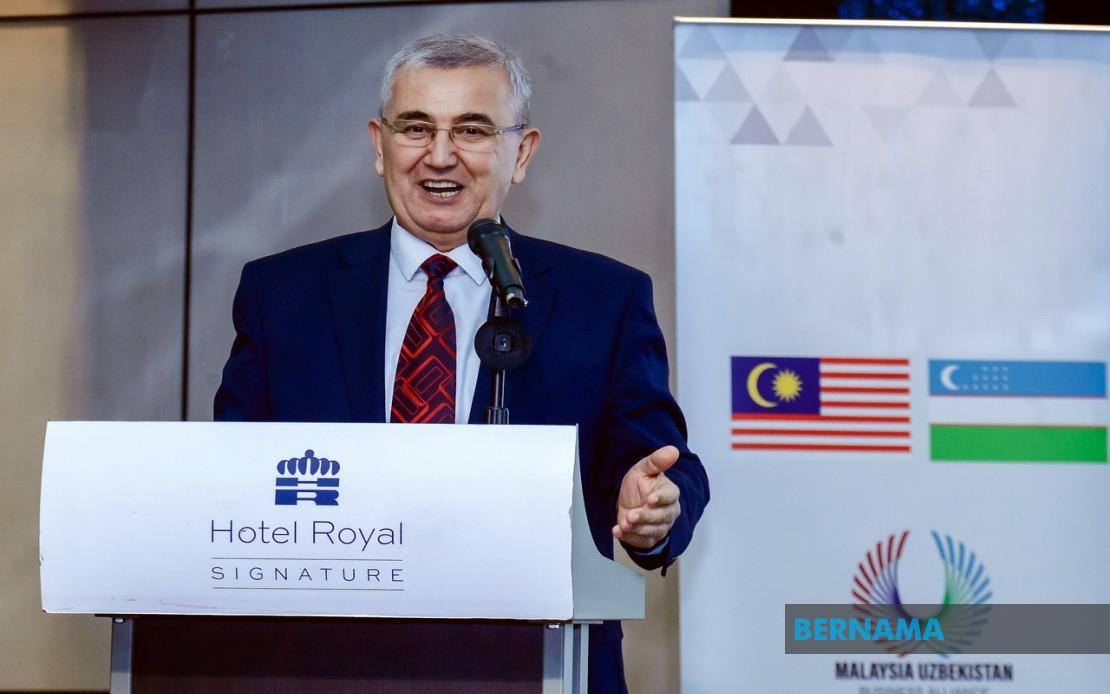
Malaysia and Uzbekistan are moving to forge a more robust agricultural alliance, leveraging complementary strengths in technology and production to address regional food security challenges. The momentum stems from high-level diplomatic engagement and recent ministerial visits that have placed agriculture at the centre of bilateral relations between the two nations seeking to modernise their farming sectors and expand trade flows across Central Asia and Southeast Asia.
Uzbekistan's Ambassador to Malaysia, Dr Karomidin Gadoyev, underscored that agriculture has become a defining pillar in discussions between national leaders, reflecting broader recognition of the sector's strategic weight in both economies. The issue gained prominence during Prime Minister Datuk Seri Anwar Ibrahim's visit to Uzbekistan in May 2024 and President Shavkat Mirziyoyev's earlier trip to Malaysia in February 2023, signalling sustained political commitment to deepening connections. The recent official visit by Agriculture and Food Security Minister Datuk Seri Mohamad Sabu to Uzbekistan has catalysed a new phase of collaborative effort, moving bilateral relations from aspirational discussions into concrete project development.
The partnership rests on a deliberate alignment of respective comparative advantages. Malaysia brings proven expertise in paddy cultivation, aquaculture, fisheries management, precision agriculture technologies, and agricultural research capabilities through institutions like the Malaysian Agricultural Research and Development Institute (MARDI). Uzbekistan, conversely, contributes sophisticated knowledge in energy-efficient irrigation systems suited to arid climates, horticultural production techniques, and large-scale agri-food processing infrastructure. This asymmetry creates natural complementarities—Malaysia can furnish cutting-edge technological solutions and innovative farming methodologies, whilst Uzbekistan offers scalable production capacity and emerging market access across Central Asia's landlocked corridors.
Food security considerations are increasingly intertwined with digital transformation, according to both nations' strategic thinking. Recognising that global food supply volatility poses growing risks, Malaysian and Uzbek policymakers see artificial intelligence and smart technologies as essential tools for boosting agricultural output and system resilience. Uzbekistan explicitly aims to absorb Malaysian expertise in digitisation and automation, viewing technological transfer as central to modernising its farming landscape. This convergence reflects a broader regional trend wherein Southeast Asian agricultural innovators are positioning themselves as technology exporters to Central and South Asian partners confronting similar production pressures.
Practical collaboration is already materialising on the ground. Malaysian company Miracule has inaugurated its first agricultural drone showroom in Uzbekistan, with expansion plans to increase drone deployment across Uzbek farmland and eventually establish advanced drone assembly operations within the country. Simultaneously, MARDI is engaging with Uzbek counterparts to pilot agricultural innovations and knowledge-sharing frameworks. These initiatives represent more than symbolic gestures; they constitute the foundation for sustained technical cooperation and future foreign direct investment flows from Malaysia into Uzbekistan's agricultural sector.
Aquaculture has emerged as a particularly promising frontier for deepening ties. Uzbekistan's expanding population of nearly 40 million inhabitants and its double-landlocked geography—which restricts access to marine fisheries—have generated substantial unmet demand for seafood products. Malaysia possesses advanced biofloc technology systems that dramatically enhance production economics by reducing feed costs by up to 30 per cent while simultaneously increasing yield and minimising operational expenditure. Malaysian enterprises are already exploring investment opportunities in shrimp farming and fisheries ventures throughout Uzbekistan, suggesting that capital flows may soon follow diplomatic frameworks. This sector exemplifies how Malaysian technological solutions directly address acute supply-side constraints in Uzbek food systems.
Current bilateral trade figures reveal significant latent potential for expansion. Agri-food commerce between the two countries totalled more than RM338 million in 2025, with Malaysian palm oil and derivative products dominating export composition. However, both governments recognise these numbers represent merely the foundation of a far larger opportunity. Officials speak confidently of doubling or tripling agri-food trade within the next five to ten years, indicating realistic ambitions grounded in identified market gaps and investment pipelines. Malaysia is positioned to utilise Uzbekistan as a regional processing hub for crude palm oil destined for Central Asian distribution networks, whilst Uzbek enterprises can expand shipments of premium fresh and dried fruits, along with value-added processed food commodities, to Malaysian consumers and broader Southeast Asian markets.
The strategic geometry of this partnership extends beyond bilateral commerce to encompass regional architecture. By establishing Uzbekistan as a processing and distribution centre for Malaysian agricultural products, both nations can unlock supply chain efficiencies and reduce logistics costs across Central Asia. Simultaneously, this arrangement strengthens Malaysia's commercial footprint in markets previously underexploited by Southeast Asian agribusinesses. For Uzbekistan, Malaysian technological inputs and market access create pathways to upgrade its agricultural value chains and position itself as a modern food production hub within landlocked Central Asia—a transformation aligned with broader regional development objectives.
Digital technologies and artificial intelligence feature prominently in both nations' forward-looking strategies. Uzbekistan intends to integrate Malaysian experience in deploying smart and digital agricultural systems to enhance productivity and sustainability outcomes. This ambition reflects acknowledgment that technological leapfrogging offers Uzbekistan a mechanism to compress development timelines and achieve world-class agricultural performance without traversing the inefficient stages through which established farming nations progressed. Malaysian companies and institutions appear well-positioned to facilitate this transition, translating research insights and practical innovations into implementable solutions tailored to Uzbek conditions and institutional contexts.
Institutional frameworks are equally critical to sustaining this partnership beyond rhetorical commitment. MARDI's engagement with Uzbek research bodies establishes pipelines for continuous knowledge exchange and collaborative problem-solving around crop productivity, pest management, and resource efficiency. These connections create dependencies and relationships that transcend individual political cycles, embedding cooperation within organisational cultures and technical communities. Such institutionalisation typically produces more durable outcomes than top-down government agreements unsupported by operational networks.
Malaysia's invitation for Uzbekistan to participate in the Malaysia Agriculture, Horticulture and Agrotourism Exhibition (MAHA) 2026 signals intention to deepen commercial and consumer awareness. For Uzbekistan, the platform offers unprecedented exposure to Malaysian businesses and consumers regarding its premium fresh fruits and processed foods. This trade exhibition can catalyse new commercial relationships, supply chain connections, and consumer brand recognition that may generate sustained bilateral commerce long after the event concludes. For Malaysia, Uzbek participation reinforces the country's positioning as a regional agricultural technology and market hub.
Looking forward, both governments envision mutually complementary agricultural systems wherein Malaysia's technological prowess and Uzbekistan's production scale and market position create integrated value chains. Ambassador Gadoyev articulated confidence that continued collaboration would yield synergies unavailable through unilateral action. This vision reflects practical recognition that food security in an interconnected world increasingly depends on regional partnerships that reconcile production capabilities with technological sophistication. For Malaysian readers and policymakers, Uzbekistan represents a significant emerging market for agricultural technology exports and a gateway to Central Asian opportunities—growth vectors that diversify Malaysia's agricultural sector beyond traditional markets and enhance national food security through reciprocal trade relationships.

