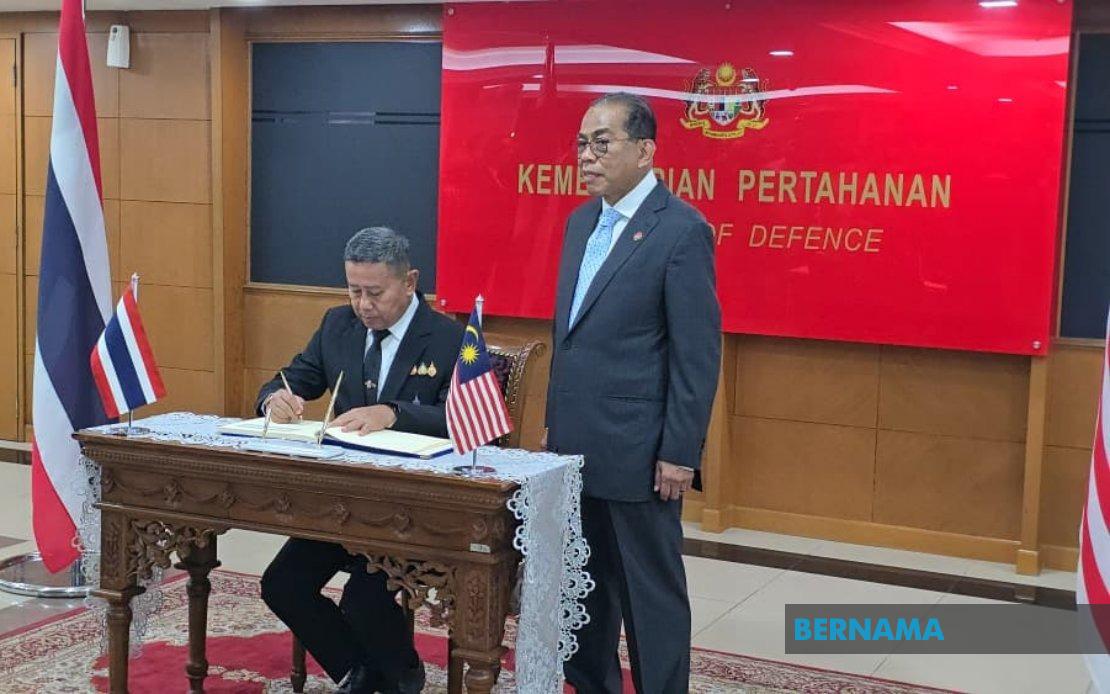
Malaysia and Thailand have reaffirmed their commitment to deepening defence cooperation and tackling shared security concerns across Southeast Asia, following high-level talks between Defence Minister Datuk Seri Mohamed Khaled Nordin and his Thai counterpart Lieutenant General Adul Boonthumjaroen in Kuala Lumpur. The meeting, held at Wisma Pertahanan, represented Adul's first official visit to Malaysia in his newly assumed role and underscored the enduring strategic partnership between the two neighbouring nations.
Mohamed Khaled extended formal congratulations to Adul on his recent appointment as Thailand's Defence Minister, while emphasising Malaysia's confidence in Thailand's trajectory under the leadership of Prime Minister Anutin Charnvirakul. The exchange reflected the institutional warmth characterising bilateral defence relations, where leadership transitions are marked by ceremonial affirmations of continuity and mutual respect. Such gestures carry symbolic weight in Southeast Asian diplomacy, signalling stability in defence arrangements despite potential shifts in political personnel.
Both defence chiefs articulated a shared vision for promoting peace and stability throughout the Southeast Asian region, a declaration that extends beyond bilateral concerns to encompass the broader architecture of regional security. This commitment reflects the growing complexity of transnational security challenges facing the region, from maritime disputes to transnational crime and emerging technological threats. Malaysia and Thailand, as significant players in ASEAN, recognise their individual and collective responsibilities in maintaining the delicate balance that underpins regional prosperity and cooperation.
A notable dimension of the discussions centred on Thailand's explicit endorsement of Malaysia's diplomatic efforts to resolve the longstanding border conflict between Thailand and Cambodia. By publicly acknowledging Malaysia's proactive mediation role, Thailand demonstrated confidence in Malaysian initiatives aimed at de-escalating tensions between Bangkok and Phnom Penh. This recognition carries practical implications for Malaysia's standing as a trusted neutral arbiter within ASEAN, reinforcing its credentials as a nation capable of facilitating dialogue on sensitive territorial disputes. Malaysia's historical experience in managing its own border complexities appears to have earned regional respect for its approach to conflict resolution.
The Thai acknowledgment of Malaysia's peacemaking efforts reflects a broader regional strategy where ASEAN members increasingly look to peer nations with credibility and diplomatic capital to help broker solutions. For Malaysia, such validation strengthens its position as a constructive force in regional stability, particularly relevant at a time when various geopolitical pressures challenge ASEAN unity and effectiveness. The endorsement also suggests that Thailand views Malaysia's role not merely as bureaucratic but as genuinely valuable in helping navigate one of Southeast Asia's most intractable territorial disputes.
During the visit, Adul toured the National Aerospace and Defence Industries (NADI) Group of Companies, a Malaysian defence contractor and technology hub. This industrial dimension to the diplomatic engagement opened pathways for exploring concrete defence procurement and technological cooperation. Such visits serve dual purposes: they provide Thai officials with insights into Malaysian defence capabilities and manufacturing strengths, while simultaneously offering Malaysian defence companies potential business opportunities with a neighbouring nation's military establishment. For NADI, interaction with Thailand's defence leadership could generate future partnerships in research, development, or production of defence systems.
The exchange of views at NADI's facilities between Malaysian and Thai defence representatives focused on identifying areas of mutual technological benefit and future collaboration potential. Defence industrial cooperation between regional nations has become increasingly sophisticated, encompassing joint research initiatives, training programmes, and supply chain integration. Such partnerships allow smaller economies to leverage collective expertise and reduce individual procurement costs while building indigenous defence capabilities. For Malaysia, engaging Thailand in defence industrial discussions strengthens regional self-sufficiency in security matters.
The timing of Adul's visit carries strategic significance given the evolving security landscape in Southeast Asia. China's expanding military presence, renewed maritime tensions, and the complexity of maintaining ASEAN centrality in regional affairs all underscore the importance of bilateral defence dialogue among Southeast Asian nations. Malaysia and Thailand, despite occasional diplomatic tensions over maritime boundaries, recognise that cooperation on broader security matters serves mutual interests far better than competition. The visit therefore represents pragmatic acknowledgment that certain security challenges transcend bilateral disputes.
Malaysia's role as mediator in the Thailand-Cambodia border situation requires delicate balance and sustained engagement. By securing Thailand's explicit support for these efforts, Malaysia gains political cover for continued involvement in what remains a sensitive issue. Regional conflicts, when left unresolved, tend to generate spillover effects affecting neighbouring states, migration patterns, and economic stability. Malaysia's investment in Thai-Cambodian peace therefore reflects enlightened self-interest alongside humanitarian concern.
The bilateral defence relationship between Malaysia and Thailand extends back decades and encompasses military-to-military exchanges, joint training exercises, and intelligence sharing arrangements. The latest high-level meeting refreshes these connections and signals continuity despite periodic tensions, such as those arising from maritime boundary demarcation issues in the Andaman Sea and Strait of Malacca. By compartmentalising disputes and maintaining strong defence dialogue channels, both nations demonstrate maturity in regional relations and commitment to preventing disagreements from destabilising broader cooperation.
Looking forward, the trajectory suggested by these discussions points toward expanded Malaysian-Thai engagement on defence technology, regional stability initiatives, and ASEAN cohesion. Thailand's incoming defence leadership appears committed to maintaining and deepening partnerships with neighbouring nations, positioning Bangkok as an active participant in regional security architecture. For Malaysia, the visit reinforces its diplomatic flexibility and defence sector development, contributing to long-term regional balance and Malaysian strategic interests across Southeast Asia.

