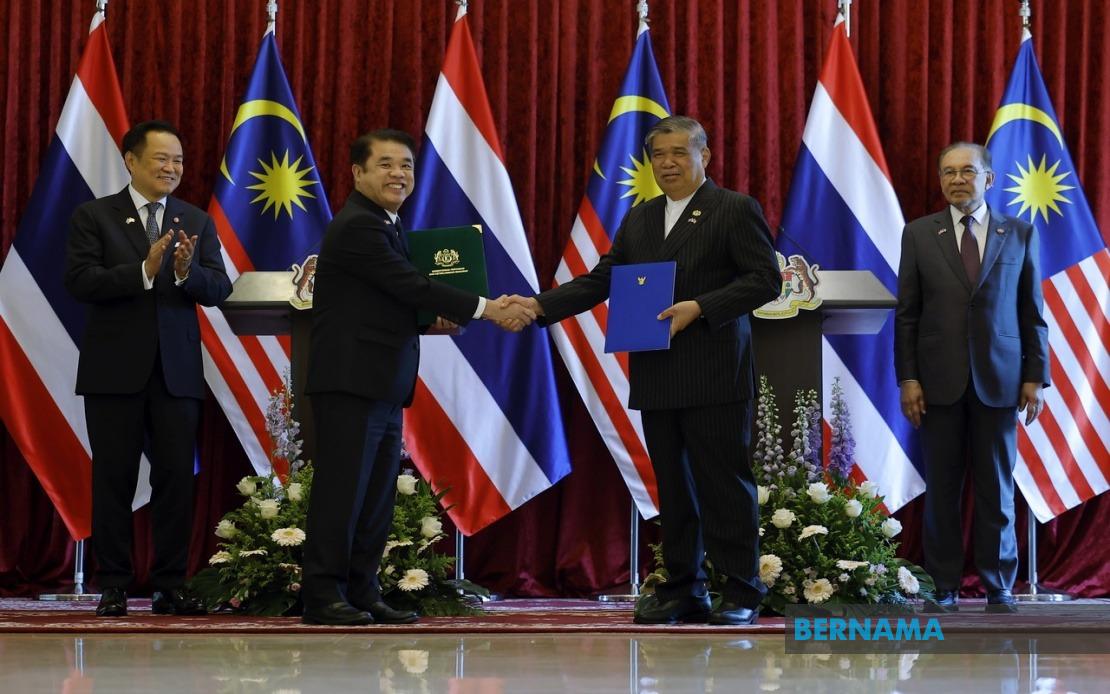
Malaysia and Thailand have moved decisively to strengthen their agricultural partnership, with both nations agreeing to activate a comprehensive Memorandum of Understanding on Agricultural Cooperation within just seven days. The breakthrough came during Thai Prime Minister Anutin Charnvirakul's inaugural official visit to Malaysia, signalling renewed momentum in regional trade relations at a time when food security concerns loom large across Southeast Asia. The agreement represents a notable shift from the extended timeline Thailand had initially sought, underscoring Malaysia's determination to accelerate engagement with its northern neighbour on critical economic matters.
Prime Minister Datuk Seri Anwar Ibrahim and Anutin jointly witnessed the signing between Malaysian Agriculture and Food Security Minister Datuk Seri Mohamad Sabu and Thai Agriculture Minister Suriya Juangroongruangkit, cementing executive-level commitment to the pact. The arrangement carries particular weight given the persistent irritants that have characterised agricultural trade between the two countries. Thailand had originally proposed a timeline of six weeks for the MoU's entry into force, but Malaysian negotiators successfully compressed this to a single week—a practical demonstration of how high-level political will can unlock longstanding bureaucratic obstacles. This compressed timeframe suggests both governments view agricultural cooperation not merely as a commercial transaction but as a strategic imperative.
Central to the breakthrough was resolution of vexing fisheries market access issues that had created friction in bilateral relations. Malaysia's unilateral tightening of import controls on Thai fisheries products on June 1 had necessitated Certificates of Analysis for barramundi shipments and imposed temporary restrictions on five specific shrimp species, measures that rankled Thai exporters and their government. The agreement reached in Putrajaya effectively represents a mutual accommodation: Malaysia secures compliance assurances from Thai suppliers, whilst Thailand gains expedited market access restoration through a structured dialogue framework rather than prolonged import suspensions. This balance exemplifies pragmatic dispute resolution tailored to the needs of agricultural producers on both sides of the border.
The MoU establishes a comprehensive institutional architecture addressing far more than fisheries alone. The framework encompasses crop production, livestock management, agricultural trade facilitation, and product marketing—essentially covering the entire supply chain from farm gate to consumer. Equally significant are the provisions for research and development collaboration, capacity building initiatives, and harmonisation of biosecurity standards alongside sanitary and phytosanitary measures. For Malaysian agricultural interests, these cooperation mechanisms promise access to Thai expertise in certain horticultural sectors whilst offering Thai producers pathways into Malaysian supply chains. The structured transparency promised through formal coordination mechanisms addresses a persistent complaint from businesses on both sides regarding unpredictable regulatory changes.
Food security emerges as the philosophical foundation undergirding this agreement, a recognition that Southeast Asia's vulnerabilities in ensuring reliable food supplies transcend national boundaries. Both leaders emphasised this dimension publicly, signalling that agricultural cooperation serves not merely parochial trade interests but regional stability. Given Malaysia's substantial food import dependency and Thailand's role as a significant agricultural producer and exporter, the partnership carries implications extending beyond bilateral commerce. A functioning Malaysia-Thailand agricultural corridor strengthens supply chain resilience across ASEAN, reducing susceptibility to disruptions whether from climate-related shocks or geopolitical friction.
The bilateral agricultural trade relationship has demonstrated robust growth despite periodic tensions, having reached RM20.33 billion in annual exchange during 2025. Malaysia's export profile emphasises higher-value processed items—coffee, cocoa, tea, spices, and manufactured food products—reflecting the nation's position in regional value chains. Thai imports to Malaysia centre predominantly on meat and meat-based products, capitalising on Thailand's competitive advantages in livestock production and processing. This complementary trade structure suggests genuine mutual benefit from the MoU's implementation, as each country's export strengths address the other's strategic import requirements.
The timing of this agreement reflects broader diplomatic momentum between the two governments. Anwar and Anutin had conducted bilateral talks the preceding week, during which they canvassed expanded cooperation across trade, investment, agriculture, and regional security matters. This layered approach—combining sector-specific negotiations with comprehensive bilateral engagement—appears designed to embed agricultural cooperation within a larger architecture of bilateral relations, reducing the risk that disputes in one domain will contaminate others. For Malaysian policymakers, the agreement demonstrates capacity to manage trade friction with important neighbours through dialogue rather than escalation, a lesson relevant as regional economic interdependence deepens.
Implementation of the MoU now depends on administrative machinery within both agriculture ministries operationalising the framework rapidly. The one-week timeline demands that officials in Putrajaya and Bangkok immediately establish coordination mechanisms, finalise implementation protocols, and communicate new procedures to industry stakeholders. This compressed implementation schedule tests bureaucratic agility on both sides, yet the political backing evident from both Prime Ministers suggests resources will be mobilised accordingly. For Malaysian exporters and importers dependent on Thai agricultural products, clarity on new procedures becomes urgent, necessitating swift dissemination of guidance through chambers of commerce and industry associations.
The agreement's emphasis on research and development cooperation deserves particular attention given Southeast Asia's agricultural challenges. Climate volatility, water scarcity, and soil degradation increasingly constrain traditional farming methods across the region. Malaysian and Thai agricultural research institutions collaborating on crop resilience, water-efficient cultivation techniques, and disease management could generate innovations benefiting both countries' farmers. Such cooperation aligns with broader ASEAN initiatives on sustainable agriculture, positioning Malaysia-Thailand collaboration as a potential model for other bilateral agricultural partnerships within the bloc.
Regional observers will scrutinise whether this agreement portends deeper Malaysia-Thailand integration across other economic sectors. Agricultural cooperation often serves as a testing ground for broader trade integration, providing experience with harmonised standards, dispute resolution mechanisms, and supply chain coordination that can subsequently extend to manufactured goods and services. Should the MoU implementation proceed smoothly, it could energise discussions on other bilateral trade impediments, potentially advancing progress toward the deeper regional integration that ASEAN aspires toward but has struggled to achieve.
Looking forward, the success of this MoU hinges on whether both governments maintain political backing despite inevitable implementation challenges. Agricultural trade inevitably generates disputes—quality complaints, price fluctuations, regulatory disagreements—and the framework's effectiveness depends on whether officials resolve such issues through the established mechanism rather than resorting to unilateral measures as occurred in June. The one-week implementation timeline signals serious commitment, yet sustaining momentum through operational difficulties will require continuous high-level attention. For Malaysia's food security strategy, the partnership offers potential to diversify suppliers, strengthen regional supply chains, and position the nation as a hub for agricultural value-added activities within Southeast Asia.

