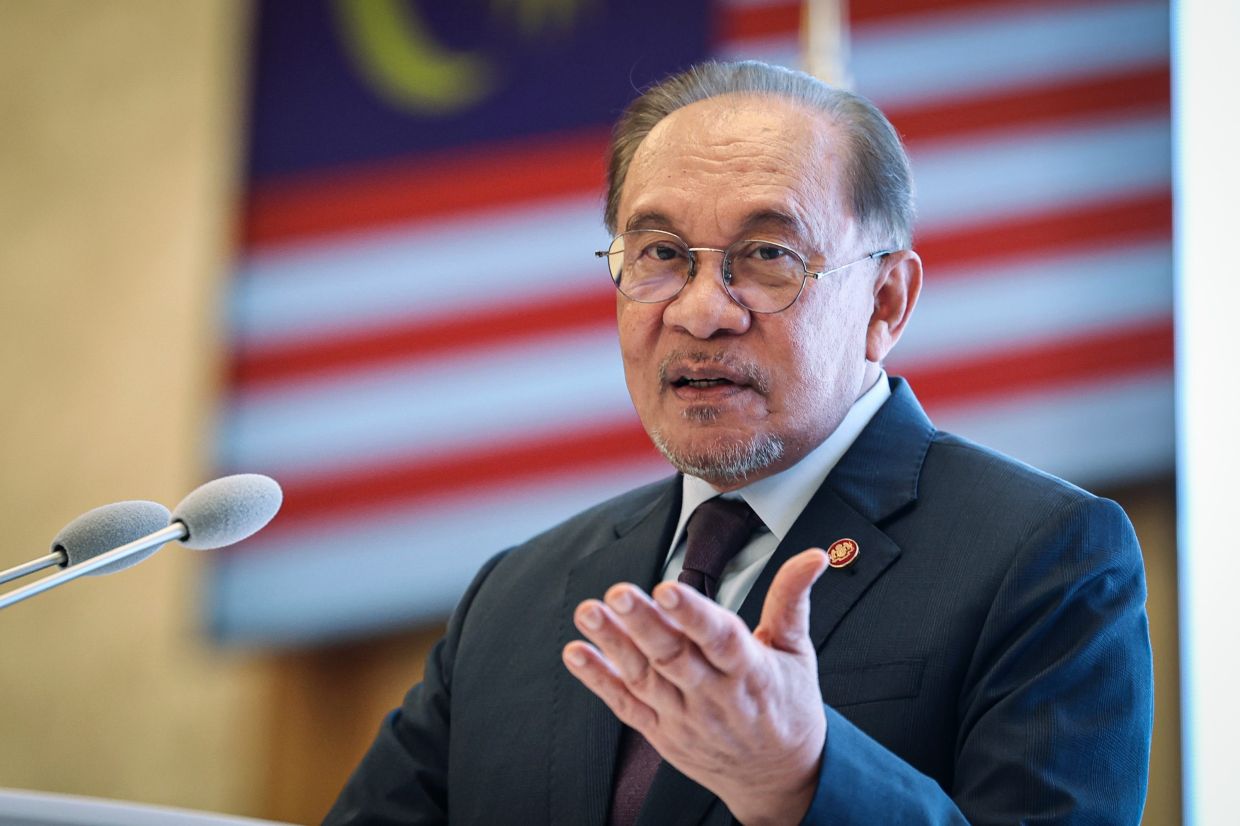
Prime Minister Datuk Seri Anwar Ibrahim has indicated that Malaysia and Singapore are moving closer to finalising the master plan for the Johor-Singapore Special Economic Zone (JS-SEZ), a landmark infrastructure project intended to unlock economic opportunities across both nations. Speaking following discussions with Singapore President Tharman Shanmugaratnam, Anwar, who serves concurrently as finance minister, underscored satisfaction with the headway achieved on the initiative and pledged both governments' commitment to completing the framework in the coming months.
The remarks came during Tharman's three-day state visit to Malaysia from July 13 to 15, undertaken at the invitation of His Majesty Sultan Ibrahim, King of Malaysia. The visit provided a formal platform for senior officials from both countries to engage on the full spectrum of bilateral relations, ranging from economic cooperation to regional stability. The choice of venue and timing reflected the diplomatic significance both Kuala Lumpur and Singapore attach to strengthening institutional links at the highest level.
The JS-SEZ represents one of the most ambitious cross-border economic initiatives in Southeast Asia, designed to create a seamlessly integrated trade and investment hub bridging Johor and Singapore. The special economic zone concept seeks to harness geographic proximity and complementary economic strengths of both jurisdictions, offering multinational corporations and investors a unified framework for operations. For Malaysia, the project carries strategic importance as a mechanism to attract foreign direct investment, generate employment, and position Johor as a critical node in regional supply chains.
Anwar's statement underscores the political will at the highest levels to move beyond preliminary consultations and into substantive implementation. The completion of a master plan constitutes a foundational step, as it will establish the governance structure, regulatory framework, infrastructure specifications, and operational protocols governing the zone. Such a blueprint is essential for attracting capital commitments from major investors who require clarity on rules, incentives, and long-term stability before deploying resources.
Beyond the JS-SEZ, the bilateral meeting addressed a range of longstanding issues that have periodically strained Malaysia-Singapore relations. The two nations share a complex history marked by both deep economic interdependence and occasional friction over maritime boundaries, water agreements, and airspace usage. Anwar's emphasis on resolving outstanding matters through constructive dialogue reflects a matured approach to bilateral problem-solving, particularly relevant given the rising geopolitical tensions across Asia and the mutual benefits of maintaining stable neighbourhood relations.
The Prime Minister's assertion that both sides remain committed to resolving disputes through mutual respect and understanding signals a departure from adversarial rhetoric that has occasionally characterised public discourse in either country. Such messaging carries practical implications for Malaysian and Singaporean investors operating across borders, who benefit from predictable policy frameworks and reduced uncertainty. The goodwill demonstrated at the highest political levels provides reassurance to business communities that remain sensitive to shifts in diplomatic temperature.
For Malaysia's broader economic agenda, the JS-SEZ project aligns with the government's emphasis on regional connectivity and integration as drivers of sustainable growth. The initiative dovetails with other infrastructure schemes such as the Pan-Borneo Highway and port development in Johor, creating a portfolio of projects aimed at transforming the southern state into a magnet for manufacturing, logistics, and technology-intensive industries. The presence of a thriving JS-SEZ would enhance Johor's competitive positioning relative to other Southeast Asian jurisdictions vying for investment capital.
Singapore's participation in the JS-SEZ reflects its strategic calculation that deepening integration with Johor serves its own economic interests, particularly as the city-state faces land constraints and rising costs. Access to a larger hinterland offers Singapore's enterprises opportunities for expansion, cost optimisation, and diversification of production bases. The zone effectively extends Singapore's economic footprint across the Straits of Johor, creating a larger functional economic region that transcends political boundaries.
The master plan's completion will likely address critical infrastructure requirements, including transportation links such as the proposed high-speed rail connecting Kuala Lumpur and Singapore, customs and border procedures, tax incentives, and sectoral priorities. Preliminary discussions have suggested that the zone might focus on advanced manufacturing, electronics, petrochemicals, and digital services, sectors where both economies possess existing strengths and complementary capabilities. Clear designation of priority sectors within the master plan will help align investment recruitment strategies and workforce development initiatives.
Anwar's statement also reflects the pragmatic stance both governments have adopted toward regional economic competition. As other Southeast Asian nations pursue similar special economic zone models and seek to attract footloose multinational corporations, Malaysia and Singapore recognise that cooperation yields superior outcomes to competition. The JS-SEZ concept thus represents a win-win strategy that enhances the competitiveness of both nations vis-à-vis other regional players while capitalising on geographical proximity and existing bilateral trade networks.
Looking forward, the finalisation of the JS-SEZ master plan will represent a critical transition point from strategic intent to operational implementation. Subsequent phases will involve institutional establishment, regulatory harmonisation, and infrastructure development—each presenting distinct challenges but also substantial opportunities. Malaysian stakeholders, particularly business chambers and state-level policymakers in Johor, will be monitoring the plan's content closely to assess how the initiative will affect their operations and competitive positioning.
The timing of Anwar's announcement carries significance given broader regional dynamics. As Southeast Asian nations navigate shifting great-power competition and seek to maintain equidistance between major powers, deepening intra-regional economic integration provides a stabilising counterweight. The JS-SEZ, viewed in this context, transcends a mere commercial arrangement and becomes an instrument of regional cohesion and shared prosperity that benefits both Malaysia and Singapore while demonstrating the region's capacity for constructive cooperation.

