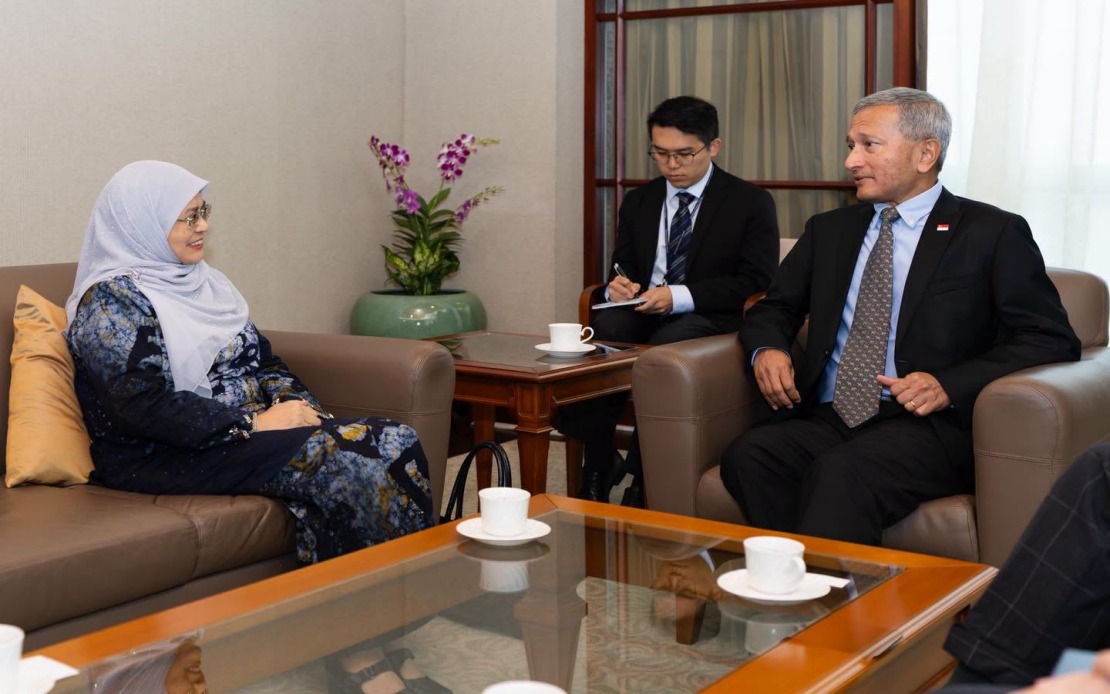
Malaysia and Singapore have renewed their pledge to maintain forward momentum in their bilateral relationship, with both nations emphasising the breadth and depth of cooperation they intend to pursue across economic, social and diplomatic domains. The reinforcement of this commitment took place during an official courtesy meeting between Singapore's Foreign Minister Dr Vivian Balakrishnan and the newly appointed Malaysian High Commissioner to Singapore, Datin Paduka Anizan Siti Hajjar Adnin, held on Wednesday at the Foreign Ministry office in Singapore.
The meeting represented a significant moment in the diplomatic calendar, marking the high commissioner's formal introduction to Singapore's foreign affairs leadership following her assumption of duties on July 2, 2026. Such introductory calls are customary protocol in diplomatic practice and serve as an opportunity for incoming envoys to establish working relationships with host-country officials whilst signalling the sending nation's continued commitment to the partnership. The Malaysian High Commission subsequently outlined the substance of discussions through official channels, underscoring that both delegations had focused on practical ways to sustain and expand the beneficial aspects of their historical partnership.
Central to the discussions was recognition of the particular significance that cross-border communities hold in the Malaysia-Singapore relationship. Both governments acknowledged the need to continue identifying concrete measures and policy initiatives that would enhance the welfare and livelihoods of ordinary citizens who maintain family ties, employment arrangements or business interests on either side of the border. This focus reflects the lived reality of tens of thousands of Malaysians who commute daily to Singapore for work, as well as Singaporean investors and professionals operating throughout Malaysia. The deliberate attention to these ground-level concerns demonstrates a commitment to ensuring that bilateral cooperation translates into tangible benefits for the ordinary people most affected by the relationship.
Dr Balakrishnan articulated Singapore's perspective on the partnership in his own public statement, characterising the Malaysia-Singapore relationship as fundamentally rooted in shared historical experience and reinforced by enduring connections among their respective populations. He highlighted three pillars undergirding the tie: the common heritage both nations share as former British colonies that gained independence and developed distinct trajectories in Southeast Asia; the organic networks of family, cultural and social linkages that connect Malaysian and Singaporean communities; and a track record of extensive functional cooperation across multiple fields ranging from security to trade to environmental management. His remarks underscored that Singapore views the relationship not as a transactional arrangement but rather as a partnership embedded in deeper structural realities.
The Foreign Minister's confidence in the new High Commissioner's capacity to advance the relationship drew explicitly on Anizan's extensive background in Malaysia's diplomatic service. By publicly endorsing her credentials and experience, Balakrishnan signalled Singapore's readiness to work constructively with her and projected optimism about the trajectory of bilateral ties under her leadership. High commissioners carry significant responsibility as the principal representatives of their home countries in the host capital, and their personal diplomatic skills, institutional knowledge and relationship-building capacity directly influence the quality and effectiveness of bilateral engagement. The reference to her predecessors also implicitly acknowledged the cumulative institutional memory and diplomatic groundwork that previous high commissioners had established, positioning Anizan as continuing rather than disrupting an existing trajectory.
The bilateral relationship between Malaysia and Singapore carries particular weight within the Southeast Asian context, given both nations' membership in ASEAN and their role as anchoring economies in the region. Their ability to maintain stable, cooperative relations has implications that extend beyond their bilateral sphere. Tensions or dysfunction in the Malaysia-Singapore relationship can create ripple effects throughout ASEAN's decision-making processes and affect the broader regional integration agenda. Conversely, demonstrated commitment to deepening cooperation sends a constructive signal to other regional actors and reinforces ASEAN's foundational principle of mutual respect for sovereignty and non-interference in internal affairs.
From a Malaysian perspective, the reaffirmation of commitment to the Singapore relationship carries domestic political weight as well. Many Malaysians have personal or economic stakes in Singapore, whether through employment, investment or family connections, making the state of bilateral relations a matter of practical concern to a significant portion of the population. The government's public emphasis on strengthening ties and improving conditions for citizens with cross-border interests addresses constituent concerns and demonstrates responsiveness to their day-to-day realities. Additionally, the smooth functioning of the bilateral relationship supports Malaysia's broader economic strategy, as trade with Singapore remains substantial and seamless cross-border commerce benefits Malaysian businesses and workers.
The timing of this diplomatic exchange also reflects the normal rhythm of personnel transitions in the diplomatic service. The appointment of a new high commissioner typically occasions a formal round of courtesy visits to senior government officials, allowing both parties to establish baseline understanding and set the tone for the tenure ahead. That both Malaysian and Singaporean officials invested time and resources in such meetings, and that both subsequently communicated the substance and spirit of discussions through official channels, indicates that neither side is taking the relationship for granted or allowing it to drift through institutional inertia. Such active engagement, even in its ceremonial aspects, reinforces the priority both governments place on the partnership.
Looking forward, the commitment reiterated during this meeting will likely manifest in ongoing discussions across multiple working-level committees and technical bodies that manage specific aspects of the bilateral relationship. These include mechanisms addressing maritime issues, trade facilitation, security cooperation, transportation linkages and countless other functional areas. The high commissioner's office will serve as the focal point for coordination of these various strands of engagement. The ability to translate high-level political commitment into effective implementation at working levels often determines whether bilateral rhetoric produces tangible improvements in the relationship. In that sense, the appointment of an experienced diplomat like Anizan suggests that Malaysia is positioning itself to manage the relationship with professional competence and sustained attention to detail.

