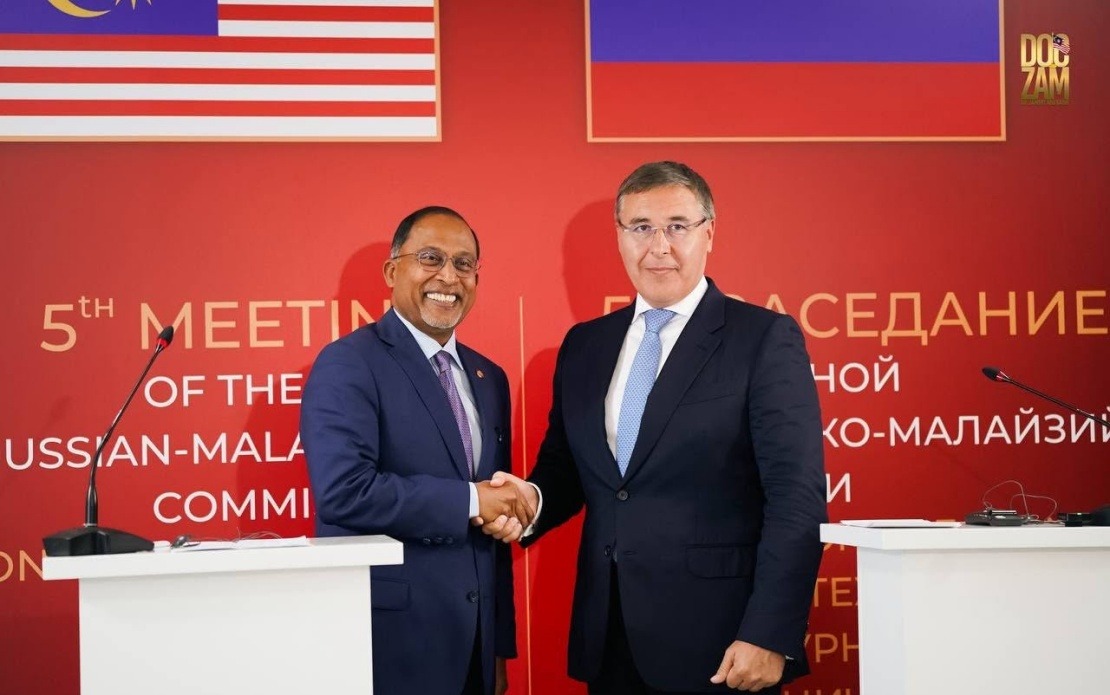
Malaysia and Russia have pledged to complete their 2027 Joint Action Plan before the year concludes, signalling a commitment to translate high-level diplomatic ties into tangible collaborative outcomes across multiple sectors. Higher Education Minister Datuk Seri Dr Zambry Abd Kadir announced the agreement following the Fifth Meeting of the Malaysia-Russia Joint Commission for Economic, Scientific, Technical and Cultural Cooperation, which he co-chaired with Russian Minister of Science and Higher Education Valery Falkov in Vladivostok. The decision reflects both nations' determination to move beyond ceremonial diplomacy and establish mechanisms that deliver measurable results for their citizens and economies.
The bilateral relationship has gained considerable momentum in recent years, anchored by high-level diplomatic exchanges involving Sultan Ibrahim, King of Malaysia, Russian President Vladimir Putin, and Prime Minister Datuk Seri Anwar Ibrahim. This year's joint commission meeting deliberately focused on channelling such political goodwill into concrete institutional frameworks and collaborative programmes. By establishing a structured action plan for 2027, Malaysia and Russia are essentially creating a roadmap that specifies objectives, timelines, and responsible parties across various domains, transforming rhetoric into operational reality.
In the crucial domain of higher education and human capital development, Russia will maintain its annual commitment of 40 government scholarships for Malaysian students. This sustained investment in educational exchange has historical significance given the long-standing academic partnerships between Malaysian and Russian universities. Beyond scholarship provision, both countries are pursuing innovative initiatives including the inaugural Malaysia-Russia Rectors' Forum planned for 2027, which will bring together university leaders to discuss research collaboration, institutional partnerships, and knowledge-sharing frameworks. The expansion of the MAI-UniKL Russian Aerospace Programme signals deepening technical cooperation in advanced fields, while the Malaysia-Russia Youth Leadership Summer Camp addresses the critical need for young professional networks bridging the two nations.
The establishment of a Malaysia-Russia Raw Materials Dialogue represents a pragmatic recognition of complementary economic interests. As Malaysia pursues industrial diversification and resource security, engagement with Russia—a major supplier of raw materials—offers strategic flexibility. These discussions encompass supply chains, pricing mechanisms, and long-term procurement agreements that could insulate Malaysian industries from supply disruptions while providing Russian suppliers with stable, long-term markets. For Malaysian manufacturers and processors, this dialogue potentially unlocks cost efficiencies and supply reliability crucial for competitive positioning in regional and global markets.
Trade and agricultural cooperation constitute another pillar of the expanding relationship. Both nations agreed to explore expanded market access and strengthened commercial linkages, with particular emphasis on food security initiatives. Russia's expertise in fertiliser production, including urea, directly addresses Malaysia's agricultural sector needs. Given Malaysia's significant palm oil production and broader agricultural base, securing reliable fertiliser supplies from a diversified supplier base reduces vulnerability to price volatility and geopolitical disruptions affecting other major suppliers. This cooperation extends beyond commodity imports to encompassing knowledge transfer in agricultural technology and sustainable farming practices.
Cooperation in strategic, emerging sectors underscores the forward-looking nature of this bilateral engagement. Artificial intelligence, digital technology infrastructure, smart city development, and information security rank among priority areas where both nations see mutual benefit and complementary capabilities. Russia's technological strengths in certain domains complement Malaysia's position as a regional digital hub and aspiring regional fintech centre. Telecommunications and renewable energy cooperation align with Malaysia's net-zero commitments and regional energy transition objectives. Discussion of peaceful nuclear energy cooperation, subject to regulatory frameworks, acknowledges both nations' long-term energy security considerations.
Financial cooperation has advanced significantly with involvement from Bank Negara Malaysia and Russia's central banking authorities. These institutions are exploring mechanisms to facilitate bilateral trade settlement, investment flows, and financial services collaboration. Labuan's positioning as an international financial centre and ASEAN gateway offers particular promise as a venue for Malaysia-Russia financial transactions, infrastructure finance, and regional banking corridors. Exploration of Islamic finance cooperation recognises Malaysia's global leadership in this domain and potential Russian interest in accessing Islamic financial instruments and expertise. Digital assets cooperation reflects both nations' recognition that technological innovation increasingly shapes financial intermediation.
The expansion into industrial, healthcare, transport, green technology, climate change, creative economy, and space sectors demonstrates the comprehensiveness of contemporary bilateral engagement. Healthcare cooperation could encompass pharmaceutical research, medical device manufacturing, and clinical trial collaboration. Transport sector cooperation extends to port development, logistics networks, and infrastructure planning beneficial to both parties. Space sector cooperation represents a particularly symbolic dimension, reflecting both nations' technical capabilities and long-standing interests in aerospace development. Climate change collaboration acknowledges shared environmental challenges despite geographic differences, while creative economy engagement taps into growing global demand for cultural content and digital creative services.
Three institutional cooperation agreements signed at the joint commission meeting formalise linkages between Malaysia's premier universities and leading Russian research institutions. The partnership between Universiti Teknologi MARA and National Research University Moscow Power Engineering Institute addresses energy and power systems expertise. Collaboration between UiTM and the Institute of Experimental Medicine opens possibilities in biomedical research and healthcare innovation. UTHM's agreement with the State University of Land Use Planning enables knowledge exchange in environmental management and sustainable development. These institutional agreements create lasting frameworks for ongoing academic collaboration, research funding partnerships, and student and faculty mobility.
Malaysia's hosting of the sixth joint commission meeting in 2027 carries symbolic significance beyond routine diplomatic scheduling. The timing coincides with the 60th anniversary of Malaysia-Russia diplomatic relations, allowing both nations to commemorate six decades of engagement while simultaneously launching the next phase of bilateral cooperation. For Malaysia particularly, hosting this significant meeting on home soil provides opportunity to showcase its development trajectory, research capabilities, and institutional strengths to Russian counterparts while deepening personal relationships among government officials, academics, and business leaders who will implement joint initiatives.
For Malaysian observers, this deepening Malaysia-Russia relationship represents deliberate strategic diversification of international partnerships. In an increasingly multipolar regional environment, Malaysia benefits from maintaining constructive relationships with major powers across different regions and political systems. Russia's technical capabilities in certain industrial sectors, resource endowments in critical materials, and diplomatic independence align with Malaysia's interests in maintaining strategic autonomy and avoiding excessive dependence on any single partnership or bloc. The structured approach to bilateral cooperation through the 2027 joint action plan signals that this is not merely transactional engagement but reflects genuine institutional commitment and long-term strategic thinking.
The emphasis on results-oriented cooperation reflects lessons learned in international relations where ambitious agreements sometimes falter due to implementation gaps and accountability deficits. By establishing a formal action plan with specific initiatives, timelines, and responsible institutions, Malaysia and Russia are creating mechanisms to track progress, identify obstacles, and adjust strategies accordingly. This approach contrasts with earlier patterns where bilateral declarations generated publicity without subsequent substantial outcomes. The involvement of multiple government agencies, financial institutions, and academic bodies also distributes responsibility across numerous actors, reducing likelihood that initiatives depend solely on political leadership continuity or individual institutional commitment.

