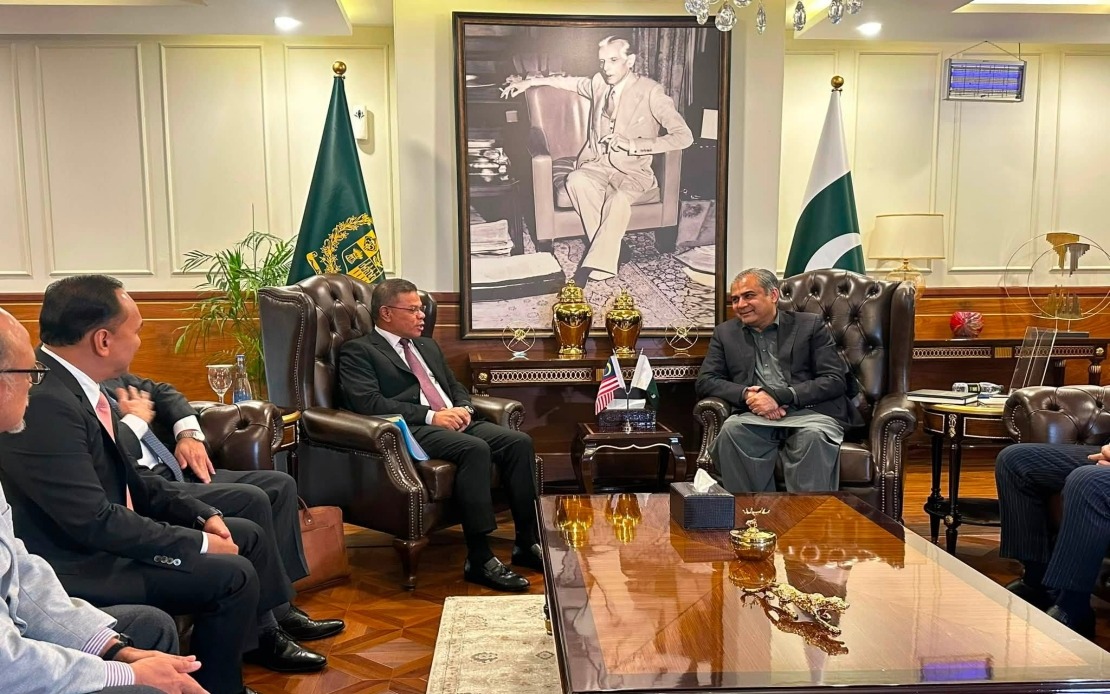
Malaysia and Pakistan are moving to significantly broaden their security and law enforcement partnership, according to discussions held between Home Minister Datuk Seri Saifuddin Nasution Ismail and Pakistan's Federal Minister of Interior and Narcotics Control, Syed Mohsin Raza Naqvi, during an official visit to Islamabad that commenced on August 20. The bilateral engagement reflects both nations' recognition that contemporary security challenges demand increasingly coordinated regional responses and deeper institutional collaboration between their respective agencies.
The two-day visit encompassed a comprehensive review of existing cooperation frameworks and identification of new areas where the countries can work more effectively together. Rather than simply reinforcing established partnerships, the discussions centred on pragmatic expansion into domains where both nations face shared vulnerabilities. The agenda addressed police cooperation mechanisms, structured intelligence sharing protocols, coordinated counter-terrorism strategies, joint operations against drug trafficking networks, prevention of cross-border criminal activity, cybersecurity defence initiatives, immigration management, human trafficking suppression, prisoner exchange protocols, and maritime law enforcement coordination across shared waters.
A key institutional development emerging from these talks involves the establishment of a working group at the ministerial level. This mechanism aims to provide a formal platform for ongoing dialogue and ensures that commitments made during bilateral meetings translate into concrete, measurable actions rather than remaining aspirational. By creating structured follow-up mechanisms, both nations are attempting to overcome historical challenges in implementing cooperative agreements and establish accountability for the implementation of agreed-upon initiatives.
Saifuddin Nasution emphasised that this engagement transcends routine diplomatic courtesy, instead representing a strategic recognition that security threats facing Malaysia and Pakistan possess similar characteristics and often interconnected dimensions. Counter-terrorism operations, for instance, frequently reveal transnational networks requiring simultaneous action in both countries. Drug trafficking routes often traverse multiple jurisdictions, necessitating coordinated enforcement strategies. Cybercriminal operations targeting both nations often originate from shared sources, demanding collaborative intelligence and technical capacity-building. By pooling expertise and resources, both countries can address these challenges with greater efficiency than working independently.
The Home Minister also highlighted Pakistan's constructive role in facilitating international dialogue mechanisms that contribute to regional peace and stability—a dimension often overlooked in security discussions focused narrowly on enforcement and counter-terrorism. This acknowledgment suggests Malaysia views Pakistan as a valuable stakeholder in broader regional architecture rather than simply as a law enforcement partner. Simultaneously, Saifuddin Nasution drew upon Malaysia's experience facilitating negotiations regarding the Thailand-Cambodia border dispute, positioning Malaysia as a country with demonstrated capacity in conflict resolution and regional mediation. This reciprocal sharing of experience signals that both nations see value in each other's expertise and institutional knowledge.
The ceremonial elements of the visit reinforced the diplomatic significance of the engagement. Saifuddin Nasution was accorded full ceremonial honours upon arrival, including a guard of honour mounted by the Federal Constabulary. His participation in commemorative activities at the Martyrs' Memorial, where he laid a wreath and recited Al-Fatihah in honour of those who sacrificed their lives for Pakistan, demonstrated respect for Pakistan's sacrifices in security and counter-terrorism operations. These formal observances, while symbolic, carry weight within Pakistani political and security circles and underscore Malaysia's commitment to the relationship at the highest levels.
Engagements with operational-level personnel throughout the visit provided an opportunity to strengthen working relationships among frontline officers and commanders. Saifuddin Nasution's attendance at a special parade at Islamabad Police Lines and his meetings with officers and personnel represented recognition that security cooperation ultimately depends on robust working relationships between operational agencies rather than ministerial agreements alone. Such interactions facilitate knowledge exchange, build personal networks, and can accelerate implementation of agreed-upon protocols when officers have established prior rapport.
For Malaysia, deeper engagement with Pakistan addresses several strategic imperatives. Pakistan's geographic position, its experience managing transnational security challenges, and its extensive intelligence networks make it a valuable partner for addressing threats affecting Malaysian interests. Additionally, Pakistan's role in facilitating regional dialogue aligns with Malaysia's own interests in a stable, predictable regional environment conducive to economic development and prosperity. Enhanced cooperation with Pakistan can complement Malaysia's existing security partnerships and create additional layers of defence against evolving threats.
The visit also carries significance for bilateral relations more broadly. By elevating security cooperation discussions and formalising implementation mechanisms through working groups, both countries signal serious political commitment to deepening ties. This can create positive momentum for cooperation across other domains, from trade to cultural exchange. Security partnerships often serve as foundational relationships that subsequently facilitate broader diplomatic engagement.
The emphasis on structured implementation frameworks and working groups reflects lessons learned from previous attempts at international cooperation, where agreements frequently remained dormant due to unclear responsibilities, undefined timelines, or lack of institutionalised follow-up mechanisms. By building these frameworks into the current arrangement, Malaysia and Pakistan are attempting to ensure that the considerable diplomatic capital invested in these discussions yields tangible operational outcomes.
Saifuddin Nasution's acknowledgment of Prime Minister Datuk Seri Anwar Ibrahim's support, conveyed through his official greetings, emphasised that these security discussions operate within Malaysia's broader political and diplomatic framework. This ensures that any agreements reached possess backing at the highest levels of government and are aligned with Malaysia's overall foreign policy priorities. The visit thus represents not merely bureaucratic-level engagement but reflects considered strategic policy choices at the cabinet level.
As regional security dynamics continue evolving—with transnational criminal networks becoming increasingly sophisticated, terrorism adapting to counterterrorism operations, and cyber threats multiplying—the importance of frameworks enabling rapid information sharing and coordinated responses becomes more pronounced. The Malaysia-Pakistan working group and expanded cooperation mechanisms developed during this visit position both nations to respond more effectively to these emerging challenges while simultaneously strengthening their bilateral relationship and contributing to broader regional stability and security.

