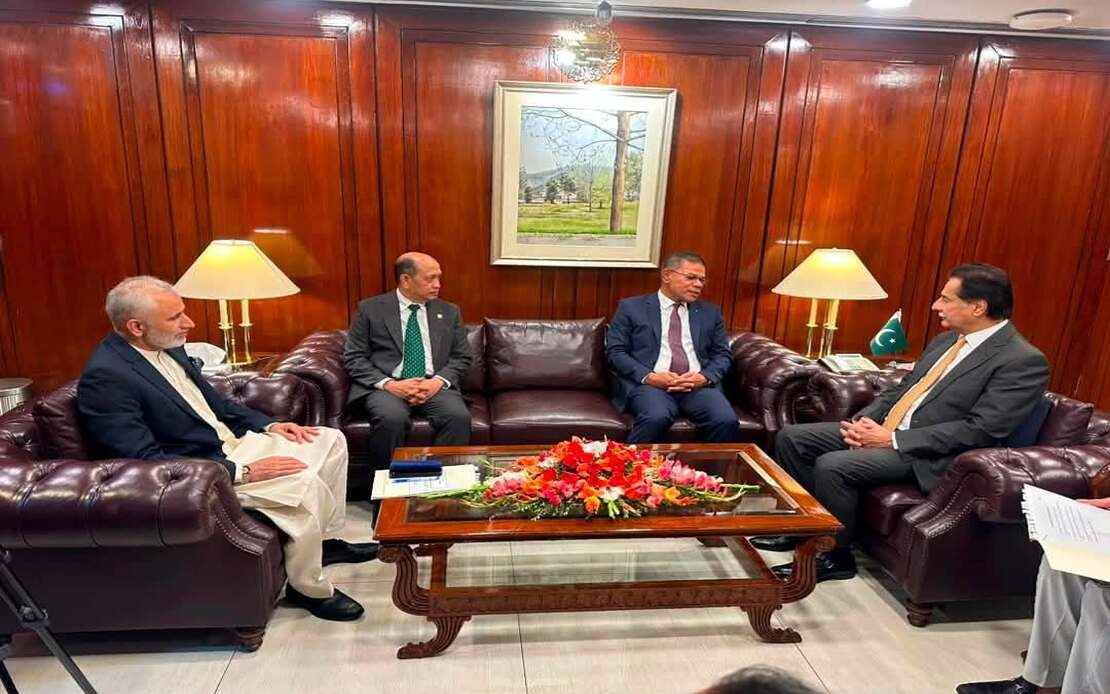
Malaysia and Pakistan have reaffirmed their commitment to dialogue and diplomatic channels as tools for navigating the complex geopolitical environment facing the region. Home Minister Datuk Seri Saifuddin Nasution Ismail articulated this shared position following high-level meetings in Islamabad during the second day of his official visit, where he engaged with the Speaker of the National Assembly of Pakistan, Sardar Ayaz Sadiq, and the chairman of the Senate of Pakistan, Syed Yousaf Raza Gilan.
The emphasis on dialogue reflects both nations' recognition that military posturing and confrontation offer limited solutions to the multifaceted security challenges confronting South Asia and the broader region. In an era marked by volatile geopolitical rivalries, proxy conflicts, and emerging transnational threats ranging from terrorism to cyber warfare, Malaysia's delegation sought to underscore the efficacy of institutional dialogue and people-to-people connections in building resilience and understanding. This approach aligns with Malaysia's broader regional strategy through ASEAN, where consensus-building and non-interference remain cornerstone principles.
Saifuddin Nasution highlighted Malaysia's practical experience in leveraging ASEAN mechanisms to maintain regional peace and stability despite significant political and economic differences among member states. The organisation has demonstrated that sustained dialogue, even amid tensions, can prevent conflicts from escalating and create frameworks for addressing shared concerns such as maritime security, counterterrorism, and economic cooperation. By sharing this institutional knowledge with Pakistani leadership, Malaysia effectively positioned itself as a voice for pragmatism in an increasingly fraught strategic landscape.
The bilateral relationship between Malaysia and Pakistan rests upon foundations that extend beyond transactional interests. Both nations share historical ties rooted in Islam, common developmental aspirations, and people-to-people connections strengthened by significant diaspora communities and educational exchanges. The emphasis during these meetings on trust, mutual respect, and interpersonal bonds reflects recognition that sustainable diplomatic relationships require investment in human connections and institutional understanding rather than reliance on strategic convenience alone.
Parliamentary diplomacy emerged as a significant focal point in these discussions, with both sides emphasising the potential for expanding institutional exchanges between their legislative bodies. In Malaysia's context, this represents a strategic investment in building relationships beyond executive branches, thereby creating multiple channels for dialogue that can withstand shifts in political administrations. Pakistan, with its own complex history of democratic consolidation and institutional development, similarly benefits from these connections with a regional partner that has navigated democratic transitions with relative stability.
Saifuddin Nasution's visit to the Parliament Museum provided symbolic value beyond mere ceremonial observance. By engaging with Pakistan's parliamentary history and constitutional framework, the Malaysian delegation demonstrated respect for Pakistani institutional development whilst learning from the country's experiences with democratic governance and constitutional reform. Such exchanges, though often overlooked in strategic analysis, contribute substantially to fostering mutual understanding and building relationships grounded in appreciation for each nation's unique political journey.
The timing of this visit carries particular significance given the complex security environment in South Asia. Pakistan faces substantial internal security challenges ranging from militant extremism to economic instability, whilst also managing geopolitical competition with India and shifting dynamics in Afghanistan following the Taliban's return to power. Malaysia's outreach, emphasising constructive engagement and dialogue, offers a counterbalance to more confrontational approaches and signals Malaysia's willingness to engage with all regional players regardless of their international alignments.
For Southeast Asia more broadly, Malaysia's diplomatic initiative underscores the region's interest in maintaining stability in the broader Asian neighbourhood. Pakistan's strategic location, straddling South Asia, Central Asia, and the Indian Ocean, renders its internal stability and external relations consequential for regional security dynamics. Malaysian engagement contributes to a broader pattern of Southeast Asian engagement with South Asian partners, diversifying relationships and preventing strategic polarisation.
The meetings also reflected pragmatic recognition that contemporary security challenges increasingly transcend traditional bilateral boundaries. Terrorism, human trafficking, maritime piracy, and cybercrime demand coordinated responses spanning multiple nations and regions. By discussing these shared vulnerabilities and exploring collaborative frameworks, Malaysia and Pakistan position themselves to address threats more effectively than through unilateral action.
Looking forward, the emphasis on expanding parliamentary and institutional exchanges provides concrete mechanisms for deepening the relationship beyond symbolic gestures. Regular dialogue between legislative bodies, judicial exchanges, and cooperation between law enforcement and security agencies can translate high-level political commitments into tangible cooperation addressing genuine challenges. These practical dimensions of the relationship ultimately determine its resilience and value to both nations.
The visit ultimately reinforces a fundamental principle in contemporary international relations: that dialogue, even among nations with different strategic interests and regional alignments, remains preferable to confrontation. In an era of great power competition and regional tensions, Malaysia's diplomatic engagement with Pakistan demonstrates that middle-power actors can play constructive roles in promoting stability and understanding. This approach, grounded in respect for sovereignty and commitment to peaceful resolution of disputes, offers a model worthy of consideration across Asia's many bilateral relationships.

