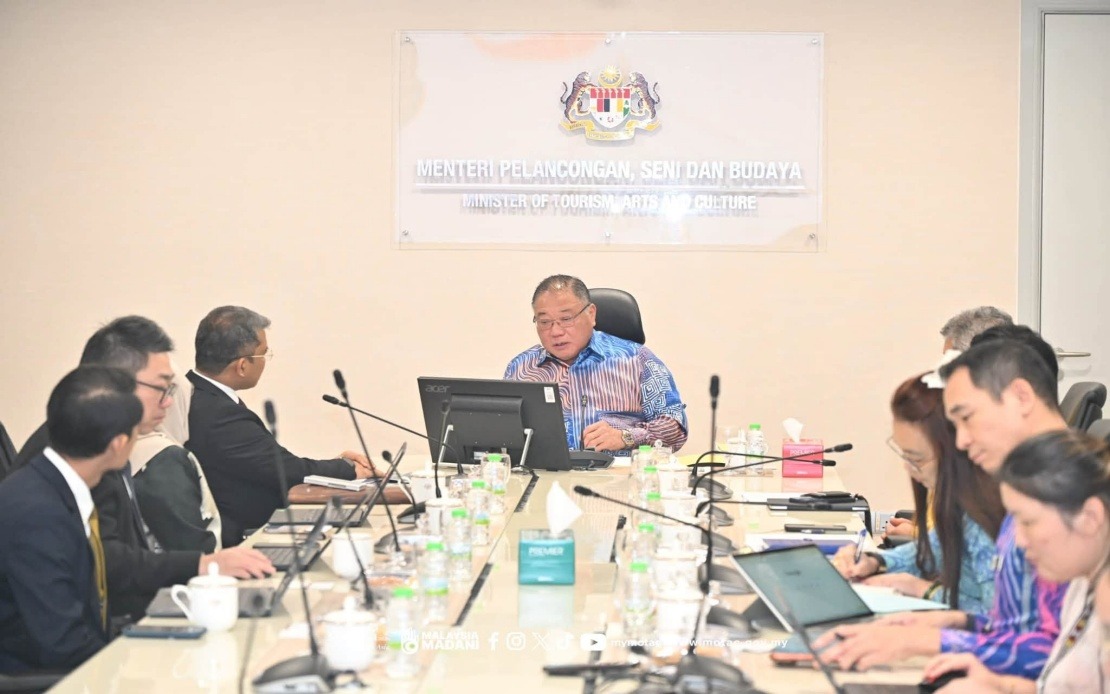
The Ministry of Tourism, Arts and Culture and Malaysia Aviation Group have moved to deepen their strategic partnership in a coordinated effort to lift international tourist arrivals and secure the broader objectives of the extended Visit Malaysia Year 2026 campaign. During discussions held in Putrajaya between Tourism, Arts and Culture Minister Datuk Seri Tiong King Sing and MAG Group president and chief executive officer Captain Nasaruddin A Bakar, both organisations outlined a comprehensive roadmap designed to leverage the national carrier's operational capacity and marketing reach to drive visitor growth across key source markets.
The VM2026 initiative, which has been extended into the following year to maximise its commercial and promotional impact, represents a critical opportunity for Malaysia to reinforce its standing as a premier Southeast Asian destination. Rather than treating tourism promotion in isolation, the collaborative framework emerging from this partnership reflects an understanding that sustained growth in international arrivals depends on seamless coordination between government policy, aviation infrastructure, and industry-wide service improvements. The extended timeline allows both parties to implement longer-term strategies that would have been rushed under the original schedule, potentially yielding stronger results across multiple visitor segments.
A central pillar of the strengthened partnership involves expanding Malaysia Aviation Group's network footprint and deepening penetration into high-value markets. The carrier plans to increase its presence in India, China, and Europe—regions that represent substantial untapped or underexploited demand for Malaysian tourism products. India in particular presents significant opportunity, given the country's large middle class with growing disposable income for international travel, while Chinese visitors have consistently demonstrated strong spending power during stays in Southeast Asia. European markets, though geographically distant, offer quality visitors with extended holiday periods and interest in cultural and nature-based experiences that Malaysia can effectively showcase. Beyond these established markets, the airline is exploring connectivity to Fukuoka, signalling an intention to tap Japanese leisure and business travel segments that have shown renewed interest in regional destinations following pandemic-related travel restrictions.
The partnership also addresses a persistent challenge within the tourism and aviation sectors: managing seasonal demand fluctuations. By implementing joint marketing campaigns and coordinated flight promotions targeting the traditionally weaker months, both organisations hope to improve load factors—the percentage of available seats filled on aircraft—during periods when leisure travel typically contracts. This approach benefits the airline through improved operational efficiency and revenue stability, while simultaneously extending the high season for accommodation providers, tour operators, and hospitality businesses. For Malaysian tourism businesses that have weathered several years of volatility, this kind of demand smoothing represents a meaningful contribution to sustainability and employment preservation across the sector.
Enhancing the passenger experience represents another dimension of the collaboration that carries implications beyond immediate tourism metrics. Improvements to cabin facilities, service quality, in-flight catering standards, and cabin crew training programmes send a signal to international travellers that Malaysia is committed to world-class service delivery from the moment they board a flight. This matters particularly because first and last impressions shape overall satisfaction and likelihood of repeat visits or recommendations to prospective travellers. For a destination competing against Thailand, Indonesia, and Vietnam for regional market share, these seemingly incremental service enhancements contribute to building a reputation for reliability and quality that influences purchasing decisions among affluent leisure travellers.
The framework also encompasses direct support for Malaysia's domestic tourism ecosystem, particularly small and medium-sized enterprises that comprise much of the local hospitality and attractions industry. By expanding airline capacity and increasing connectivity to Malaysian destinations, the partnership creates downstream demand for local tourism services—accommodation, food and beverage, guided tours, and cultural experiences. Deliberate efforts to enhance benefits flowing to local industry players suggest recognition that sustainable tourism growth depends on distributing economic gains beyond international operators and towards communities that steward natural and cultural assets. This stakeholder-inclusive approach reduces the risk of tourism growth becoming a source of grievance or environmental degradation.
The collaboration also reflects a strategic pivot towards viewing aviation not merely as a transport commodity but as a cornerstone of destination competitiveness. Countries that have successfully built tourism economies—Singapore, Thailand, and the United Arab Emirates among them—typically combine aggressive airline expansion, market development, and service standardisation into coherent national strategies. By institutionalising coordination between MOTAC and Malaysia Aviation Group through this partnership, Malaysia is adopting a model that recognises these interconnections. The involvement of high-level government and corporate leadership signals that both parties view this collaboration as a priority, not a secondary initiative.
From an economic perspective, the extended VM2026 campaign timeline provides measurable benefits. Rather than concentrating promotional spending and marketing effort into a single calendar year, spreading the campaign across an extended period reduces the unit cost of visitor acquisition, allows for course correction based on real-time performance data, and permits the accumulation of word-of-mouth recommendations that often prove more persuasive than paid advertising. Airlines operating under this partnership framework can plan capacity additions and route launches with greater confidence, while tourism businesses can invest in training and infrastructure improvements knowing that demand support extends across multiple years.
The emphasis on government, aviation, and tourism sector cooperation also positions Malaysia to manage tourism growth in ways that enhance rather than undermine competitiveness. Uncoordinated tourism expansion can lead to infrastructure bottlenecks, service quality degradation, and environmental strain that ultimately deter visitors and damage long-term demand. By creating formal mechanisms for aligned planning and execution, the MOTAC-MAG partnership reduces the likelihood of these negative outcomes. This institutional approach to tourism development has become increasingly standard among successful Asian destinations and represents maturation in how Malaysia conceptualises its tourism strategy.
Looking ahead, the success of this partnership will depend on execution quality and the willingness of other stakeholders—accommodation operators, ground service providers, immigration authorities—to align their own operations with the collaborative framework. The extended VM2026 campaign provides a sufficiently long runway for identifying implementation challenges and adjusting tactics accordingly. For Malaysia's tourism sector and the broader economy, this deepened coordination between government and the national carrier offers a pathway towards more sustainable, inclusive, and resilient growth in international visitor arrivals.

