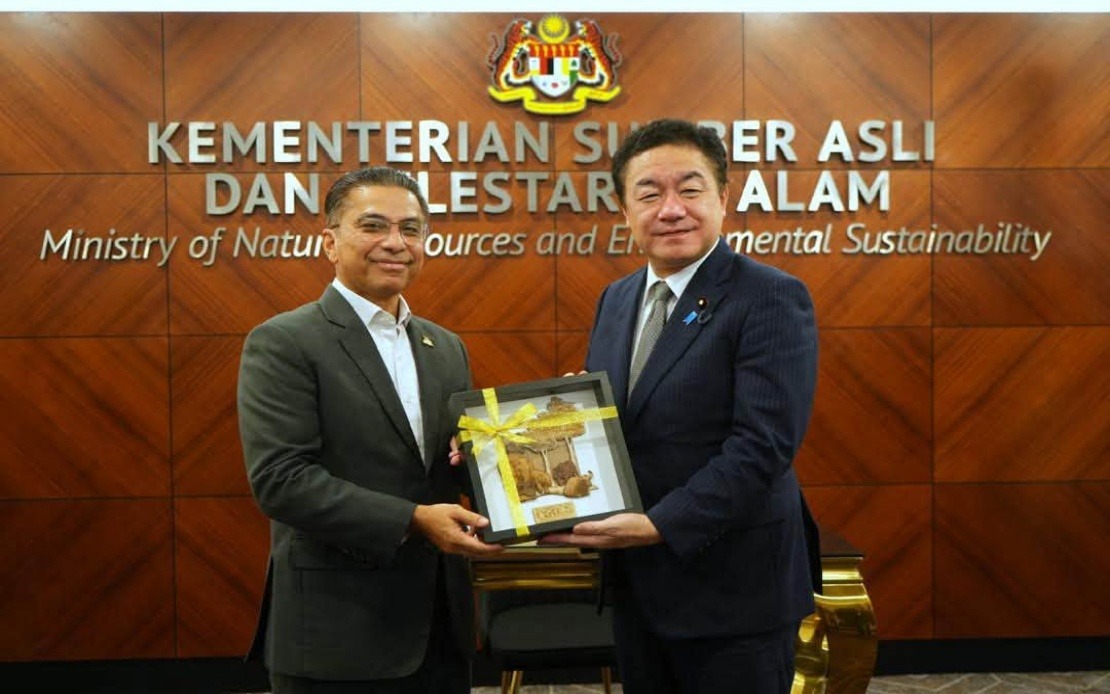
Malaysia and Japan have taken another significant step in deepening their strategic relationship, with high-level discussions focusing on critical sectors that align with both nations' economic and environmental priorities. During a recent visit to the Ministry of Natural Resources and Environmental Sustainability (NRES) in Putrajaya by Japan's Parliamentary Vice-Minister of Economy, Trade and Industry Komori Takuo, officials from both countries reaffirmed their commitment to advancing cooperation in rare earth elements, critical minerals processing, and climate action initiatives. The meeting, chaired by Deputy Natural Resources and Environmental Sustainability Minister Syed Ibrahim Syed Noh, built upon decisions made during the bilateral summit in June, which occurred under the Malaysia-Japan Comprehensive Strategic Partnership framework.
The rare earth elements sector represents a particularly strategic focus for Malaysia's economic development and regional positioning. Malaysia controls significant REE deposits and has positioned itself as a critical player in global supply chains, especially as countries worldwide seek to reduce their dependence on single suppliers. During the discussions, Malaysia formally acknowledged Japan's ongoing contributions through technical assistance and knowledge transfer mechanisms, specifically highlighting the role of the Japan International Cooperation Agency (JICA) and the Japan Organisation for Metals and Energy Security (JOGMEC). These organizations have provided valuable expertise in mining, processing, and sustainable extraction practices that have enhanced Malaysia's domestic capabilities in the REE sector.
Crucially, Malaysia reaffirmed its strategic policy position regarding raw rare earth material exports during the meeting. The government maintains a moratorium on exporting unprocessed REE materials, a decision designed to ensure that value-added processing and manufacturing activities remain anchored within Malaysia's borders. This approach reflects a broader economic strategy to capture higher margins along the supply chain and develop a competitive domestic REE processing industry, rather than simply exporting raw commodities. By working with Japan on advanced processing techniques and technology transfer, Malaysia aims to establish itself as a preferred destination for REE refinement and manufacturing in the Asia-Pacific region. This policy aligns with efforts to strengthen Malaysia's industrial base and create more high-skilled employment opportunities.
Beyond the minerals sector, the two nations have made substantial progress on climate cooperation mechanisms that carry significant implications for Malaysia's energy transition. Officials welcomed the completion of negotiations on a draft Memorandum of Cooperation governing the Joint Crediting Mechanism (JCM), which operates under Article 6.2 of the Paris Agreement framework. This market-based instrument allows countries to collaborate on reducing greenhouse gas emissions while generating internationally tradable carbon credits. By establishing a formal JCM arrangement with Japan, Malaysia gains access to both financial resources and technological expertise needed to accelerate its transition toward low-carbon energy systems.
The anticipated finalization of the carbon market cooperation mechanism by the end of the year carries particular weight for Malaysia's climate commitments. The framework is designed to channel investment into technologies that reduce carbon emissions while supporting Malaysia's energy transition away from fossil fuels toward renewable and sustainable sources. This is directly linked to Malaysia's Nationally Determined Contribution (NDC) under the Paris Agreement, which sets specific targets for greenhouse gas emission reductions by 2030 and beyond. Japanese expertise in renewable energy, energy efficiency, and emerging green technologies such as hydrogen fuel cells and advanced battery systems can significantly accelerate Malaysia's progress toward these NDC targets, while simultaneously creating opportunities for Japanese companies to establish operations and partnerships within Malaysia.
The strategic combination of Japan's established expertise in green technology with Malaysia's abundant natural resources and renewable energy potential creates a compelling foundation for building a competitive green economy. Japan has decades of experience implementing energy-efficient manufacturing processes, developing renewable energy infrastructure, and managing environmental sustainability at scale. Malaysia possesses significant advantages including solar potential, biomass resources, and increasing renewable capacity. By pooling these complementary strengths through formal cooperation mechanisms, both nations can develop integrated supply chains for green products and technologies that serve regional and global markets. This partnership approach reflects recognition that climate action and economic competitiveness are mutually reinforcing objectives rather than competing priorities.
The composition of the delegations underscores the high-level importance both governments attach to this cooperation. Malaysia's delegation included not only NRES representatives but also the deputy secretary-general overseeing natural resources management and officials from the Foreign Ministry, reflecting coordination across multiple government levels. Japan's participation through Parliamentary Vice-Minister Komori Takuo and Japanese Ambassador Shikata Noriyuki, along with senior METI officials, indicates that Tokyo views this engagement as strategically significant. Such high-level representation ensures that agreements reached will receive sufficient political backing and institutional support for effective implementation.
For Malaysia specifically, this partnership addresses several pressing policy objectives simultaneously. The REE cooperation component supports industrialization and export diversification, moving beyond simple commodity exports toward sophisticated manufacturing. The climate cooperation mechanism provides access to green technology and finance while helping Malaysia meet its international climate obligations. For broader Southeast Asia, Malaysia's experience in negotiating these frameworks with major developed economies like Japan can serve as a model for other regional nations seeking to balance resource sovereignty with technological advancement and climate responsibility. The precedent established through these formal mechanisms demonstrates how developing nations can structure partnerships that protect national interests while accessing the technology and capital necessary for sustainable development.
The finalization of these cooperation mechanisms by year-end will likely trigger follow-up working groups and technical committees tasked with implementing specific projects and initiatives. These bodies will determine how abstract commitments translate into concrete investments in processing facilities, renewable energy projects, and climate adaptation measures. The effectiveness of this partnership will ultimately be measured by tangible outcomes including job creation in green sectors, improvements in REE processing efficiency and environmental standards, and measurable progress toward Malaysia's climate targets. As both nations move forward with implementation, the partnership also serves as an important demonstration of bilateral coordination during a period of shifting global supply chains and intensifying competition for access to critical resources and clean technology leadership.

