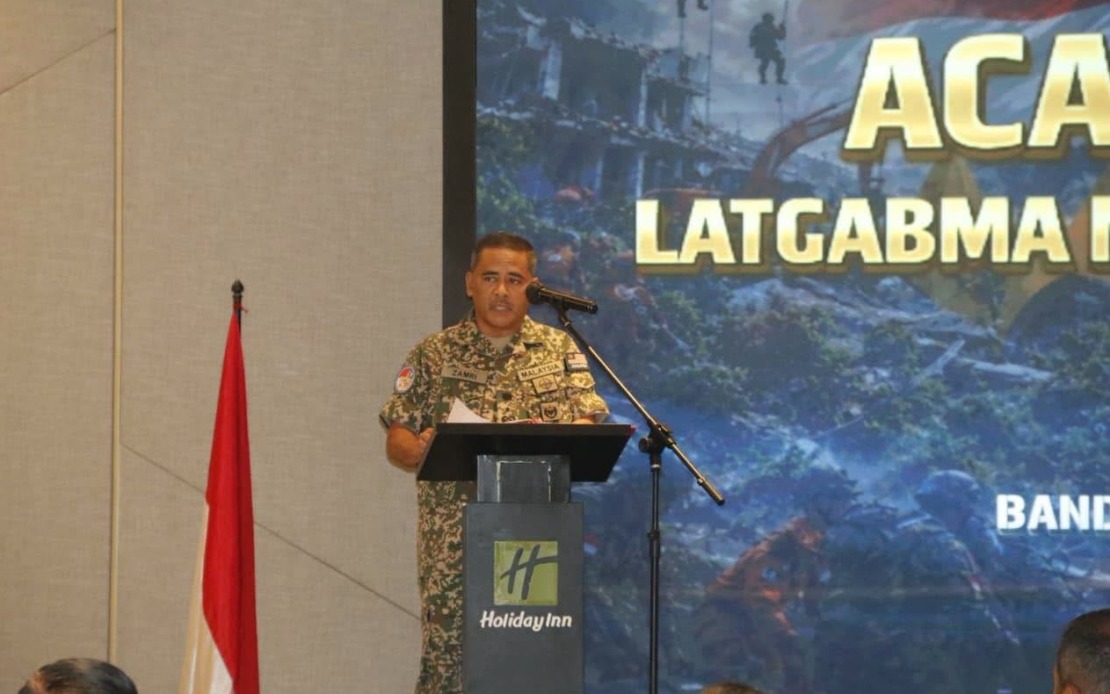
The Malaysian Armed Forces and their Indonesian counterparts have launched an ambitious joint military exercise in Lampung, Sumatra, marking a significant deepening of defence cooperation between the two Southeast Asian neighbours. The 13-day LATGABMA MALINDO DARSASA 12AB/2026 exercise, which commenced in June, brings together 719 military and civilian personnel from Malaysia, Indonesia, and supporting agencies to test integrated operational capabilities across land, sea, and air domains.
This trilateral training initiative represents far more than routine military drills. According to Brig Gen Datuk Zamri Othman, Commander of the 1st Infantry Brigade and head of the MAF Exercise Planning Group, the exercise embodies the deep fraternal relationship and strategic confidence that underpins the bilateral defence partnership. The event provides participating forces with tangible opportunities to harmonise operational procedures, strengthen inter-service communication, and build mutual understanding among personnel who may one day coordinate responses to genuine security crises. By practising together regularly, both nations reduce the friction and miscalculation that could arise during actual emergencies.
The timing and focus of this exercise reflect the evolving security landscape across the region. Malaysia and Indonesia face an expanding array of non-traditional threats that transcend conventional military boundaries. Maritime piracy and smuggling operations persist in busy shipping lanes, while terrorism remains a persistent concern despite significant progress in counterinsurgency efforts. Cyber warfare has emerged as a critical vulnerability, with both nations' infrastructure increasingly dependent on digital systems. Natural disasters—earthquakes, tsunamis, flooding—strike with little warning and demand rapid, coordinated cross-border responses. These multifaceted challenges necessitate that Malaysia and Indonesia maintain robust defence diplomatic channels and regularly exercise their capacity to respond together.
The selection of Bandar Lampung as the primary training venue was deliberate and strategically sound. Located at the convergence of three active tectonic plate belts, Lampung Province has directly experienced the catastrophic earthquakes and tsunamis that periodically devastate southern Sumatra. By training in this geographically authentic setting, participants engage with realistic disaster scenarios grounded in actual historical events rather than abstract hypotheticals. This approach significantly enhances the relevance and practical applicability of the skills and knowledge acquired during the exercise, ensuring that personnel return to their home nations with refined capabilities directly transferable to future emergencies.
The exercise architecture reflects sophisticated planning and comprehensive scope. The academic phase, conducted through Staff Exercise (STAFFEX) sessions, requires senior officers and planning teams to work through ten distinct operational scenarios. These range from the immediate chaos of Initial Disaster Response through Mass Casualty Incident management, infrastructure collapse recovery, medical emergency protocols, and international assistance coordination. Participants also engage with contemporary security challenges including Cyber Attack scenarios, Information Warfare dynamics, Mass Evacuation procedures, and the complex Stabilisation and Transition phases that characterise post-crisis recovery. This intellectual groundwork prepares commanders and staff to make sound decisions under pressure.
The practical implementation phase, termed Field Training Exercise (FTX), translates theoretical understanding into operational competency. Force Integration Training brings MAF personnel together with TNI units and representatives from Indonesia's specialised agencies including the National Search and Rescue Agency (BASARNAS), disaster preparedness cadets, the Indonesian Red Cross, and regional disaster management authorities. Through coordinated field activities—rope work, rappelling techniques, emergency response actions, and field hospital establishment—personnel develop the muscle memory and interpersonal bonds essential for seamless cooperation during real crises. This hands-on training proves invaluable for breaking down institutional silos and fostering genuine interoperability.
Beyond military training, the exercise incorporates significant humanitarian components that extend benefits to local Indonesian communities. Engineering Civil Action Programme activities include restoration of two uninhabitable houses in Kampung Sukamaju and construction of concrete roadways in Kampung Keteguhan, providing tangible infrastructure improvements. The Medical Civic Action Programme, conducted at local community health centres, delivers general health screenings, free eyeglasses, and blood donation services to residents. These activities underscore how defence cooperation can generate positive social outcomes and strengthen the bonds of goodwill between the Malaysian and Indonesian peoples, extending the benefits of military partnership beyond security considerations alone.
Cyber warfare training represents a critical and increasingly urgent dimension of modern defence cooperation. The CyberEx segment of LATGABMA MALINDO DARSASA 12AB/2026 addresses the technical dimensions of contemporary cyber threats, with training covering reconnaissance techniques, system enumeration, credential-based attacks, man-in-the-middle interception tactics, spoofing methodologies, and feed manipulation strategies. As both nations' defence, economic, and civilian infrastructure grow more digitally integrated, the capacity to detect, respond to, and mitigate cyber attacks becomes essential. Regular joint cyber exercises ensure that Malaysian and Indonesian cybersecurity specialists maintain interoperable protocols and understand each other's defensive postures and vulnerabilities.
The exercise represents the latest iteration of a partnership framework stretching back four decades. LATGABMA MALINDO DARSASA has operated continuously since 1984 under the oversight of the General Border Committee and the Malaysia-Indonesia Joint Training Committee, rotating between participating nations every three years. The previous major iteration, held in Pekan, Pahang in 2023, emphasised counter-terrorism concepts and demonstrated Malaysia's willingness to host reciprocal exercises. This institutional continuity, embedded in formal bilateral mechanisms, ensures that defence cooperation survives political transitions and fluctuations in broader diplomatic relations.
The composition of participating forces reflects the multifaceted nature of modern security challenges. With 463 TNI personnel, 150 MAF personnel, representatives from Malaysia's National Disaster Management Agency, 25 members of the Indonesian National Police, and 79 participants from various Indonesian civilian agencies, the exercise integrates civilian disaster management expertise alongside military capabilities. This whole-of-government approach acknowledges that contemporary security threats cannot be addressed by armed forces alone, requiring coordination between military and civilian authorities. For Malaysia, this exercise demonstrates the interconnectedness of national defence with disaster management, public health, and infrastructure resilience.
The broader geopolitical context amplifies the significance of strengthened Malaysia-Indonesia defence ties. The two nations share maritime borders, overlapping maritime claims, and complex historical legacies. Yet their security interests align substantially, particularly regarding counterterrorism, maritime domain awareness, and disaster response. China's growing military presence in regional waters, coupled with increasing great power competition in Southeast Asia, creates incentives for ASEAN nations to strengthen intra-regional security cooperation. Regular, substantive exercises between Malaysia and Indonesia demonstrate that Southeast Asian states can build robust bilateral partnerships that enhance collective regional stability without requiring alignment with external powers.
The exercise also reflects Malaysia's commitment to forward defence engagement and practical security cooperation. Rather than purely diplomatic gestures, Malaysia invests significant military resources and personnel in sustained training partnerships. This approach yields tangible benefits: both nations develop interoperable procedures, build personal relationships among officers who may later coordinate crisis responses, and demonstrate to their respective publics and neighbouring states that defence cooperation contributes to regional stability and humanitarian resilience. For Malaysian military personnel, exposure to Indonesian operational concepts and procedures enhances their understanding of a critical neighbour and strengthens the foundation for future collaborative security efforts.
Looking ahead, the success of LATGABMA MALINDO DARSASA 12AB/2026 will likely reinforce Malaysia and Indonesia's commitment to expanded defence cooperation. The demonstrated capacity to conduct complex joint operations involving disaster response, cyber defence, and humanitarian assistance provides both nations with confidence in their ability to respond effectively to future crises. As regional security challenges evolve—whether from transnational terrorism, maritime threats, climate-induced disasters, or cyber attacks—the institutional relationships and practical competencies developed through exercises prove increasingly valuable. Malaysia should consider this exercise a cornerstone of its regional security strategy, one that strengthens the nation's defence capabilities while simultaneously contributing to broader Southeast Asian stability and prosperity.

