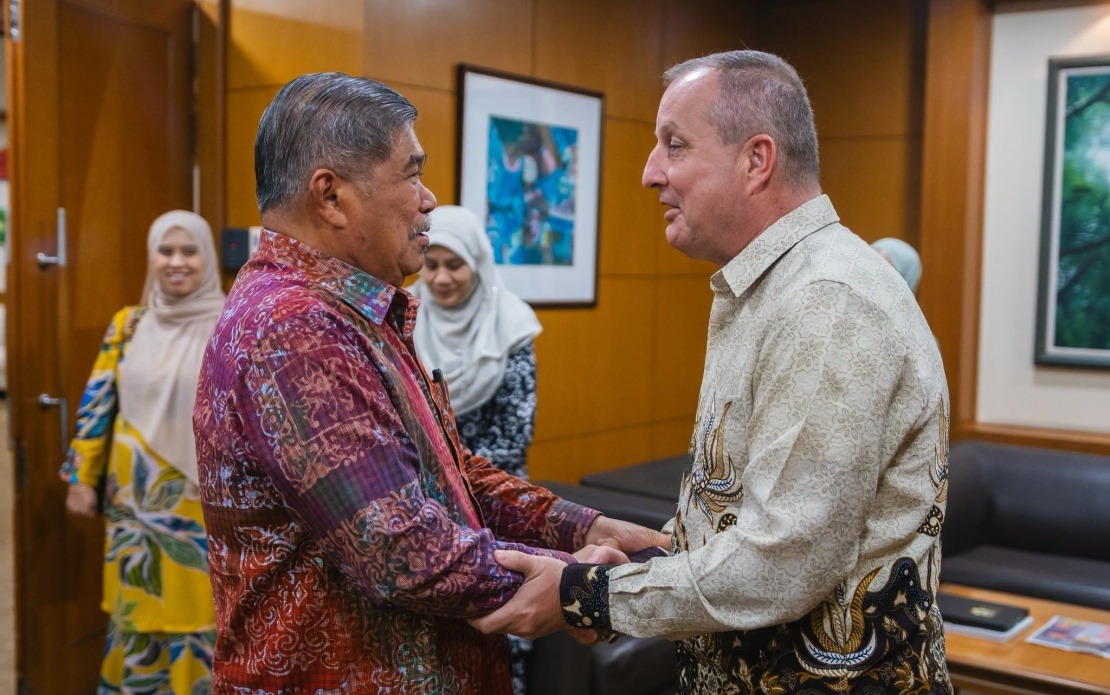
Malaysia and Hungary are moving to deepen their agricultural partnership, marking a significant step toward strengthening food security and fostering innovation in the agri-food sector. Agriculture and Food Security Minister Datuk Seri Mohamad Sabu outlined the bilateral agenda following discussions with Hungarian Ambassador to Malaysia Dr. Sándor Sipos, signalling renewed momentum in bilateral ties that extend beyond traditional diplomatic channels into the practical realm of agricultural development and trade.
The strategic cooperation encompasses multiple dimensions designed to generate tangible benefits for stakeholders in both countries. Hungary's participation in the Malaysian Agriculture, Horticulture and Agrotourism Exhibition (MAHA) 2026 represents a high-profile platform for showcasing Hungarian agricultural capabilities to Southeast Asian markets, while simultaneously providing Malaysian agribusiness operators and policymakers with direct exposure to Central European farming methodologies and technologies. This exhibition participation reflects the mutual recognition that cross-regional knowledge exchange can accelerate agricultural modernisation and productivity gains.
Central to the bilateral framework is the inaugural Malaysia-Hungary Joint Working Group (JWG) meeting, which establishes formal mechanisms for coordinating policy initiatives, regulatory harmonisation, and project implementation. Such institutional structures typically address impediments to trade, standardise product specifications, and create predictable conditions for investment in the agri-food value chain. For Malaysia, engaging with Hungary—a nation with considerable expertise in temperate-zone agriculture and EU regulatory frameworks—offers pathways to upgrade technical standards and position Malaysian agricultural exports more competitively in international markets.
Research collaboration between Malaysia's Agricultural Research and Development Institute (MARDI) and Hungary's University of Agriculture and Life Sciences (MATE) forms the intellectual backbone of the partnership. These institutions bring complementary strengths: MARDI's tropical agriculture expertise and MATE's advanced research capabilities in genetics and breeding technology. The Erasmus+ Researcher exchange programme facilitates cross-institutional mobility, enabling scientists and postgraduates to conduct collaborative studies while building lasting professional networks. Such academic partnerships typically yield publications, patent applications, and methodologies transferable to commercial agricultural operations.
The research focus on genetics, breeding technology, and high-quality livestock product development carries particular significance for Malaysia's agricultural sector. Malaysian farmers increasingly face pressure to enhance productivity whilst managing environmental constraints and shifting consumer preferences toward premium, traceable products. Access to Hungarian expertise in selective breeding and animal husbandry—disciplines refined across generations of Central European farming—provides practical insights applicable to Malaysian dairy, poultry, and aquaculture industries. These technical transfers can materialise as improved animal strains, refined feeding protocols, and disease management strategies.
Beyond academic collaboration, the partnership explicitly targets expansion of trade and investment flows in the agri-food sector. Hungary, despite its smaller geographic footprint, maintains robust agri-food export sectors, particularly in grain processing, dairy products, and meat production. Malaysian importers seeking diversified supply sources for processed food ingredients may find Hungarian suppliers offer competitive pricing, reliable quality assurance aligned with EU standards, and supply chain stability. Conversely, Malaysia's position as a tropical agricultural hub offers Hungarian investors opportunities to establish regional distribution networks or acquire stakes in specialty crop production.
The emphasis on expertise, technology, and experience sharing acknowledges a fundamental reality: agricultural development in the 21st century increasingly depends on knowledge mobility rather than capital alone. Farmers, breeders, and agri-entrepreneurs in both countries stand to benefit from exposure to alternative production models, pest and disease management protocols, market development strategies, and digital agricultural technologies. For Malaysian smallholders and medium-sized enterprises, participation in knowledge-sharing initiatives can reduce the cost of innovation whilst building confidence to adopt new practices.
The bilateral agenda also addresses food security—a strategic priority for both nations and the broader Southeast Asian region. Hungary's location within the European Union provides insights into how consolidated, continent-wide food systems function, including early warning mechanisms for supply disruptions, strategic reserves management, and cross-border coordination during crises. Malaysia, as a food-importing nation with significant domestic production capacity, can adapt relevant aspects of European food security frameworks to Southeast Asian contexts. Similarly, Malaysian agricultural resilience in tropical climates offers valuable lessons for European partners adapting to climate change.
The timing of this deepened cooperation reflects broader geopolitical realignments wherein Southeast Asian nations are deliberately broadening their external partnerships beyond traditional Western trading partners. Hungary's participation signals European engagement with the region outside conventional frameworks. For Malaysia, cultivating such partnerships diversifies sources of agricultural technology, reduces dependency on any single supplier nation, and positions the country as an attractive hub for regional agri-food investment and research. This strategic positioning carries medium-term implications for Malaysia's role in regional food system resilience and agricultural innovation leadership.
Minister Mohamad's commitment to strengthening the relationship underscores governmental recognition that agricultural development requires sustained diplomatic effort, institutional investment, and long-term vision. The trajectory from initial discussions to concrete research collaborations, exhibition participation, and investment promotion typically unfolds over multiple years. Success depends on continuity of political will, adequate funding allocations, and persistent engagement by implementing agencies and private sector participants. Both governments appear positioned to move beyond ceremonial exchanges toward substantive cooperation that generates measurable agricultural outcomes.

