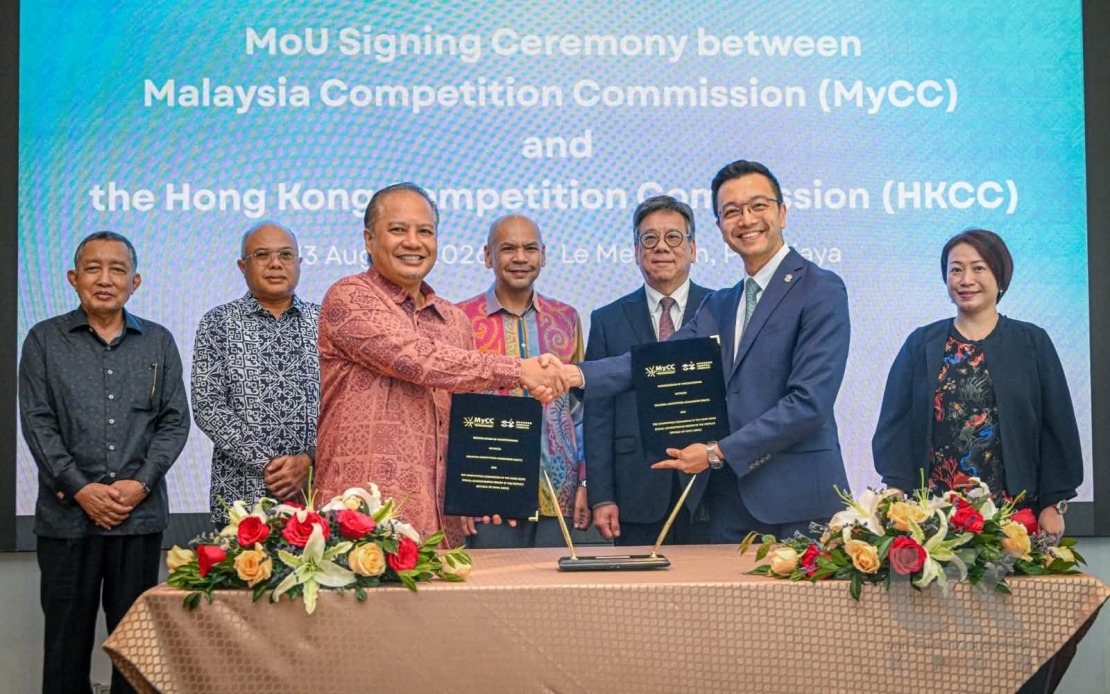
Malaysia's competition watchdog and its Hong Kong counterpart have established a formal partnership to coordinate enforcement action and share expertise on competition matters, signalling a regional push toward tighter oversight of corporate conduct that spans multiple jurisdictions. The Memorandum of Understanding between the Malaysia Competition Commission (MyCC) and Hong Kong Competition Commission (HKCC) was inked in Kuala Lumpur, representing a significant step in addressing the enforcement challenges posed by increasingly integrated Asian markets where companies routinely operate across borders.
Domestic Trade and Cost of Living Minister Datuk Armizan Mohd Ali characterised the accord as part of a broader strategic framework, noting that MyCC has now completed similar bilateral agreements with four major competition authorities. The prior partnerships involved the Türkiye Competition Authority, Korea Fair Trade Commission, and the Philippine Competition Commission, each reflecting Malaysia's commitment to embedding itself within a network of enforcement-focused regulators across Asia and beyond. This sequential approach to building bilateral relationships demonstrates a deliberate policy of embedding Malaysian regulatory interests within international structures.
The timing of the Malaysia-Hong Kong agreement underscores a fundamental shift in how competition authorities across the region perceive their role in an era of digital commerce, supply chain interconnection, and multinational corporate consolidation. As Minister Armizan articulated, the traditional notion of competition enforcement confined within a single nation's borders has become obsolete, particularly in Southeast Asia where economic ties are deeply woven and business activities routinely transgress jurisdictional lines. Companies engaged in e-commerce, logistics, telecommunications, and financial services routinely face scrutiny from multiple regulators, necessitating coordinated rather than fragmented approaches.
The operational dimensions of the cooperation framework encompass several practical mechanisms through which both authorities will strengthen their capacity and coordination. Information exchange sits at the core of the arrangement, allowing MyCC and HKCC to maintain current knowledge of legislative developments, including amendments to competition statutes in each jurisdiction. For Malaysian businesses operating in Hong Kong and Hong Kong firms with Malaysian operations, this transparency can facilitate compliance and reduce the risk of inadvertent breaches stemming from divergent or evolving legal standards across the two territories.
Beyond legislative tracking, the MoU establishes pathways for deeper investigative cooperation, whereby enforcement officers from each commission can share methodologies, case experiences, and evidentiary approaches. This knowledge transfer proves particularly valuable in combating sophisticated cartels and bid-rigging schemes that often involve actors from multiple countries coordinating activity to manipulate prices or exclude competitors. The Malaysian business community, already navigating a complex regulatory landscape encompassing MyCC, sector-specific regulators, and provincial authorities, will find that MyCC's enhanced international cooperation capacity translates into more credible and consistent enforcement signals.
Capacity-building initiatives embedded within the accord will take tangible form through training programmes, workshops, and technical secondments. These mechanisms enable both agencies to benchmark their investigative practices against international standards and expose officials to diverse regulatory approaches. For MyCC, engagement with HKCC's enforcement teams offers particular value given Hong Kong's established role as a financial and trading hub where competition issues often possess sophisticated dimensions. Malaysian regulators can observe how experienced teams handle complex matters involving technology platforms, financial instruments, and multi-jurisdictional conspiracies before such issues become prevalent in Malaysia's own caseload.
The cross-border enforcement dimension addressed explicitly in the MoU reflects the reality that many cartels and anti-competitive practices now operate on a regional or even global scale. A price-fixing conspiracy involving Malaysian palm oil traders and Hong Kong trading houses, or market allocation schemes spanning both economies, cannot be effectively addressed by either authority acting unilaterally. Bilateral cooperation, potentially escalated to multilateral formats involving other regional regulators, becomes the only viable enforcement approach. This represents a substantive evolution from competition enforcement models of previous decades, when authorities largely focused on domestic conduct affecting domestic consumers.
Minister Armizan's framing of the agreement as serving consumer interests and broader economic dynamism reflects the underlying logic of competition enforcement. Rather than viewing competition regulation as burdensome or anti-business, contemporary regulators increasingly emphasise that vigorous enforcement against cartels, monopolistic abuse, and predatory conduct ultimately enhances economic efficiency and consumer welfare. In Malaysia's context, where small and medium enterprises form the backbone of the economy, preventing larger actors—whether domestic or foreign—from engaging in exclusionary practices becomes particularly important for maintaining contestable markets and protecting entrepreneurial entry.
The strategic positioning of these bilateral agreements within KPDN's broader institutional framework suggests competition policy elevation within Malaysia's trade and economic governance architecture. By expanding MyCC's international footprint and anchoring it within an emerging network of regional and global competition authorities, the ministry signals that Malaysia intends to influence the development of competition enforcement standards within Southeast Asia. This contrasts with earlier periods when Malaysia's competition regime was primarily defensive, focused on compliance with WTO standards and regional trade obligations rather than proactive standard-setting.
The implications for Malaysian corporations warrants careful attention. Companies operating across the Malaysia-Hong Kong axis must now assume a higher probability that anti-competitive conduct will be detected and prosecuted through coordinated investigations. The ease with which evidence, witness testimony, and documentary materials can be shared across jurisdictional boundaries means that evasion strategies predicated on regulatory fragmentation become less viable. Simultaneously, legitimate business activities undertaken transparently need not fear heightened scrutiny, as the MoU targets enforcement capacity rather than expanding the substantive scope of prohibited conduct.
Regional dynamics also merit consideration. With MyCC now embedded within a network encompassing Philippines, Korea, Turkey, and Hong Kong, Malaysia is positioning itself as a node within a genuinely transnational enforcement ecosystem. This elevation of Malaysia's regulatory profile can attract compliance-conscious multinational firms seeking jurisdictions where competition enforcement is predictable and internationally coordinated. Conversely, the network can identify enforcement gaps or inconsistencies that allow problematic conduct to persist across multiple jurisdictions, prompting collective action to close such loopholes.
Looking forward, the Hong Kong MoU may function as a template for additional bilateral arrangements with authorities in other significant trading partners or jurisdictions. Minister Armizan's explicit commitment to continuing relationship-building with regional and international competition bodies signals that this agreement represents a waypoint rather than a destination. The articulated goals—sharpening enforcement capacity, building institutional expertise, and maintaining a dynamic competitive ecosystem—point toward a Malaysian competition regime increasingly integrated into international enforcement structures where information flows, investigative capacity, and regulatory standards become more aligned across borders.

