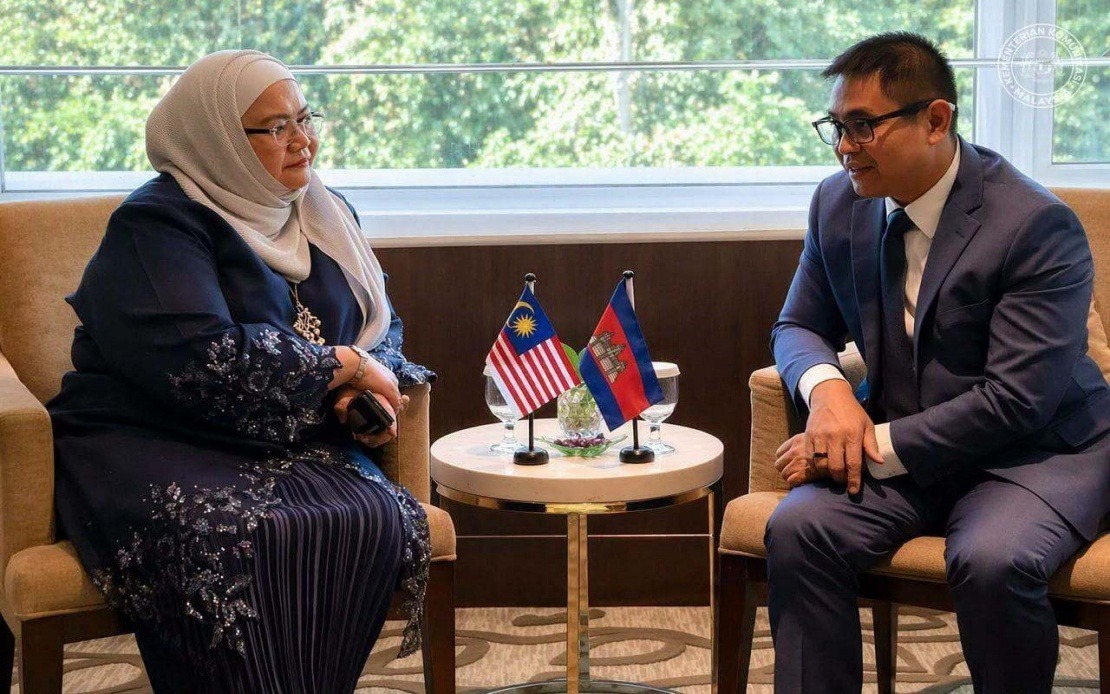
Malaysia and Cambodia are advancing a strategic partnership in the media and communications sector, with officials from both nations meeting this week to chart the course for implementing a newly signed Memorandum of Understanding on Information and Media Development Cooperation. The bilateral discussions took place in Bandar Seri Begawan, Brunei, during the 23rd ASEAN Senior Officials Responsible for Information meeting, bringing together key figures from the communications establishments of both countries to outline concrete next steps for deepening their collaboration in an increasingly complex media environment.
The agreement itself was formally signed on June 20 in Penang during the National Journalists' Day celebrations, with Malaysia's Communications Minister Datuk Fahmi Fadzil and Cambodia's Secretary of State for Information Prak Thaveak Amida executing the accord. For Malaysia, this MoU represents another layer in its broader strategy to position itself as a regional hub for media development and information governance. The timing is significant, as digital transformation and the fight against disinformation have become paramount concerns across ASEAN, with governments increasingly recognising the need for coordinated approaches to media challenges that transcend borders.
Leading Malaysia's delegation during the Brunei meeting was Deputy Secretary-General Datuk Bahria Mohd Tamil, whose role overseeing strategic communications and the creative industry underscores the government's view of media cooperation as integral to broader economic and diplomatic objectives. This positioning reflects an understanding that in the modern information ecosystem, media development is inseparable from national competitiveness and regional influence. Cambodia's participation, headed by Prak Thaveak Amida, demonstrates both nations' commitment to formalising what have previously been ad hoc exchanges into a structured framework for sustained engagement.
The scope of the MoU extends across several interconnected domains that reveal the sophistication of modern bilateral media relations. Information exchange forms the foundation, allowing both countries to share insights and best practices in journalism, broadcasting standards, and content creation. Media development cooperation encompasses capacity building, training programmes, and institutional strengthening that can elevate the professional standards of communicators in both nations. Digital transformation initiatives are particularly crucial, as Malaysia and Cambodia navigate the shift towards digital-first media consumption while grappling with attendant challenges of misinformation and platform governance. These elements collectively address the reality that contemporary media challenges demand responses far beyond traditional regulatory frameworks.
Information integrity and combating disinformation emerged as central themes during the bilateral discussion, reflecting growing regional concerns about coordinated campaigns to spread false narratives and undermine public trust in institutions. This issue carries particular resonance for Malaysia, which has experienced high-profile cases of misinformation affecting public discourse on sensitive political and social matters. Cambodia faces similar pressures, particularly during election periods and times of political sensitivity. By formalising cooperation in this area, both nations can pool resources for fact-checking initiatives, develop shared methodologies for identifying disinformation, and coordinate responses to cross-border information manipulation campaigns.
The Malaysian government's public statements emphasise commitment to deepening friendship alongside advancing institutional cooperation, a diplomatic formulation that reflects the multi-dimensional nature of modern bilateral relations. Media cooperation, in this framing, serves simultaneously as a practical mechanism for addressing shared challenges and as a confidence-building measure that strengthens political ties. The government specifically highlighted that these strategic initiatives are designed to advance both the information and media sectors while reinforcing the bilateral relationship. This dual emphasis suggests recognition that cooperation on neutral technical matters can create momentum for broader engagement.
Within the ASEAN context, this Malaysia-Cambodia agreement fits into a larger pattern of bilateral media arrangements developing across the association. The 23rd SOMRI meeting, which provided the venue for this discussion, itself demonstrates how information officials across ten member states maintain regular dialogue about evolving media landscapes. Malaysia's proactive engagement with Cambodia through this MoU positions it as an initiator of substantive bilateral frameworks rather than a passive participant in multilateral discussions. For Cambodia, the agreement offers access to Malaysian expertise and resources in areas where development needs remain significant, particularly in digital media infrastructure and professional journalism standards.
The creative industry dimension, implicit in the government's framing through Datuk Bahria Mohd Tamil's portfolio, suggests the MoU encompasses not merely governmental information dissemination but also broader cultural and entertainment media sectors. This reflects contemporary understanding that media development includes the entire ecosystem—from news organisations and broadcasters to content creators and digital platforms. Malaysia's growing strength in digital content creation positions it as a potential knowledge partner for Cambodia, while Cambodia's rich cultural heritage and emerging creative sector offer Malaysian stakeholders potential opportunities for collaboration and content sourcing.
Looking forward, the implementation of this MoU will likely proceed through working groups and technical committees that translate broad commitments into specific programmes. Training exchanges, joint research initiatives on media challenges, and coordinated approaches to platform regulation may follow. For Malaysia particularly, successful implementation strengthens its narrative as a responsible communicator within ASEAN and a nation committed to elevating media standards across the region. For Malaysian media professionals and institutions, the arrangement opens potential pathways for engagement with Cambodian counterparts through capacity-building programmes and professional exchanges.
The timing of this bilateral intensification reflects broader regional conversations about information security and media resilience in an era of rapid technological change and contested narratives. Both Malaysia and Cambodia, like other ASEAN members, face pressures from external actors seeking to influence domestic information spaces through coordinated disinformation campaigns. By establishing formal mechanisms for cooperation on these fronts, the two nations position themselves to respond more effectively to emerging challenges. The agreement also signals to other ASEAN members that bilateral frameworks on media matters are not only feasible but increasingly necessary for addressing 21st-century communications challenges.

