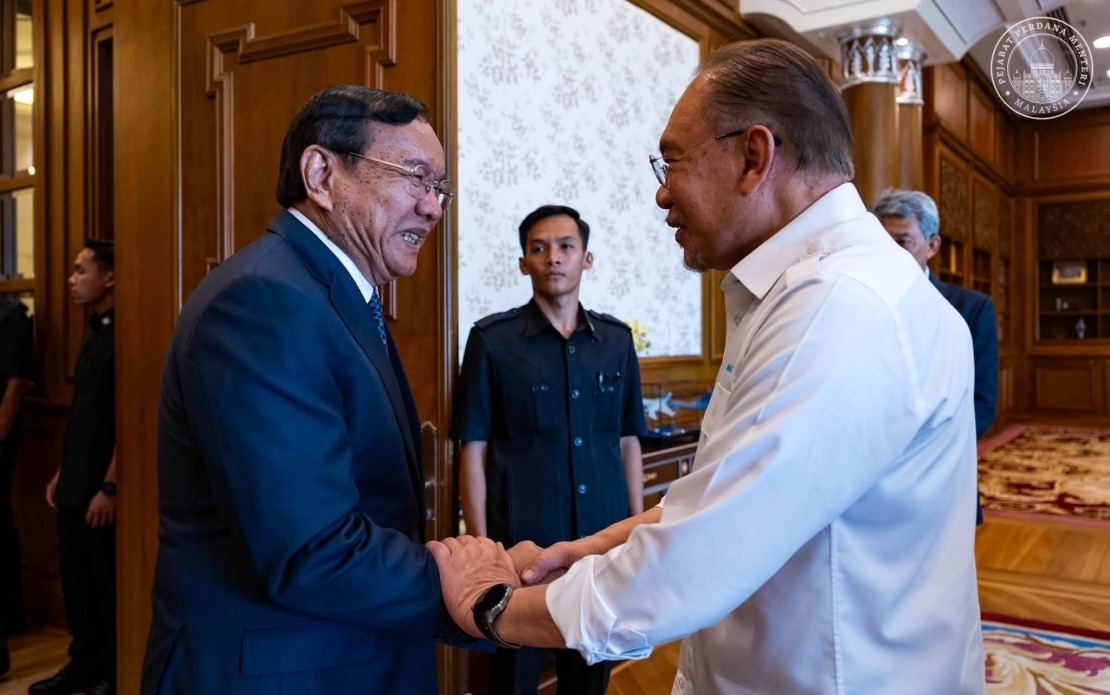
Prime Minister Datuk Seri Anwar Ibrahim has announced a sweeping agenda to reinvigorate the Malaysia-Cambodia partnership, signalling both nations' determination to translate longstanding diplomatic relations into concrete economic and strategic gains. The commitment emerged during a high-level visit by Cambodian Deputy Prime Minister and Minister of Foreign Affairs and International Cooperation Prak Sokhonn, whose two-day stay in Malaysia underscores the momentum building between the neighbouring Southeast Asian economies.
The scope of envisioned cooperation extends across multiple contemporary domains that reflect the region's evolving development priorities. Digital economy integration and artificial intelligence advancement rank prominently on the bilateral agenda, representing recognition that technological capacity will define competitive advantage in the coming decade. These sectors carry particular significance for Malaysia, which has positioned itself as a regional technology hub, and for Cambodia, which seeks to leapfrog traditional development stages through digital infrastructure investment. The emphasis on AI cooperation also signals both nations' awareness that the technology cannot be approached in isolation, requiring coordinated frameworks to ensure responsible deployment and shared economic benefit.
The halal industry component of the partnership holds distinctive regional importance given Malaysia's established position as a global halal standard-setter and certifier. Cambodia's growing Muslim population and potential as both a producer and consumer of halal-certified goods present complementary opportunities. Strengthening this sector creates pathways for Malaysian expertise transfer, investment in Cambodian halal-compliant production facilities, and joint marketing initiatives that could enhance both nations' international standing in a burgeoning global halal market valued at hundreds of billions of dollars annually.
Food security cooperation addresses immediate Southeast Asian vulnerabilities exposed by recent global supply chain disruptions and climate variability. Malaysia's advanced agricultural technology and Cambodia's substantial arable land and labour resources could be combined to enhance regional resilience. Such collaboration is particularly timely given rising concerns about resource scarcity across ASEAN and the need to ensure that development does not outpace the region's capacity to feed its populations sustainably.
Human capital development initiatives reflect deeper strategic thinking beyond immediate economic returns. Investing in education, vocational training, and professional development creates intergenerational bonds between the populations while building the skilled workforces both economies require. Educational exchange programmes, technical training partnerships, and scholarship opportunities also serve as soft power instruments that cultivate long-term affinity and understanding.
Cross-border crime prevention represents the security dimension of this comprehensive partnership. Human trafficking, drug smuggling, and other transnational criminal activities pose genuine threats to both nations. Coordinated law enforcement efforts, intelligence sharing, and capacity building in border security enhance mutual protection while addressing challenges that no single nation can effectively combat alone. This cooperation also underpins the stability necessary for legitimate commerce and investment to flourish.
The timing of this diplomatic reactivation assumes additional significance as Malaysia and Cambodia prepare to commemorate the 70th anniversary of their diplomatic relations in 2027. This milestone provides both nations with a natural moment for reflection on their historical journey and an opportunity to project renewed commitment forward. Prime Minister Anwar's framing of the relationship as reflecting "close friendship and enduring strategic partnership" emphasises continuity alongside modernisation—honouring the past while building for the future.
The Third Malaysia-Cambodia Joint Commission for Bilateral Cooperation meeting scheduled for August 4 serves as the institutional mechanism through which these aspirations will be operationalised. Such joint commissions provide structured forums for translating political will into working arrangements, identifying specific projects, allocating resources, and establishing accountability mechanisms. The comprehensive nature of the declared cooperation agenda will require detailed sectoral working groups to translate broad commitments into actionable programmes with measurable outcomes.
Within the broader ASEAN context, Malaysia-Cambodia cooperation carries implications extending beyond the bilateral relationship. As member states of the regional bloc, both nations share institutional responsibilities for achieving the ASEAN Community Vision 2045 framework. Enhanced bilateral cooperation in sectors like digital economy and food security generates spillover benefits for the wider region through knowledge transfer, technology diffusion, and integrated supply chains. Conversely, ASEAN unity and stability remain prerequisite conditions for pursuing ambitious national and bilateral development agendas.
For Malaysian stakeholders, this partnership renewal presents tangible opportunities. Malaysian technology firms, agricultural enterprises, halal product manufacturers, and educational institutions all stand to benefit from expanded market access and collaboration frameworks in Cambodia. The cooperation also reinforces Malaysia's positioning as a regional centre for expertise in high-value sectors, enhancing its capacity to shape Southeast Asian development trajectories.
Cambodia similarly gains substantively from partnership deepening. Access to Malaysian capital, technology, and institutional knowledge accelerates development in priority sectors. The halal industry cooperation can transform Cambodia into a significant regional producer. Enhanced food security partnerships support longer-term development resilience. Investment in human capital through educational cooperation builds the institutional foundations for sustained growth.
The bilateral cooperation agenda also demonstrates ASEAN's capacity for constructive engagement despite regional complexities. Malaysian-Cambodian relations have historically been stable, and their reactivation reflects confidence in regional mechanisms and shared interests. This positive dynamic contributes to the broader Southeast Asian stability that enables all nations in the region to focus on development rather than conflict management.
Looking forward, the success of these initiatives will depend on implementation rigour and resource commitment. Grand declarations require follow-through by government agencies, private sector participation, and realistic timelines. The institutions created through the joint commission framework will be tested by their ability to deliver concrete outcomes that benefit both populations and create sustainable value across the partnership.

