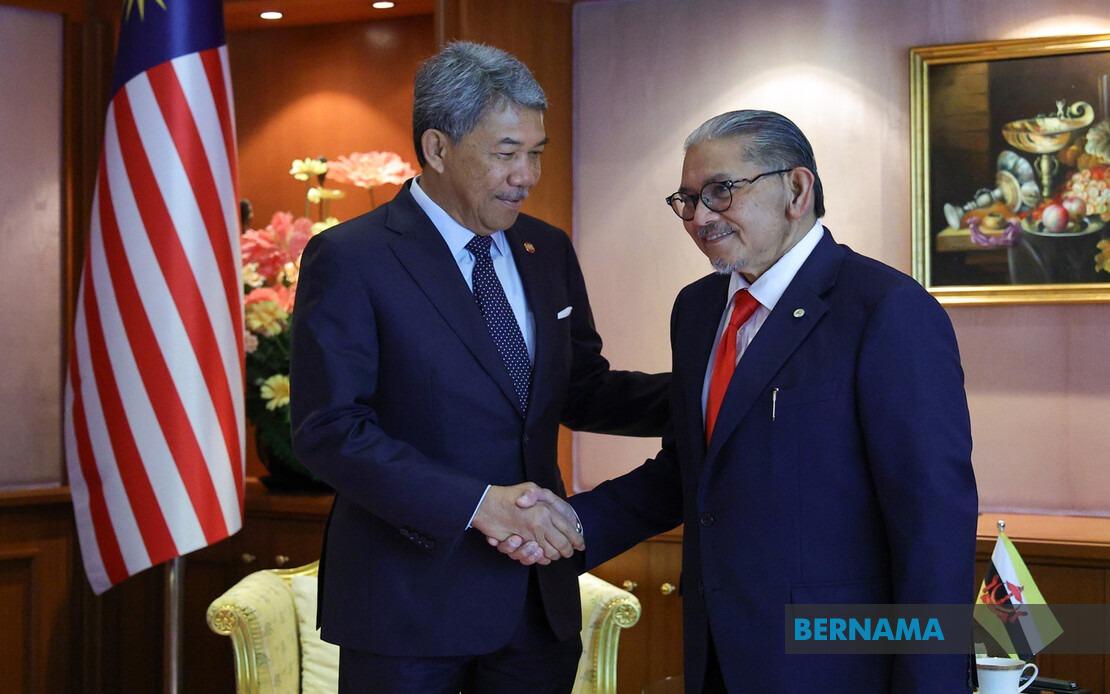
Malaysia and Brunei are cementing their longstanding diplomatic partnership through ongoing multilateral engagement, with both nations advancing on critical issues ranging from territorial demarcation to regional security cooperation. The 27th Meeting on the Implementation of the Exchange of Letters (EOL-27), held in Bandar Seri Begawan on August 21, represented the latest chapter in the two countries' sustained effort to harmonise policies and strengthen institutional frameworks that underpin their relationship.
The meeting brought together Foreign Minister Datuk Seri Mohamad Hasan and Brunei Second Minister of Foreign Affairs Datuk Seri Setia Erywan Mohd Yusof in a co-chaired format, signalling the shared commitment both governments place on regular dialogue at senior levels. These structured meetings, conducted under the Exchange of Letters framework, have become a hallmark of Malaysia-Brunei engagement, providing a formal mechanism through which both nations can systematically address outstanding bilateral matters and explore new areas of mutual interest.
One of the most substantive outcomes from the gathering centred on the land and maritime boundary demarcation process, a complex undertaking that requires meticulous coordination between technical teams on both sides. Mohamad disclosed that approximately 50 per cent of the boundary demarcation work had been completed, marking tangible progress on an issue that carries both practical and symbolic significance for the two neighbours. While the existing boundary itself has been established, the demarcation exercise serves the more granular purpose of precisely marking the line on the ground, taking into account the intricate topography and various ground-level circumstances that characterise the terrain between Malaysia and Brunei.
The demarcation process itself adheres to technical standards and diplomatic protocols set out in the 2009 Terms of Reference (TOR), a framework that both countries agreed to follow in order to ensure the exercise remains systematic, transparent, and mutually acceptable. The Foreign Minister explained that a technical committee operates continuously to assess conditions on the ground and prepare reports that inform the next phases of demarcation. This methodical approach reflects the care with which Malaysia and Brunei treat their shared borders, viewing the process not as a contentious issue but rather as an opportunity to strengthen mutual understanding and prevent misunderstandings that could arise from ambiguity.
Beyond boundaries, the two nations have identified search and rescue coordination as a priority area warranting formalised cooperation. The EOL-27 meeting advanced discussions on establishing a comprehensive Search and Rescue (SAR) mechanism, with both governments preparing to execute a memorandum of understanding that will institutionalise their maritime and land-based emergency response capabilities. For a region where natural disasters, maritime accidents, and other emergencies can strike suddenly and affect multiple jurisdictions, coordinated SAR arrangements prove invaluable in ensuring rapid, effective response and potentially saving lives.
The proposed SAR MoU reflects the evolving nature of bilateral cooperation in Southeast Asia, where traditional security and sovereignty concerns increasingly coexist with transnational challenges that demand cross-border coordination. By formalising procedures, communication protocols, and resource-sharing mechanisms, Malaysia and Brunei are positioning themselves to respond more effectively to emergencies affecting either nation's waters or territory. This development also holds indirect benefits for maritime commerce and civilian aviation, sectors that depend on reliable emergency response infrastructure.
A third dimension of the meeting concerned facilitated movement for the populations of Brunei, Sarawak, and Sabah. The three regions share geographic proximity and historical connections, yet cross-border travel and commerce had long been constrained by administrative procedures and regulatory requirements. By focusing on measures that ease legitimate movement of people, both governments acknowledge the practical realities of life in a region where family ties, business networks, and cultural links frequently transcend formal borders. Streamlined cross-border procedures can generate economic benefits through increased tourism, trade, and people-to-people exchange, while maintaining necessary security and immigration controls.
For Malaysia particularly, the emphasis on facilitating movement within the Borneo region carries political and economic weight. Sarawak and Sabah, as East Malaysian states, have historically maintained distinct relationships with Brunei separate from the peninsula's ties to the sultanate. By embedding border facilitation measures within a broader bilateral framework, Malaysia ensures that East Malaysian interests—especially those of border communities and regional businesses—receive proper attention and integration into national foreign policy objectives.
The timing and substance of EOL-27 also signal stability in Malaysia-Brunei relations at a period when several Southeast Asian bilateral relationships face strain over maritime claims, trade disputes, or other contentious matters. Malaysia and Brunei have generally managed to keep their relationship on an even keel, avoiding the public acrimony that sometimes characterises other intra-ASEAN disputes. This collaborative stance reflects shared interests in regional stability, mutual respect for each other's sovereignty, and pragmatic recognition that both nations benefit more from cooperation than confrontation.
The meeting's focus on technical implementation—boundary demarcation percentages, SAR coordination protocols, facilitated movement procedures—underscores a mature diplomatic relationship focused on substantive outcomes rather than rhetorical positioning. Both governments appear content to make steady, incremental progress on long-standing issues rather than rushing toward agreements that might prove unstable or fail to address underlying concerns. This patient approach, while sometimes less dramatic than headline-grabbing diplomatic initiatives, often yields more durable results.
Looking ahead, the completion of the remaining 50 per cent of boundary demarcation will likely occur in phases, with the technical committee continuing its ground-level work while senior officials monitor progress through forums such as EOL meetings. The SAR MoU, once signed, will require operational procedures to be developed and regular joint training or coordination exercises to maintain readiness. Measures facilitating cross-border movement will need careful calibration to balance openness with security screening.
For regional observers, the Malaysia-Brunei partnership offers a model of bilateral management that emphasises dialogue, technical cooperation, and incremental problem-solving. In an era when major power competition and nationalist sentiment sometimes drive more confrontational diplomatic postures, the measured, institutionalised approach favoured by these two neighbours merits attention. Their example suggests that sustained attention to bilateral relationships, combined with well-structured mechanisms for dialogue and genuine commitment to resolving substantive issues, remains a viable and productive path in contemporary Southeast Asian international relations.

