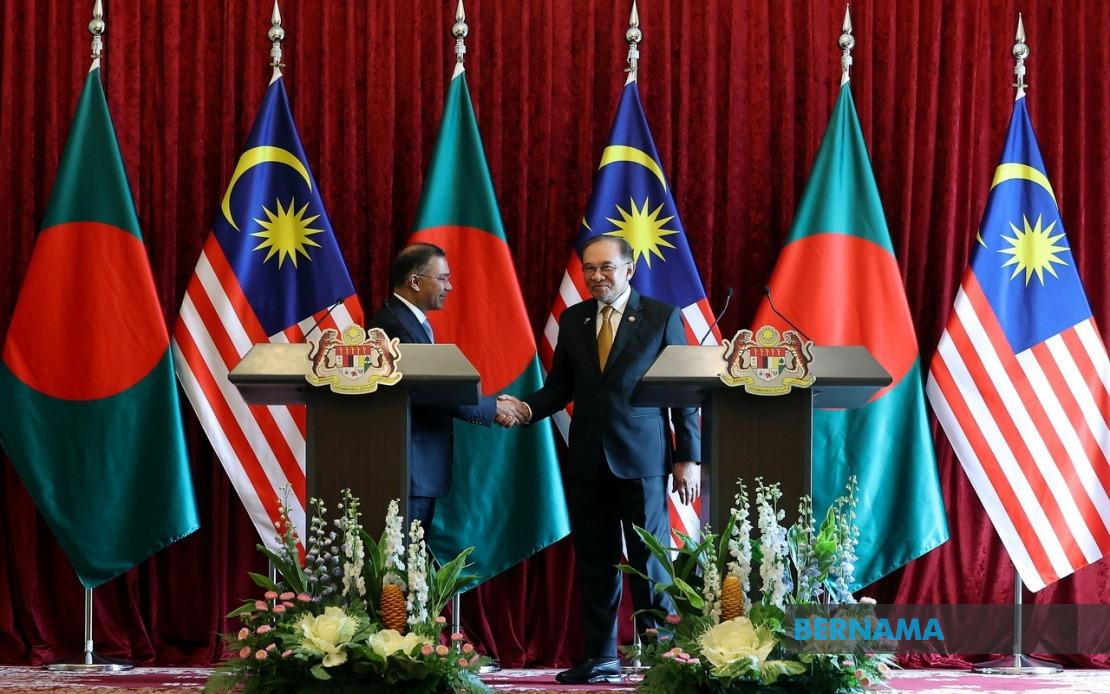
Malaysia and Bangladesh have reaffirmed their commitment to eliminating the systematic exploitation and mistreatment of migrant workers, marking a significant moment in bilateral cooperation on labour standards. During a joint press conference in Putrajaya on June 22, Prime Minister Datuk Seri Anwar Ibrahim and Bangladesh Prime Minister Tarique Rahman acknowledged that while foreign workers remain essential to Malaysia's economic prosperity, both governments bear a responsibility to establish safeguards that prevent abuse and ensure dignity in the workplace.
Anwar highlighted the paradox facing Malaysia's labour-dependent economy: the nation's continued reliance on foreign workers has simultaneously created vulnerabilities that unscrupulous actors exploit. He characterised the human resource sector as critical to Malaysia's economic survival, yet noted that it has become marred by numerous scandals and humanitarian concerns that threaten both the reputation of Malaysian employers and the wellbeing of vulnerable workers. This acknowledgment represents a departure from dismissive attitudes that once dominated policy discussions, signalling growing recognition that labour exploitation carries economic and reputational costs for the country.
The two leaders stressed the need for recruitment systems that operate with greater transparency and fairness to both workers and employers. Anwar emphasised that any framework governing migrant labour must reflect the standards and requirements of both Malaysia and Bangladesh, preventing the current situation where workers arrive with mismatched contracts, inflated fees, or promises that go unfulfilled. Such systemic reforms would address long-standing criticisms from human rights organisations that have documented cases of wage theft, document confiscation, and unsafe working conditions affecting Bangladeshi workers in Malaysia.
Central to the agreement is a commitment to protect not only the workers themselves but also their families back home who depend on remittances from Malaysia. Bangladesh, as a major source nation for migrant labour, has particular interest in ensuring that its citizens abroad are not victimised by exploitative recruitment agents or unethical employers. The bilateral emphasis on family welfare reflects understanding that migrant worker vulnerability extends across borders, affecting dependents in origin countries who may have little recourse when exploitation occurs.
Bangladesh's call for Malaysia to expand recruitment of Bangladeshi workers signals both the labour surplus in Bangladesh and the demand for workers in Malaysia, but it comes with an implicit condition: that such expansion occur only within a framework of genuine protections. Tarique specifically requested that Malaysia reopen and expand its labour market to Bangladeshi workers as soon as possible, indicating Bangladesh's eagerness to facilitate this migration corridor. However, this expansion would be meaningful only if accompanied by the enhanced oversight and transparency mechanisms both leaders referenced.
The timing of this agreement reflects broader regional and global pressure on Malaysia to reform its labour practices. Southeast Asia has faced increased scrutiny over migrant worker conditions, with Malaysia particularly vulnerable to criticism given its large undocumented worker population and well-documented cases of trafficking and forced labour. International bodies have repeatedly highlighted Malaysia's need for stronger enforcement of existing labour laws and more rigorous monitoring of recruitment agencies, both domestic and foreign-based.
For Malaysian employers, clearer recruitment standards and transparent processes could paradoxically streamline hiring while reducing legal and reputational risks. Many legitimate businesses have complained that they compete unfairly against unscrupulous operators who undercut wages and ignore regulations. A level playing field with enforced standards might raise labour costs marginally but would protect Malaysia's international standing and reduce the likelihood of sanctions or trade restrictions tied to labour rights.
The agreement also carries implications for the broader ASEAN labour market. As other Southeast Asian nations grapple with similar issues regarding migrant worker protection, any meaningful reforms achieved through Malaysia-Bangladesh cooperation could serve as a model for regional approaches. The success of such bilateral arrangements depends critically on implementation, particularly whether both governments commit resources to monitoring and enforcement rather than allowing the agreement to remain symbolic.
Bangladesh's labour export industry supports millions of families, making the terms of employment in destination countries vitally important to the nation's social stability. Enhanced protections for Bangladeshi workers in Malaysia would demonstrate that large-scale labour migration can occur without sacrificing worker dignity, potentially influencing how other labour-sending nations approach negotiations with destination countries.
For Malaysian workers in the formal and informal sectors, the focus on protecting migrant workers also raises questions about labour standards domestically. If Malaysia commits to transparent, fair recruitment practices for foreign workers, domestic workers might reasonably expect equivalent protections. The agreement thus potentially catalyses broader labour market reforms affecting not only migrant populations but Malaysia's entire workforce.
The next critical phase will involve translating these statements into concrete policy mechanisms. Both governments must establish joint oversight bodies, define standards for recruitment agents, create accessible complaint mechanisms for workers, and commit to regular monitoring. Without such institutional follow-through, the agreement risks becoming merely aspirational rather than transformative.
As Malaysia seeks to position itself as a responsible migration destination within Southeast Asia, and as Bangladesh manages the welfare of millions working abroad, this bilateral commitment represents a necessary step toward more ethical labour practices. The extent to which both nations implement these principles will determine whether this marks a genuine inflection point in how migrant workers are treated or simply another round of diplomatic statements without substantive change.

