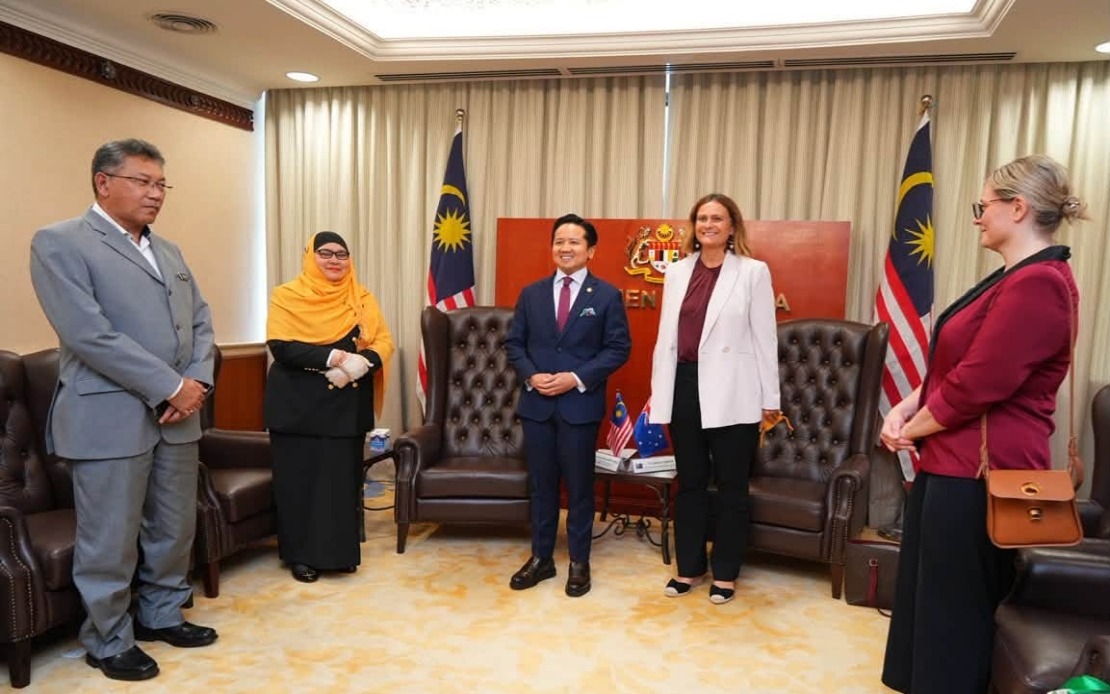
Malaysia and Australia have signalled their intention to strengthen collaboration in the rare earth elements and critical minerals sectors, with particular focus on building domestic manufacturing capacity for neodymium magnets. The initiative emerged from discussions between Malaysia's Natural Resources and Environmental Sustainability Minister Datuk Seri Arthur Joseph Kurup and Australian High Commissioner to Malaysia Danielle Heinecke during a meeting at Parliament building on August 12, marking a significant deepening of the two nations' strategic relationship in resource development.
The cooperation framework reflects Malaysia's strategic pivot towards developing a comprehensive domestic rare earth value chain that spans the entire production spectrum, from processing through to final manufacturing stages. This ambition sits squarely within the parameters of the National Mineral Policy 3, which positions Malaysia to establish competitive advantages in high-value mineral transformation rather than remaining a passive supplier of raw materials. By tapping into Australia's well-established technical capabilities and expertise in the critical minerals sector, Malaysia aims to leapfrog traditional development stages and accelerate its ascent in the global rare earth supply chain.
Neodymium magnets represent one of the most sought-after outputs in the rare earth value chain, commanding premium prices due to their essential role in renewable energy technologies, electric vehicle motors, and advanced defence systems. Currently, the global neodymium magnet market remains heavily concentrated in China, creating supply vulnerabilities for Western-aligned economies and their industrial partners. Malaysia's push to establish domestic manufacturing capacity addresses both national economic interests and emerging geopolitical considerations around supply chain diversification and de-risking from over-reliance on single-source suppliers.
A particularly technical but strategically important dimension of the bilateral discussions centred on the management of neutralisation underflow residue, or NUF, a byproduct generated during rare earth processing. The handling of such residues carries significant environmental implications, and collaborative efforts to establish best-practice protocols could position Malaysia as an environmentally responsible rare earth processor. This matters considerably given international scrutiny of environmental standards in rare earth production and the preference among Western manufacturers for suppliers demonstrating robust environmental governance. Australia's expertise in this realm offers valuable benchmarking and technical knowledge transfer opportunities.
The partnership gains additional significance when viewed against the backdrop of Malaysia's broader commitment to sustainable resource management and green economic growth. Rather than pursuing rare earth development through conventional extraction-heavy approaches, the framework emphasises environmental stewardship alongside economic extraction, potentially differentiating Malaysian producers in markets increasingly influenced by environmental, social, and governance considerations. This positioning resonates particularly well among multinational corporations seeking politically stable and environmentally conscious suppliers for their critical supply chains.
Beyond minerals, the discussions encompassed a notably diverse portfolio of environmental and climate-related cooperation. Both governments explored coordination on hazardous waste management protocols, marine ecosystem conservation initiatives, and climate financing mechanisms. Malaysia's commitment to the United Nations Climate Change Conference scheduled for 2031 featured prominently, underscoring how resource development conversations in modern bilateral diplomacy increasingly intertwine with climate action commitments. The breadth of these discussions reflects a recognition that sustainable economic partnerships must address environmental imperatives alongside commercial objectives.
These developments occur within the established framework of the Malaysia-Australia Comprehensive Strategic Partnership, which was formally established in 2021. That overarching arrangement has provided the diplomatic infrastructure through which more specialised technical partnerships can flourish. The current initiative on critical minerals represents an organic deepening of that framework, demonstrating how bilateral relationships evolve through targeted sectoral cooperation that benefits both parties. For Malaysia, the partnership offers access to world-class technical knowledge and proven operational best practices. For Australia, engagement with Malaysia helps ensure reliable and diversified markets for its critical minerals expertise and strengthens regional relationships within Southeast Asia.
From a broader Southeast Asian perspective, Malaysia's pursuit of rare earth manufacturing capacity carries ripple effects across the region. Successful development of a competitive domestic rare earth processing and magnet manufacturing sector could establish Malaysia as a regional hub for such industries, attracting downstream manufacturing of REE-dependent products. This clustering effect might stimulate technology transfer throughout the region and create employment opportunities in high-skilled manufacturing sectors. Other regional economies would likely monitor Malaysia's progress closely, potentially spurring similar initiatives elsewhere in Southeast Asia.
The timing of this bilateral cooperation also warrants consideration. Global supply chain disruptions and escalating geopolitical tensions have heightened awareness among Western industrial economies regarding the vulnerabilities created by concentrated rare earth supplies. Western governments and companies increasingly seek to develop diversified, trustworthy supply relationships beyond China. Malaysia, with its established manufacturing base, stable governance, and geographic position within the Indo-Pacific region, presents an attractive alternative source. The Kurup-Heinecke discussions effectively position Malaysia to capture a growing share of Western critical minerals demand.
Looking ahead, the practical implementation of these cooperative initiatives will determine their ultimate impact. Developing domestic neodymium magnet manufacturing requires substantial capital investment, skilled workforce development, and potentially favourable regulatory frameworks to attract manufacturing partnerships. Australia's willingness to share technical expertise suggests confidence in Malaysia's capacity to execute such development plans. The exchange of best practices on residue management and environmental protocols will require sustained institutional coordination and possibly formal agreements specifying knowledge-sharing mechanisms and technical personnel exchanges.
The convergence of commercial opportunity and environmental responsibility that characterises this partnership reflects evolving expectations around how natural resource industries should operate in the contemporary global economy. Malaysia has the opportunity to establish itself as a model for responsible rare earth development, combining industrial scale with environmental consciousness. Success would enhance Malaysia's attractiveness as a manufacturing partner for technology companies seeking ethically and environmentally sound supply chains, potentially translating into competitive economic advantages that extend well beyond the rare earth sector itself.

