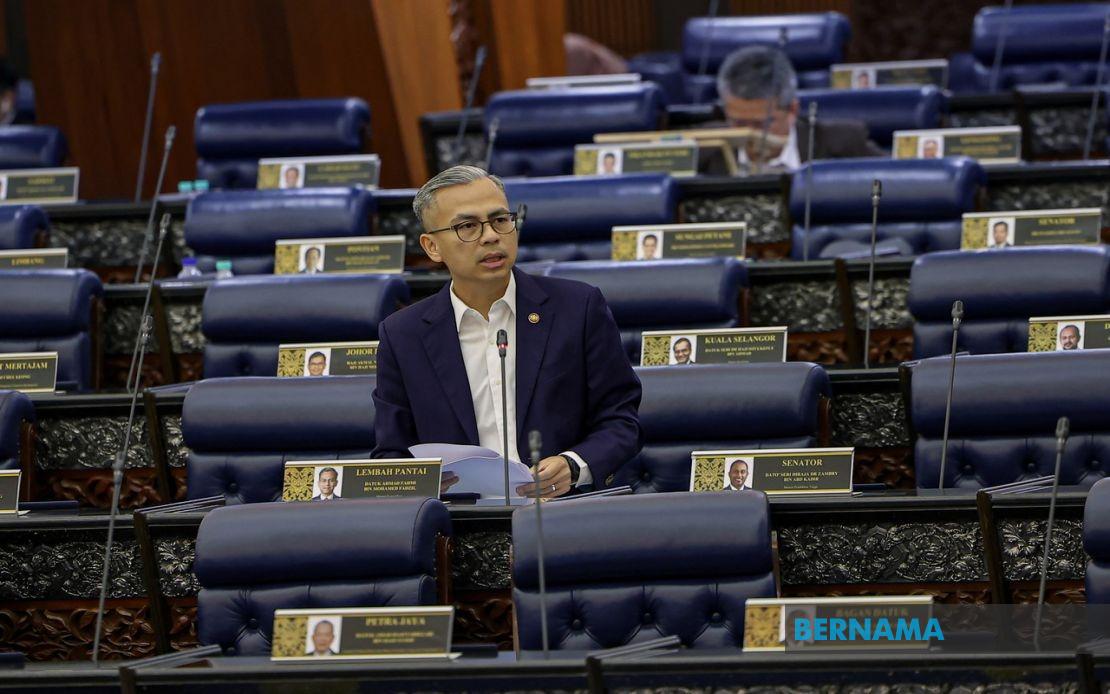
Communications Minister Datuk Seri Fahmi Fadzil introduced the Communications and Multimedia (Amendment) Bill 2026 to Parliament on July 13, launching a legislative effort to reshape how Malaysia's telecommunications sector serves broader state security objectives. The measure underwent its first reading in the Dewan Rakyat, with plans for second reading during the current parliamentary session, signalling the government's intention to move the legislation forward without substantial delay.
At its core, the Bill modifies Section 202 of the Communications and Multimedia Act 1998, inserting two new subsections that fundamentally expand the Minister's authority over the Malaysian Communications and Multimedia Commission (MCMC). Rather than limiting universal service obligations to connectivity and affordability—traditional pillars of telecommunications policy—the amendments explicitly weave national security considerations into the regulatory framework. This represents a significant conceptual shift, treating communications infrastructure not merely as a commercial utility but as an asset integral to state resilience and protection.
The proposed new subsection 202(1A) grants the Minister discretionary power to direct the MCMC to champion universal service initiatives wherever national security imperatives demand it. These initiatives could encompass encouraging network facility installation, expanding network or application service coverage, or both, provided the relevant authorities determine such actions serve national security interests. Critically, the Bill assigns determination of those security interests exclusively to the National Security Council operating under its own 2016 legislation, creating a gatekeeping mechanism that insulates security-based telecom decisions from standard regulatory review.
This delegation of security assessment authority to the National Security Council rather than keeping it within the communications regulator's domain reflects a deliberate institutional choice with significant implications. The NSC operates in a different legal and procedural environment than MCMC, typically affording ministers and senior officials greater confidentiality and flexibility in decision-making. By routing security determinations through that channel, the Bill enables telecommunications policy to be shaped by considerations that may remain opaque to industry stakeholders, competing service providers, and consumer advocacy groups who normally engage in telecommunications regulation.
The legislative approach also contemplates a broadened definition of what qualifies as a universal service obligation. Traditional frameworks centred on ensuring all Malaysians could access basic telephony or broadband at affordable prices. The amended law pivots toward a security-centric model where the state can mandate service expansion, facility development, or technology adoption based on protective grounds rather than purely developmental ones. This could potentially encompass requirements for network redundancy, data localisation measures, or preferential support for domestically controlled infrastructure.
Subsection 202(1B) introduces a safeguard requiring that any national universal service initiative remain consistent with the parent Act's original objects, which include promoting competition, protecting consumer interests, and ensuring efficient service delivery. Whether this consistency requirement meaningfully constrains security-driven mandates or functions as a formality remains unclear, as courts would need to adjudicate potential conflicts between security directives and traditional regulatory objects. The tension between these objectives could become a future flashpoint in Malaysian telecommunications policy.
The Bill's second component, contained in Subclause 2(b), empowers the Minister to promulgate regulations under Section 16 of the principal Act regarding national universal service initiatives. This secondary rule-making authority allows implementation details to be established beyond primary legislation, potentially enabling rapid adjustment as security threats evolve or technological conditions change. However, it also means much of the substantive policy may be determined through administrative process rather than parliamentary debate, limiting the transparency afforded by legislative scrutiny.
Government officials emphasised that the amendment responds to rapid evolution within the communications and multimedia sector, noting that technological advancement and shifting national security needs justify regulatory recalibration. This framing positions the Bill as a modernisation exercise rather than a regulatory overreach, suggesting that traditional universal service frameworks simply lack the flexibility and security orientation contemporary Malaysia requires. Whether that rationale persuades international observers, industry players, or opposition critics remains uncertain.
A notable feature of the legislative package is the government's assertion that implementation will impose no additional financial burden on the public purse. This claim warrants scrutiny, as directing the MCMC to undertake new security-related initiatives could generate costs that shift to the regulator's budget, licensed operators through compliance requirements, or consumers through service pricing adjustments, even if no direct government appropriation materialises. The financial impact may therefore be distributed rather than eliminated.
For Malaysian telecommunications providers, the amendment introduces fresh regulatory uncertainty. Operators must anticipate that security considerations could justify mandates to modify networks, prioritise certain users or regions, or adopt particular technologies regardless of commercial logic. Mid-sized and smaller carriers may face particular strain if security initiatives require capital expenditure on redundant facilities or alternative infrastructure. Foreign investors in Malaysian telecom ventures may also reassess their appetite for exposure to a regulatory environment where state security determinations can override standard commercial considerations.
Regionally, the Bill adds another layer to Southeast Asia's broader trend toward telecommunications governance centred on state control and national security. Neighbouring countries including Singapore, Vietnam, and Indonesia have similarly expanded regulatory authority over telecom infrastructure in recent years, though Malaysia's approach of explicitly integrating national security into universal service law is particularly direct. This convergence suggests a regional pattern whereby traditional notions of light-touch utility regulation yield to security-centric frameworks that grant governments expansive discretion over communications networks.
The amendment also signals Malaysia's engagement with global conversations about controlling digital infrastructure amid great-power competition and transnational security threats. Nations worldwide increasingly view telecommunications and data networks as critical infrastructure vulnerable to foreign interference, espionage, and military disruption. By amending its legal framework to accommodate security-driven policy, Malaysia positions itself to respond to those perceived threats with domestic legal tools rather than relying solely on international agreements or ad-hoc regulatory interventions.
As Parliament prepares for second reading, stakeholders including industry bodies, consumer groups, and civil liberties advocates will likely scrutinise whether the Bill's framing of security sufficiently protects competition and public interest objectives. The outcome will substantially influence how Malaysian communications policy navigates the intersection of commercial development, consumer welfare, and state security for years ahead.

