The Ministry of Health has committed RM500,000 towards modernising healthcare infrastructure at the Kemar Health Clinic in Gerik, Perak, marking a significant step in extending quality medical services to indigenous communities in one of the country's most geographically challenging regions. Health Minister Datuk Seri Dr Dzulkefly Ahmad announced the immediate allocation during a visit to the facility, emphasising the government's determination to eliminate barriers that have historically prevented marginalised populations from accessing adequate healthcare.
The ageing boat storage facility at Kemar, which has served the clinic for more than 11 years, stands at the heart of this upgrade initiative. The existing structure, deteriorated and capable of housing only a single vessel, has become inadequate for protecting the critical watercraft that form the lifeline of medical service delivery in this riverine landscape. A new, purpose-built storage facility will be constructed using part of the allocated funds, enabling the clinic to properly maintain and secure the boats essential for reaching scattered Orang Asli settlements across the region.
Beyond infrastructure repairs, the ministry plans to strengthen the clinic's operational capacity through strategic asset procurement. A four-wheel-drive vehicle will replace the current ageing transport, improving staff mobility and emergency response capabilities. Additionally, the allocation includes funding for advanced medical equipment, particularly a Video Laryngoscope, a sophisticated device that enhances the clinic's ability to manage critical airway procedures during life-threatening emergencies. These investments reflect a deliberate shift towards equipping remote facilities with technology typically found in urban hospitals.
During his Hulu Perak visit, Dr Dzulkefly also inaugurated the Medik 8 multipurpose boat, a RM350,000 vessel designed to expedite emergency response times across the region's waterways. The 12-passenger boat joins an existing fleet of six boats operated by the health ministry, significantly expanding transportation capacity for medical teams serving over 4,500 Orang Asli residents around the RPS Kemar settlement. For communities entirely dependent on water routes for access to healthcare, such expansion represents a tangible reduction in treatment delays that can determine survival in emergency situations.
The minister's acknowledgment of healthcare workers deserves particular emphasis, as it underscores a reality often overlooked in policy discussions: infrastructure alone cannot deliver healthcare in challenging environments. Doctors, nurses, and boat operators at Kemar routinely navigate treacherous river conditions and adverse weather to fulfil their medical responsibilities. Dr Dzulkefly's recognition of these frontline personnel highlights the human dimension of Malaysia's health equity agenda, a principle articulated through the Malaysia MADANI framework asserting that healthcare is a fundamental right regardless of geographic or economic circumstances.
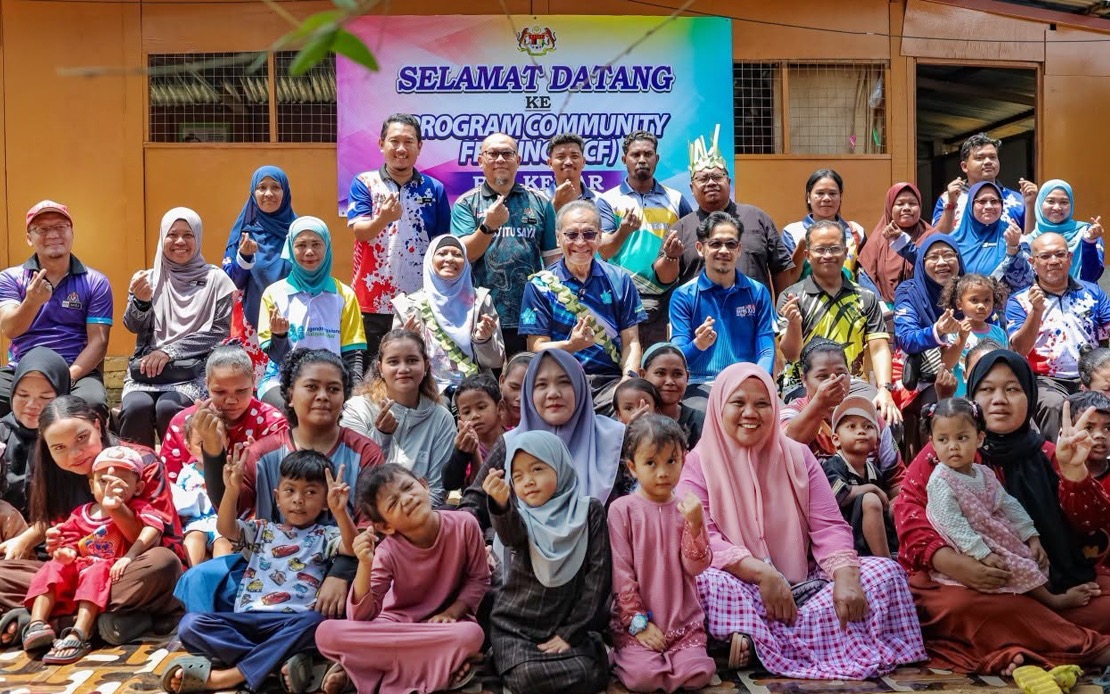
Parallel to infrastructure development, the ministry has achieved measurable health improvements through sustained programmatic intervention. The Community Feeding Programme at RPS Kemar, operating continuously since 2015, targets nutritional deficiencies among Orang Asli children aged six months to six years through comprehensive feeding, milk supplementation, multivitamins, and therapeutic interventions for severe malnutrition. Over a decade, this initiative has dramatically reduced childhood stunting from 75.2 per cent to 50.8 per cent, while underweight rates have declined from 43.7 per cent to 25.2 per cent.
These statistics carry profound implications for regional development and social equity. Childhood malnutrition directly undermines cognitive development, educational attainment, and long-term economic productivity. By addressing nutritional gaps systematically, the ministry is not merely treating immediate health symptoms but investing in the foundational capacities that enable future generations of Orang Asli children to participate fully in Malaysia's economy and society. The reduction in stunting rates from three-quarters to half the child population, whilst still requiring further improvement, represents substantial progress in reversing generations of health disadvantage.
The broader context reveals a deliberate government effort to close the healthcare gap between peninsular Malaysia's urban centres and its most isolated communities. The Kemar Health Clinic upgrade occurs alongside plans for a new Type 5 facility, indicating long-term institutional commitment rather than temporary band-aid solutions. For the Southeast Asian region, where indigenous and remote populations consistently experience worse health outcomes than national averages, Malaysia's approach offers a replicable model combining infrastructure investment, equipment modernisation, operational expansion, and sustained programmatic support.
The challenge facing the ministry extends beyond the Kemar settlement. Numerous other Orang Asli communities across Peninsular Malaysia experience similarly acute healthcare access barriers, suggesting the RM500,000 allocation represents initial progress in a much larger equity undertaking. The success metrics—reduced stunting, improved underweight prevalence, faster emergency response times—provide benchmarks against which future interventions can be measured and refined.
Implementation timelines and coordination between federal and state agencies will prove critical to translating allocations into tangible improvements. The boat storage facility, vehicle procurement, and medical equipment sourcing must proceed efficiently to maximise the allocation's impact. Equally important is ensuring that infrastructure upgrades translate into enhanced service quality for end users, requiring sustained investment in staff training, maintenance protocols, and supply chain management.

