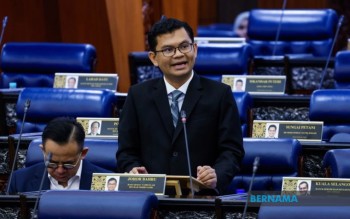
Malaysia's government is executing a comprehensive 120-point action plan designed to cushion the economy against ongoing global supply chain disruptions, Economy Minister Akmal Nasrullah Mohd Nasir revealed in parliament on June 29. The scale of the intervention underscores the severity with which authorities view the crisis and their determination to prevent cascading shocks through the domestic economy. Of the full slate of decisions made by the National Economic Action Council (MTEN), 27 have already been fully operationalised while 93 remain in active implementation, painting a picture of a government juggling immediate relief measures with longer-term stabilisation efforts across multiple fronts.
The breadth of this response reflects recognition that supply chain turmoil touches virtually every economic layer in Malaysia. Small and medium enterprises, which form the backbone of Malaysia's job creation engine, face particular vulnerability when global logistics networks become unreliable and input costs spike unpredictably. The government's strategy therefore targets these businesses directly alongside broader measures to ensure that essential commodities—from food to fuel to medicines—reach consumers without dramatic price shocks. By addressing both the immediate pain points and structural vulnerabilities, the authorities hope to prevent a cascading loss of confidence among businesses and households that could transform a supply problem into a demand crisis.
Akmal Nasrullah's comments to parliament carried an implicit acknowledgement that the global situation will not resolve quickly. Rather than waiting for international conditions to normalise on their own—a passive approach that could prove politically and economically costly—the government has opted for continuous monitoring and targeted intervention throughout what officials expect to be a protracted recovery phase. This represents a significant commitment of administrative resources and political capital, as managing such a prolonged intervention requires constant recalibration based on real-time data and emerging bottlenecks. The MTEN framework provides the institutional machinery for this ongoing coordination, bringing together different agencies and ministries under a unified strategic umbrella.
The minister's assessment of the timeline for stabilisation reveals the scale of the challenge ahead. Energy markets, which ripple through virtually every supply chain globally, are not expected to stabilise until the third quarter of 2026 at the earliest. This projection assumes geopolitical stability and the restoration of normal shipping routes—assumptions that carry their own uncertainties given recent disruptions in key maritime chokepoints. For Malaysia, which relies heavily on energy imports and sits along crucial international trade corridors, this extended timeline underscores why proactive government action matters more than hoping circumstances improve naturally.
Price volatility in energy and raw materials will likely persist for another one to two years according to government analysis, creating an unpredictable operating environment for businesses seeking to plan investment and hiring. This extended period of uncertainty poses particular challenges for Malaysian manufacturers competing in global markets, as they must absorb higher input costs or risk losing competitiveness if they pass them to customers. The government's interventions thus serve a dual purpose: immediate relief to prevent social friction and business failures, but also signals of stability and management competence that may help maintain investor confidence during the turbulent period ahead.
Authorities are framing their approach as neither alarmist nor complacent, but rather grounded in realistic assessment of both risks and Malaysia's capacity to weather them. The government acknowledges that prolonged supply disruptions pose genuine economic dangers if allowed to fester—potential factory closures, layoffs, and reduced consumer spending could follow from sustained shortages and price spikes. However, the structured, data-driven management framework is intended to prevent these risks from materialising into full-blown crises. This messaging appears designed to reassure both domestic and international investors that Malaysia's leadership understands the problem and possesses the tools and determination to manage it effectively.
The emphasis on transparency and stakeholder cooperation marks a significant aspect of the strategy. By committing to share information with the public as situations evolve, the government hopes to build trust and reduce the kind of panic buying or hoarding that can artificially worsen supply shortages. Similarly, calls for cooperation from all economic actors—businesses, labour unions, civil society—reflect recognition that government action alone cannot solve supply problems rooted in global markets. Business cooperation in moderating price increases, worker flexibility in adapting to shifting employment patterns, and consumer understanding during periods of limited availability all become part of the social contract required for successful navigation of the crisis.
For Malaysian small and medium enterprises, the government's 120-point plan offers both practical support and strategic reassurance. Many MSMEs operate with thin margins and limited access to credit, making them particularly vulnerable to the combination of supply uncertainty and rising input costs that characterise the current environment. Direct subsidies for critical inputs, facilitated credit lines, and technical assistance in supply chain restructuring all help these businesses maintain operations during the disruption. Beyond immediate support, the government's visible engagement signals that policymakers view MSME survival as a national priority, potentially influencing bank lending decisions and customer confidence in small business viability.
The international dimension of Malaysia's response carries weight beyond domestic economic management. As a trading nation dependent on regional supply networks and global markets, Malaysia's ability to absorb shocks without major disruption demonstrates reliability to trading partners and investors considering long-term commitments in Southeast Asia. Countries or companies experiencing severe supply chain problems face risks of manufacturing relocation or reduced bilateral trade. By managing the crisis competently, Malaysia positions itself as a stable operational base within a volatile region, potentially attracting businesses seeking to diversify away from more disruption-prone locations.
The focus on monitoring through MTEN and relevant agencies suggests that the 120 decisions represent not a fixed menu of interventions but a framework for continuous adjustment. As new supply bottlenecks emerge or certain measures prove more effective than others, the government can reallocate resources or introduce fresh initiatives. This adaptive approach contrasts with more rigid policy responses that might prove ineffective once circumstances shift. The test of this strategy will come in the months ahead as global conditions either improve or deteriorate beyond current expectations, forcing authorities to demonstrate whether they can execute complex coordinated responses at the scale required.

