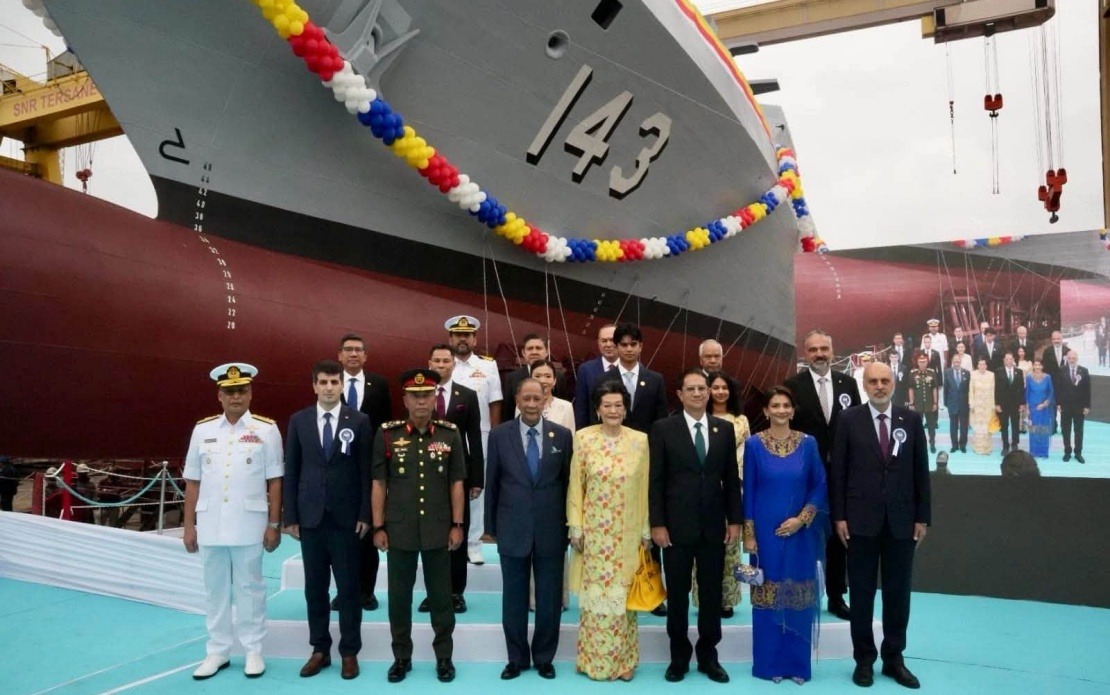
The Royal Malaysian Navy's modernisation programme took another significant step forward with the launch of the third Littoral Mission Ship Batch 2 (LMSB2) vessel, named Tunku Osman Jewa, as Defence Minister Datuk Seri Mohamed Khaled Nordin underscored the strategic importance of maintaining advanced naval assets in an increasingly contested maritime environment. The vessel represents a tangible commitment from the Malaysian government to ensure the RMN possesses the operational capabilities necessary to safeguard national sovereignty and protect the country's substantial maritime interests in Southeast Asian waters.
The naming ceremony, which took place in Kuala Lumpur, honoured the legacy of the late General Tan Sri Tunku Osman Tunku Mohammad Jewa, a distinguished figure who previously served as Malaysia's Armed Forces chief and maintained strong connections to the Kedah royal family. His contributions to the nation's defence establishment are now permanently memorialised through this modern warship, which will serve maritime security operations for decades to come. The ceremonial significance of this naming extends beyond mere symbolism, reflecting Malaysia's desire to connect historical military leadership with contemporary defence modernisation efforts.
The attendance of the Sultan of Kedah, Al Aminul Karim Sultan Sallehuddin Sultan Badlishah, and the Sultanah of Kedah, Sultanah Maliha Tengku Ariff, at the launching ceremony underscored the occasion's prominence within Malaysia's defence and royal circles. Their participation highlighted the state's historical ties to naval affairs and demonstrated formal endorsement of the navy's strategic development. Such high-level royal involvement signals to regional neighbours Malaysia's serious commitment to maintaining credible maritime deterrence capabilities.
The completion of all three LMSB2 vessels represents a crucial milestone in Malaysia's naval acquisition strategy, marking the fulfilment of a significant procurement cycle initiated to address capability gaps within the fleet. These ships incorporate modern design features and operational systems tailored to meet contemporary maritime security demands, including coastal patrol operations, maritime surveillance, and humanitarian assistance missions. The trio of vessels collectively enhances the RMN's capacity to project presence across Malaysia's expansive maritime territory, spanning the Strait of Malacca and the South China Sea.
Perhaps most notably, the LMSB2 programme establishes the first Government-to-Government collaboration between Malaysia and Turkiye in the procurement of naval warships, representing a diplomatic and defence industry milestone for both nations. This strategic partnership with the Turkish defence sector reflects Malaysia's diversification of supplier relationships and technological access, reducing reliance on traditional Western sources while tapping into Turkish naval engineering expertise. Such international cooperation also strengthens bilateral ties and demonstrates Malaysia's willingness to explore defence partnerships beyond established Commonwealth relationships.
Defence Minister Mohamed Khaled emphasised that acquiring these modern vessels forms an integral component of the RMN's broader 15-to-5 Transformation Plan, an ambitious programme designed to comprehensively modernise the naval fleet over the coming years. This strategic framework prioritises replacing ageing vessels with contemporary platforms equipped with advanced sensor systems, enhanced propulsion capabilities, and improved operational endurance. The transformation plan reflects recognition that Malaysia's maritime security challenges have fundamentally evolved, demanding faster response times and greater technological sophistication than legacy systems can provide.
The maritime environment confronting Southeast Asian navies has grown significantly more complex over the past decade, characterised by increased regional great power competition, proliferation of sophisticated maritime technologies, and evolving non-traditional security threats ranging from piracy to maritime terrorism. Malaysia's geographic position astride critical global sea lanes makes comprehensive maritime security capabilities not merely a national concern but a matter affecting international commerce and stability. The procurement of modern warships directly addresses these challenges by ensuring the RMN can conduct sustained operations, maintain situational awareness across vast maritime zones, and respond effectively to emerging threats.
Delivery timelines for the LMSB2 fleet extend through the end of 2027, providing the RMN with a structured acquisition schedule that allows for crew training, systems integration, and operational doctrine development alongside physical delivery of the vessels. This phased approach enables the navy to absorb new capabilities systematically rather than confronting the challenges of deploying multiple novel platforms simultaneously. Malaysian naval personnel will benefit from extended transition periods to master the technological systems incorporated within these modern ships.
The financial commitment underpinning the LMSB2 programme reflects Malaysia's determination to allocate defence resources toward tangible capability improvements despite competing budgetary pressures. These acquisitions demonstrate that defence procurement decisions have evolved beyond simple replacement cycles toward strategic investments aimed at expanding operational reach and combat effectiveness. For Malaysian observers monitoring regional military developments, particularly competition involving larger naval powers, the modernisation programme signals sustained commitment to maintaining a credible maritime presence.
Regional security analysts view Malaysia's naval modernisation with significance extending beyond bilateral considerations, as the RMN's capabilities contribute to broader Southeast Asian maritime security architecture. Enhanced Malaysian naval presence contributes to regional balance, supports maritime law enforcement operations, and reinforces principles of freedom of navigation. The LMSB2 vessels, through their advanced capabilities and international design pedigree, exemplify how smaller maritime nations can strategically upgrade their defence posture.
Looking forward, the successful delivery and integration of these three ships will inform subsequent phases of the RMN's transformation agenda, potentially influencing future procurement decisions and technological preferences. Malaysia's experience with Turkish-designed vessels may create pathways for additional defence industry cooperation, establishing precedents for non-traditional partnerships that could reshape the region's defence procurement landscape. The programme also demonstrates that effective defence modernisation requires sustained political commitment and government investment despite domestic economic pressures.

