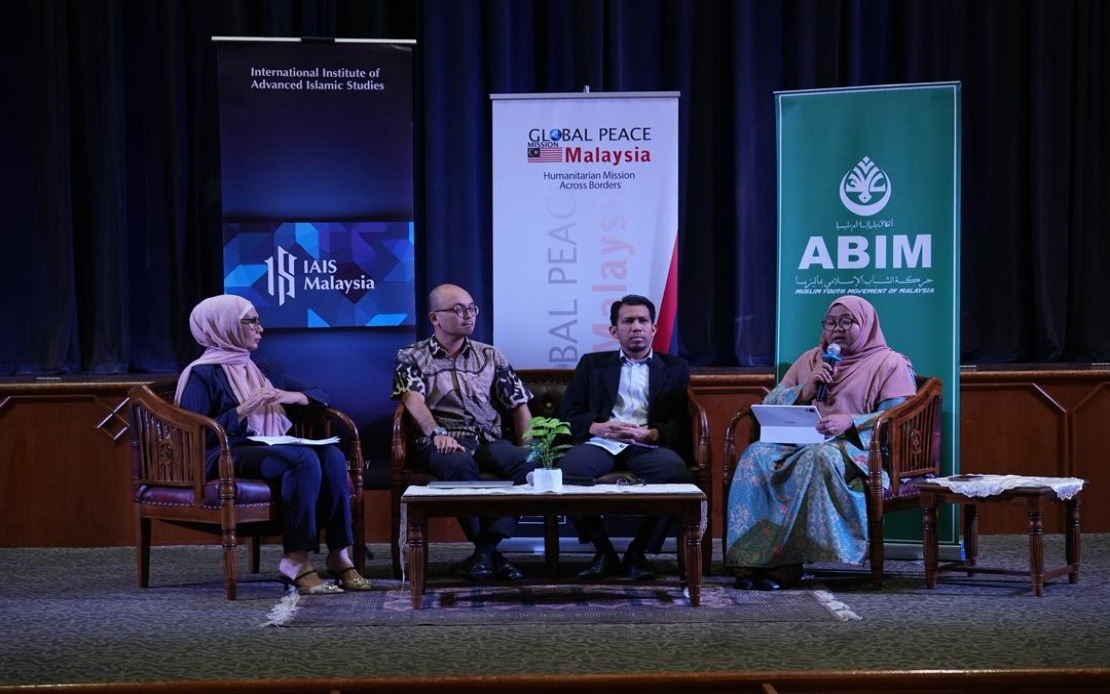
Malaysia's civil society movement has thrown its weight behind a comprehensive framework for managing refugee issues, adopting 10 resolutions at a major conference held to commemorate World Refugee Day. The gathering at the International Institute of Advanced Islamic Studies in Kuala Lumpur brought together representatives from non-governmental organisations, academic bodies, humanitarian agencies, international organisations and community leaders to chart a middle-ground approach that acknowledges both humanitarian imperatives and legitimate public concerns.
The conference, jointly organised by Global Peace Mission Malaysia, Angkatan Belia Islam Malaysia and IAIS Malaysia, reflected growing recognition among stakeholder groups that Malaysia's refugee policy requires recalibration. Rather than adopting polarised positions, the resolutions seek to establish a framework that respects the nation's security interests while honouring its track record of providing sanctuary during humanitarian emergencies. This nuanced stance carries particular significance for a Southeast Asian country that has sheltered waves of refugees from Vietnam, Syria, Bosnia and Palestine over recent decades, demonstrating both capability and commitment to refugee protection despite not being a signatory to the 1951 Refugee Convention.
ABIM president Ahmad Fahmi Mohd Samsudin, speaking after the conference, underscored the organisation's intention to present these resolutions to Members of Parliament and relevant agencies. The strategy reflects a deliberate attempt to move refugee discourse away from emotion-driven narratives toward evidence-based policymaking. Critically, the resolutions represent the accumulated expertise and on-ground insights of NGOs that work directly with refugee communities, positioning them as a valuable resource for government deliberation on more sophisticated management mechanisms.
Among the core resolutions is a firm rejection of all forms of hatred, discrimination and dehumanisation directed at refugees and asylum seekers, while simultaneously acknowledging that public anxieties about security, law enforcement and social cohesion merit serious, fact-based examination. This formulation directly addresses what stakeholders perceive as a false binary—the notion that societies must choose between humanitarian compassion and security consciousness. Instead, the conference articulated a vision where legitimate concerns receive transparent, data-driven responses rather than dismissal.
The resolutions specifically call upon the government to develop a holistic action plan that balances these competing imperatives. Such a plan would require coordination across multiple portfolios, from the Home Ministry to the National Security Council, and would need to incorporate input from the United Nations High Commissioner for Refugees and other international partners. The emphasis on comprehensiveness signals that piecemeal approaches have proven inadequate to the complexity of Malaysia's refugee situation.
A second major recommendation addresses the governance infrastructure surrounding refugee management. Participants endorsed strengthening data collection, registration and documentation systems in collaboration with UNHCR, recognising that orderly, transparent administration serves both humanitarian and security objectives. Better information systems would enable more precise targeting of assistance, more effective identification of genuine protection needs, and improved coordination with law enforcement agencies—outcomes beneficial to both refugee populations and the Malaysian state.
Crucially, the resolutions confront the information environment surrounding refugee issues. Conference participants identified public education, media literacy initiatives and coordinated responses to misinformation as essential components of sustainable refugee policy. In a region where social media has become a primary vector for rumour and xenophobic sentiment, these recommendations address a real vulnerability in Malaysia's current approach. The recognition that unchecked anti-refugee narratives could metastasise into broader social divisions reveals sophisticated political analysis—the understanding that tolerance erodes incrementally, and that hostile sentiments once normalised against one group can readily extend to others.
The resolutions further propose establishing formal channels to support NGOs and humanitarian advocates facing coordinated attacks, disinformation campaigns and hate speech on digital platforms. This recognition of what amounts to a hostile information ecosystem around refugee issues represents acknowledgment that civil society actors require institutional backing to continue their work in increasingly challenging circumstances. Without such protection mechanisms, the capacity of NGOs to advance humanitarian perspectives may progressively diminish.
Ahmad Fahmi's articulation of the broader strategic objective reveals the conference's ambition to reframe refugee discourse entirely. By insisting that refugee issues have been understood through frequently misrepresented narratives, he suggests that Malaysian public opinion has been shaped by distorted framings rather than comprehensive information. The goal of returning the issue to "middle ground" implies recognition that polarisation serves neither humanitarian nor security interests, and that deliberate efforts to restore balanced conversation are necessary.
The conference's timing around World Refugee Day carries symbolic weight, positioning Malaysia as a country capable of sophisticated, humane governance on difficult transnational issues. However, the resolutions' ultimate impact depends on implementation. The announced intention to conduct follow-up discussions with Home Ministry and MKN officials will test whether government agencies embrace this framework. Success would position Malaysia as a regional model for balancing security and humanitarian concerns—a distinction increasingly valuable as displacement crises intensify across Asia.
Looking forward, the resolutions establish benchmarks against which stakeholders can measure policy evolution. If Malaysia moves toward the integrated, evidence-based approach outlined in the conference declaration, it could demonstrate that sophisticated refugee governance and stringent security protocols need not be mutually exclusive. Conversely, failure to advance these recommendations would signal that entrenched bureaucratic approaches or political calculations override civil society input on complex policy matters. For Malaysian observers and the broader Southeast Asian region, the coming months will clarify whether this conference represents genuine policy inflection or symbolic gesturing.

