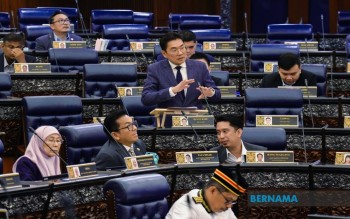
The Malaysian government is undertaking a comprehensive restructuring of its electric vehicle framework aimed at accelerating adoption and building a comprehensive charging ecosystem across the country, according to Deputy Investment, Trade and Industry Minister Sim Tze Tzin. Speaking during parliamentary proceedings on July 8, Sim outlined the administration's multi-pronged approach to transforming the nation's transport landscape while supporting the broader 2050 net-zero emissions commitment.
At the heart of the government's strategy lies a fundamental recognition that charging infrastructure cannot flourish without adequate electrical capacity to support it. The administration is collaborating with Tenaga Nasional Bhd, the nation's primary power utility, to construct additional substations strategically positioned to deliver sufficient electricity for an expanding network of charging points. This infrastructure-first approach reflects an understanding that the EV revolution requires not merely policy frameworks but substantial physical investments in the underlying systems that make widespread adoption feasible.
The charge facility development initiative extends beyond infrastructure coordination to encompass incentive structures designed to attract private operators into the market. Government discussions are underway to design compelling financial mechanisms that would encourage charging facility operators to commit capital to facility construction, recognising that public-sector investment alone cannot meet anticipated demand. Sim acknowledged that this ecosystem-building exercise demands time, resources, and coordinated effort across multiple stakeholders, but stressed that the government has internalized feedback on implementation gaps and remains committed to iterative improvement.
One parliamentary enquiry focused on the government's rationale for imposing a minimum cost, insurance and freight valuation of RM200,000 alongside a minimum power specification of 180 kilowatts exclusively on fully imported electric vehicles, rather than applying such restrictions uniformly across all EV imports. Sim's response illuminated a sophisticated policy architecture that treats electric and internal combustion vehicles fundamentally differently because they operate at distinct stages of industrial maturity and development.
For conventional petrol and diesel vehicles, Malaysia's long-established import framework relies on engine displacement measured in cubic centimetres, permitting only vehicles with engines of 1,800cc capacity or above to enter the country. This ceiling historically protected domestic assembly operations from low-cost competition. Electric vehicles, however, occupy an entirely different regulatory universe because they possess no combustion engines and therefore require alternative metrics for determining import eligibility and tax treatment.
The government's dual mandate requires simultaneously achieving two potentially conflicting objectives: rapidly expanding EV penetration among Malaysian consumers while nurturing local assembly capacity, component manufacturing, and supply chain development. Without such protections, Malaysia risks becoming merely a consumer market for foreign-manufactured electric vehicles rather than developing indigenous industrial capabilities. The challenge intensifies because current tax structures treat EVs far more favorably than their combustion-powered counterparts, with electric vehicles subject to only 10 percent excise duty compared to significantly higher rates for conventional vehicles, which vary according to engine size, vehicle classification, and localisation levels.
The RM200,000 minimum CIF valuation represents a carefully calibrated policy lever designed to prevent tax base erosion through systematic under-declaration of import values. Since excise duty calculations depend critically on the declared value of imported vehicles, and since EV taxation operates under a fundamentally different structure from conventional vehicles, establishing minimum valuation thresholds becomes essential for maintaining government revenue. Without such safeguards, importers might strategically under-report CIF values to minimise tax obligations, creating both fairness problems and fiscal consequences.
These policy mechanisms reflect the government's recognition that nurturing a competitive EV market demands protecting revenue streams while simultaneously encouraging market expansion. The minimum power specification of 180 kilowatts serves similarly to ensure that imported vehicles meet performance standards consistent with consumer expectations and domestic market development plans. Together, these trade and tax measures form part of a broader industrial strategy intended to position Malaysia as an emerging EV manufacturing hub rather than merely a dumping ground for international manufacturers seeking to offload excess inventory.
The parliamentary discussion underscores growing awareness within government that the transition to electric mobility transcends simple regulatory tweaks or consumer incentives. Instead, it demands coordinated action across electricity generation and distribution, import policy, tax treatment, industrial development, and private-sector participation. Sim's responses signalled that while substantial work remains, the administration has moved beyond piecemeal adjustments toward systemic reform of the conditions necessary for sustainable EV ecosystem development.
For Malaysian consumers and businesses, these policy shifts carry immediate implications. Charging infrastructure expansion will gradually improve convenience for EV owners, though the process will necessarily extend over multiple years as substations are constructed and private operators build facilities. The government's emphasis on developing local assembly capacity suggests that EV prices may eventually decline as supply chains mature and domestic production supplements imported vehicles. Additionally, the maintained excise duty differential provides ongoing financial incentives for consumers considering the transition from conventional to electric powertrains.
Regionally, Malaysia's approach mirrors broader Southeast Asian trends toward integrated EV ecosystem development rather than simple technology adoption. Countries across the region are discovering that successful electrification requires aligned action on generation, distribution, manufacturing, and consumer incentives. Malaysia's emphasis on simultaneous infrastructure and industrial development positions the country within this emerging regional consensus, particularly as the bloc collectively targets decarbonisation while maintaining economic competitiveness in automotive manufacturing.

