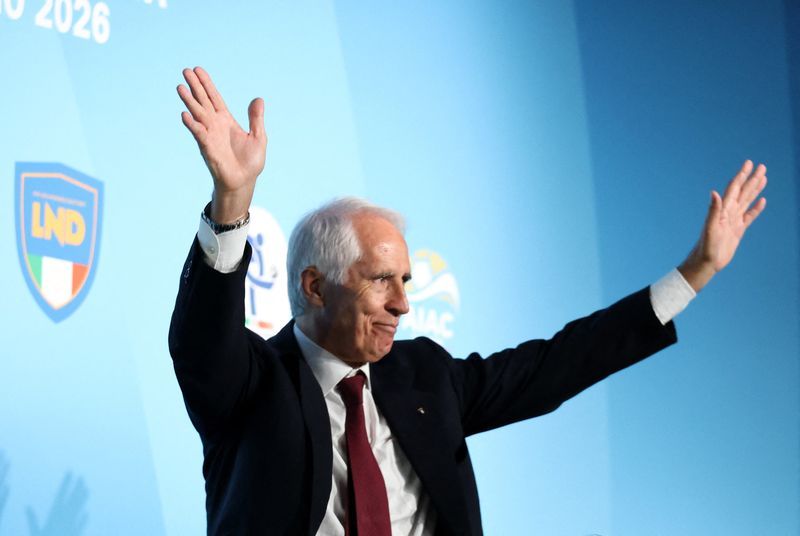
Giovanni Malago has assumed leadership of the Italian Football Federation following his election as president on Monday, tasked with reversing the fortunes of one of world football's traditional superpowers at a moment of unprecedented crisis. The 67-year-old businessman secured 68.58% support at the assembly vote in Rome, displacing rival Giancarlo Abete and replacing Gabriele Gravina, who stepped aside after April's shock elimination from World Cup qualification. Italy's inability to reach a third consecutive World Cup tournament represents the nadir of a nation that won the global title four times and has long been considered a pillar of the sport's establishment.
Malago brings considerable experience in managing major sporting institutions, having recently overseen preparations for the Milano Cortina Winter Olympics in February, an assignment that earned widespread recognition for its competent execution. His background as former head of the Italian National Olympic Committee and his history as a futsal player provide some familiarity with sports administration and competition, though football's complexities at the elite international level present a vastly different challenge from Olympic logistics. The federation he now leads faces deeper structural problems than those typically addressed through reorganisation alone, with systemic failures in youth development and strategic planning having accumulated over years of declining national team performance.
The scale of Italian football's current predicament cannot be overstated. Beyond the World Cup qualification loss to Bosnia & Herzegovina in the playoff round, the domestic clubs have also collapsed in European competitions, a compounding embarrassment that has left the entire ecosystem in what observers describe as its weakest state in four decades. This dual failure—both national team and club-level underperformance—reflects not merely tactical shortcomings but deeper institutional fragmentation and generational gaps in player development infrastructure. The resignation of head coach Gennaro Gattuso and the stepping down of Gianluigi Buffon as national team delegation head underscored the emotional toll the qualification failure inflicted across the organisation.
Malago's initial statements suggest he recognises the multifaceted nature of the reconstruction required. He has identified three immediate priorities: recruiting a new national team coach, fundamentally reorganising youth development systems, and advancing preparations for the 2032 European Championship that Italy will jointly host with Turkey. The hosting rights provide both opportunity and additional pressure—delivering a competitive national team for home matches four years hence would offer a clear narrative of recovery but also represents a stark deadline for visible progress. Malago has positioned himself as willing to undertake systemic overhaul rather than incremental adjustment, emphasising that the federation must become an institution capable of inspiring confidence rather than merely administering existing structures.
The context of Malago's appointment reflects genuine alarm within Italian football circles about the trajectory of the sport's domestic and international standing. Respected former players including Roberto Baggio have publicly questioned whether Italy's talent development apparatus remains suitable for contemporary football's demands, suggesting that the problems run deeper than recent managerial decisions. Youth academies and the pathways through which young talent progresses toward international representation have apparently deteriorated, leaving the national team with a narrowed pool of elite-level players from which to build a competitive squad. This structural weakness became critically apparent when qualification challenges materialised, revealing insufficient depth and emerging talent to compensate for an ageing generation of players.
Gravina's departure—he had led the federation since 2018—came without public acrimony but carried an implicit acknowledgment of failure. In remarks made as the assembly convened, the outgoing president suggested that his resignation should have occurred earlier, a candid admission that recognised the magnitude of the qualification loss and the organisational instability it triggered. His five-year tenure encompassed the celebrated 2020 European Championship victory but could not prevent the subsequent deterioration in World Cup qualification performance, a contradiction that perhaps illustrates the volatility of results-dependent leadership in football administration. The federation's new direction under Malago will require not merely personnel changes but strategic reimagining of how Italian football develops talent, structures domestic competition, and prepares players for the demands of high-level international football.
Malago has framed his task in language suggesting transformation rather than repair. His statement that the federation must transform its historical roots "not into nostalgia or a burden" but "into an incentive to look toward a new season—one that is courageous, victorious, humble yet ambitious" indicates acknowledgment that Italy's football culture must evolve beyond reliance on past achievements. This psychological repositioning may prove as important as tactical or organisational changes, particularly given the expectation burden that Italian supporters and media place on the national team. The weight of four World Cup titles and decades of competitive excellence can constrain thinking, potentially preventing the kind of fresh strategic thinking necessary to address contemporary challenges in player development, coaching innovation, and youth academy reform.
For Malaysian readers and Southeast Asian football observers, Malago's appointment holds broader significance in illustrating how even established football powers can experience profound institutional crisis. Italy's difficulties offer cautionary lessons about the importance of continuous investment in youth development systems and the dangers of assuming past success provides sufficient foundation for future competitiveness. The Italian federation's struggles also demonstrate that administrative reorganisation at the top level must be accompanied by ground-level change in academy systems, coaching education, and talent identification if genuine recovery is to occur. Southeast Asian federations contemplating their own development strategies can note both the negative example of institutional complacency and the potential positive example of decisive action toward systemic reform.
The coming months will reveal whether Malago's appointment represents a genuine turning point or merely symbolic change within a federation that requires far more comprehensive transformation. The selection of a new national team coach will provide the first substantive indication of strategic direction, with the choice signalling either continuity with Italian football traditions or openness to innovative approaches. Simultaneously, the federation's approach to youth development and academy restructuring will determine whether the appointment proves to be the beginning of sustained recovery or merely a managerial interregnum before further disappointments materialise. The 2026 World Cup qualifier matches, now approximately two years distant, will provide a crucial early benchmark for assessing whether Malago's leadership is generating meaningful improvement in squad quality and competitive performance.

