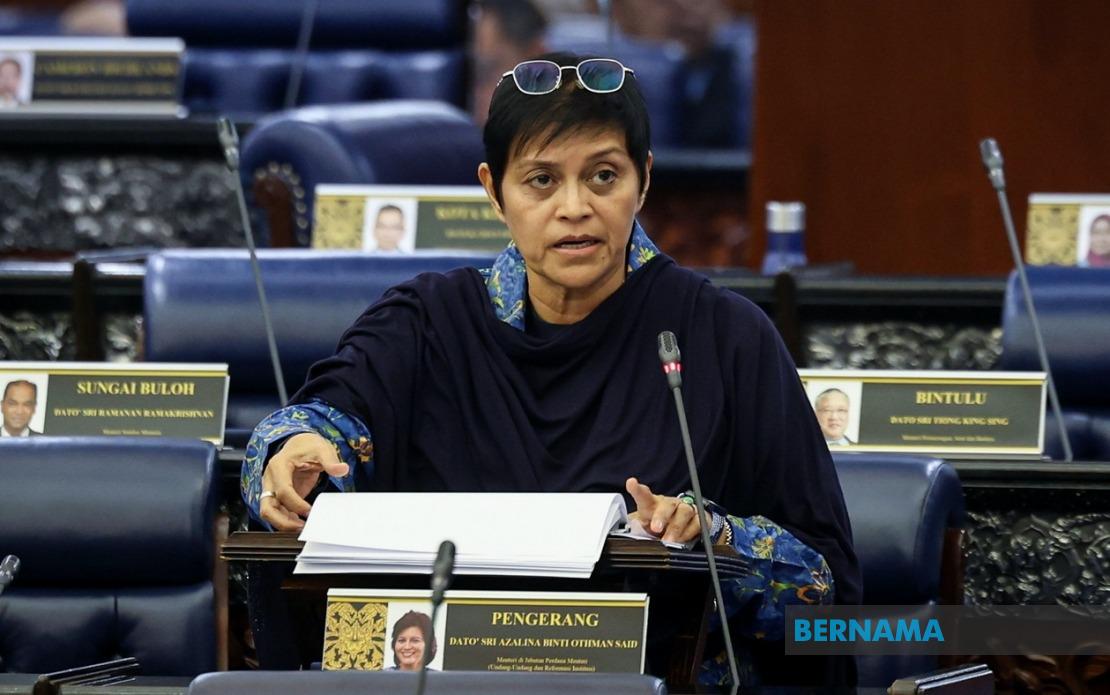
Malaysia's institutional reform agenda reaches a critical juncture tomorrow when the Dewan Rakyat receives a comprehensive report recommending the separation of the Attorney General and Public Prosecutor positions. The tabling of this Special Select Committee report represents a watershed moment for judicial independence in the country, according to Minister in the Prime Minister's Department (Law and Institutional Reform) Datuk Seri Azalina Othman Said, who framed the initiative as central to the MADANI Government's broader push to strengthen the rule of law and restore public faith in the justice system.
The extensive deliberations of the committee, which convened seven times to examine this sensitive constitutional matter, have crystallized into seven substantive recommendations designed to fortify the Public Prosecutor's institution against political interference and enhance its operational autonomy. These proposals represent a philosophical shift in how Malaysia conceives of prosecutorial independence, moving away from a system where executive influence was embedded in institutional design toward one that emphasizes checks and balances across multiple branches of government.
Central to the reform architecture is a fundamental change in the appointment mechanism for the Public Prosecutor. Under the proposed framework, the Judicial and Legal Service Commission (SPKP) would nominate candidates who would then be submitted to Parliament's Select Committee for scrutiny and recommendation. This parliamentary layer introduces democratic accountability into what has traditionally been an executive-dominated process. Only after this parliamentary examination would the SPKP's recommendation return to advise the Yang di-Pertuan Agong, whose formal appointment powers would remain constitutionally intact while their exercise would be informed by parliamentary input.
The introduction of a fixed, non-renewable seven-year term fundamentally alters the security of tenure for the Public Prosecutor position. This defined tenure creates distance between the office holder and electoral cycles, insulating prosecutorial decisions from considerations about contract renewal or political favor. The non-renewable stipulation prevents the establishment of patron-client relationships that might develop if renewal were possible, thereby reducing incentives for prosecutorial offices to curry favor with government.
Establishing a formal Code of Ethics for Public Prosecutors represents an institutional commitment to ethical standards that transcends any single individual. Such a code provides transparency about expected professional conduct, creates mechanisms for accountability, and signals to the judiciary and public alike that prosecutorial discretion operates within defined ethical boundaries. This codification also creates documented standards against which conduct can be measured, reducing subjective determinations about appropriateness.
The proposed constitutional amendment to Article 145A(18) of the Federal Constitution operationalizes these reforms through formal legal change. The amendment would mandate parliamentary involvement in the appointment process, effectively constitutionalizing the separation between executive and prosecutorial authority. For Malaysia, a constitutional amendment carries particular weight given the document's status as the supreme law, making such reforms resistant to reversal through ordinary legislation.
The proposed mechanism operates as a genuine system of checks and balances without completely divorcing the Public Prosecutor from executive engagement. The Yang di-Pertuan Agong's constitutional role is preserved, maintaining respect for the monarchy's constitutional position while ensuring that the King's appointment powers are exercised with the benefit of parliamentary and judicial recommendation. This carefully calibrated design acknowledges that complete independence from all institutions may itself be undemocratic, while maintaining barriers against political manipulation.
These reforms carry particular significance for Southeast Asian governance contexts where prosecutorial independence remains contested. Malaysia's experience with prosecutorial discretion in high-profile cases has periodically drawn international scrutiny, particularly regarding selective prosecution allegations. By institutionalizing parliamentary oversight and introducing tenure security, Malaysia positions itself within international best practices on prosecutorial independence, though the extent of parliamentary involvement remains notably robust compared to some common law jurisdictions.
For Malaysian practitioners and citizens, these changes promise greater transparency in prosecutorial decision-making and reduced vulnerability to shifting political winds. Defendants and prosecution targets would benefit from a Public Prosecutor whose tenure does not depend on pleasing whoever currently holds executive power. Civil society organizations that have long advocated for prosecutorial independence would see institutional acknowledgment of their concerns through constitutional embedding of parliamentary oversight.
The distinction between the Attorney General and Public Prosecutor roles addresses different institutional functions that have historically been conflated in Malaysia's system. The Attorney General serves as chief legal advisor to government and chief prosecutor, creating inherent tension between these roles. Separating them allows the Public Prosecutor to focus exclusively on criminal prosecution according to legal merit rather than broader government policy considerations that might motivate the Attorney General.
Implementing these recommendations will require not merely constitutional amendment but substantial legislative scaffolding to create the institutional infrastructure these reforms contemplate. Parliament will need to enact detailed legislation governing the appointment process, establishing the parameters of parliamentary scrutiny, and operationalizing the Code of Ethics. This implementation phase will test whether the committee's vision can be translated into functional institutional practice.
Azalina's emphasis on this reform as a legacy project speaks to the government's conviction that institutional strengthening transcends electoral cycles and partisan advantage. By framing prosecutorial independence as essential infrastructure for future generations rather than a temporary policy initiative, the minister positions these reforms as foundational to Malaysia's democratic development. The challenge ahead lies in translating parliamentary recommendations into constitutional amendments and legislation that withstand political pressure while creating genuinely independent institutions.

