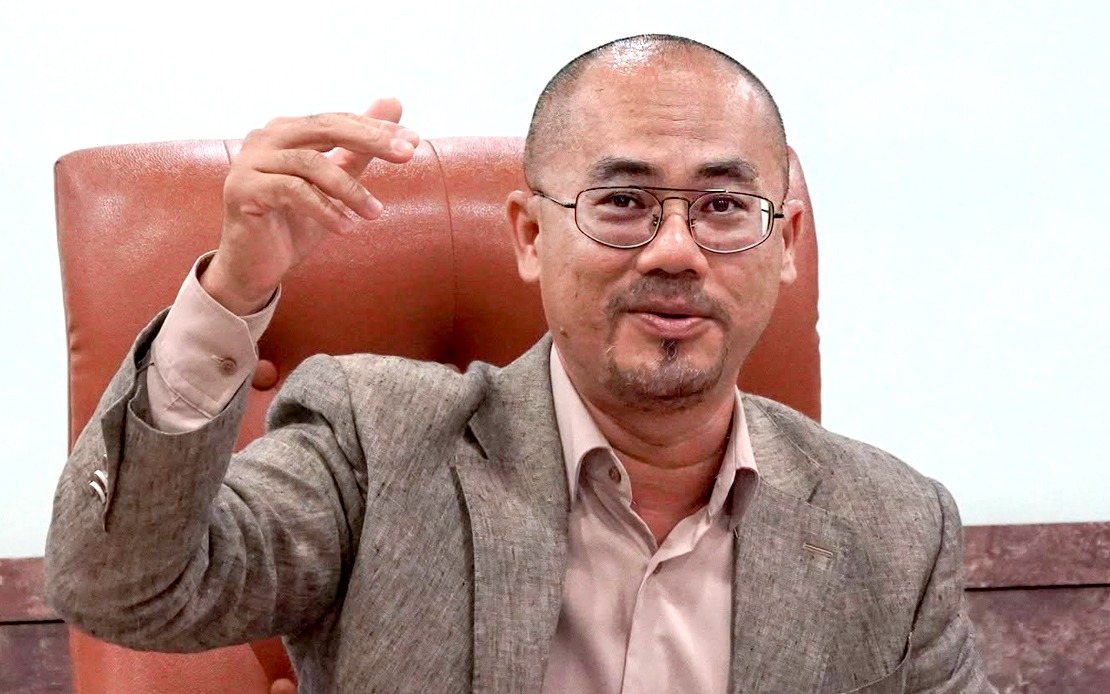
The Perak Islamic Religious and Malay Customs Council (MAIPk) has moved to counter allegations that it orchestrated a forced business shutdown at a commercial location on Jalan Panglima Bukit Gantang Wahab in Ipoh, after a social media post sparked public concern about trader welfare. The council's chief executive officer Syamsul Hazeman Md Salleh clarified the sequence of events that led to a water disconnection, emphasising that no formal eviction directive was issued to the dozens of traders operating from the premises.
The controversy centres on a notice issued by MAIPk that traders interpreted as a de facto eviction order, though the council maintains this characterisation misrepresents its intent. Syamsul Hazeman explained that the advisory was published to transparently address a complex infrastructure problem rather than to force business closures. The underlying issue involves both a deteriorating main water pipeline and accumulated charges totalling approximately RM100,000, matters the council inherited when it took possession of the land in 2024.
During an engagement session held on July 14, MAIPk officials briefed traders about the necessity of a temporary water supply interruption to enable essential repair work on the leaking main pipe. The council maintains that traders were not instructed to abandon their livelihoods, but rather informed about operational adjustments needed to resolve systemic water infrastructure failures. This distinction between notification and compulsion has become crucial as the council seeks to manage its reputation amid public scrutiny.
A critical point of clarification concerns the source of the outstanding water arrears. Syamsul Hazeman emphasised that individual traders had consistently settled their consumption-based water charges; the accumulated debt stemmed instead from a broader system failure within the main pipeline serving the entire site. This technical distinction carries weight because it separates trader culpability from structural problems predating the council's stewardship, though it also reveals the challenge MAIPk faces in addressing inherited liabilities.
The council's financial position regarding the RM100,000 arrears presents particular constraints. Syamsul Hazeman stated plainly that zakat and waqf funds—the traditional revenue sources for Islamic religious bodies—cannot be legally or ethically redirected toward settling commercial water debts. This limitation forces MAIPk into difficult negotiations with both the Perak Water Board and the state government, seeking collaborative solutions rather than unilateral debt absorption. The standoff demonstrates how administrative challenges in Islamic institutional management can directly affect small traders dependent on council-controlled properties.
MAIPk has initiated dialogue with the Perak Water Board to develop resolution pathways, acknowledging that the issue extends beyond the council's conventional operational capacity. These discussions reflect recognition that resolving longstanding infrastructure and payment disputes requires technical expertise and financial arrangements that exceed what a religious body can reasonably provide. The council's appeal for state government intervention signals the scale of the challenge and the interconnected nature of property management, utility infrastructure, and public finance in Malaysia's institutional landscape.
Once the outstanding arrears are settled—a process the council acknowledges will require patience—MAIPk intends to proceed with necessary repairs and subsequently establish fresh commercial leasing arrangements with traders through updated contracts. This staged approach aims to stabilise the situation while preparing the ground for potential future development, though uncertainty surrounding implementation timelines adds another layer of complexity for traders seeking operational continuity and investment security.
The site itself carries additional development potential that complicates its current commercial use. MAIPk has identified it as a prospective location for the Perak Islamic Religious Department Complex, a government-funded project that would fundamentally transform the property's function. However, Syamsul Hazeman made clear that this development remains contingent on state government approval and budgeting decisions, placing it in a distant, uncertain timeline. When such a project does materialise, traders would require relocation arrangements, introducing yet another potential disruption to their businesses.
The trader cooperation mentioned by the council regarding any eventual construction project carries implicit acknowledgment that current occupants operate with limited tenure security. This reality shapes the context for understanding both trader anxiety about the water disconnection and the council's concerns about managing a property with competing demands: sustaining current commercial activities, resolving inherited debt, maintaining infrastructure, and preparing for potential institutional expansion. Each of these objectives can conflict with the others.
From a broader Malaysian perspective, this situation illustrates recurring tensions between Islamic institutional property management and small-trader interests in urban areas. As councils and religious bodies expand their real estate portfolios, they frequently inherit complex operational and financial legacies that create friction with existing commercial communities. The Ipoh case demonstrates how utility failures and administrative transitions can cascade into reputational crises when public communication proves unclear.
Syamsul Hazeman's statement reflects institutional defensiveness understandable given the social media narrative suggesting heavy-handed treatment of vulnerable traders. The council's clarifications attempt to reposition the water disconnection as a technical necessity rather than a punitive action, though the outcome for traders remains operationally disruptive regardless of intent. The distinction matters for institutional legitimacy but provides limited practical relief to businesses depending on continuous water supply.
Looking forward, the resolution trajectory remains uncertain and dependent on multi-party coordination involving the Perak Water Board, state government, MAIPk, and the traders themselves. The council's confidence that a solution will emerge, tempered by acknowledgment that timelines remain unclear, reflects the pragmatic but somewhat opaque decision-making processes characteristic of Malaysian institutional disputes. For the traders, clarity about both the debt resolution process and future tenure arrangements remains essential before business planning can proceed with confidence.

