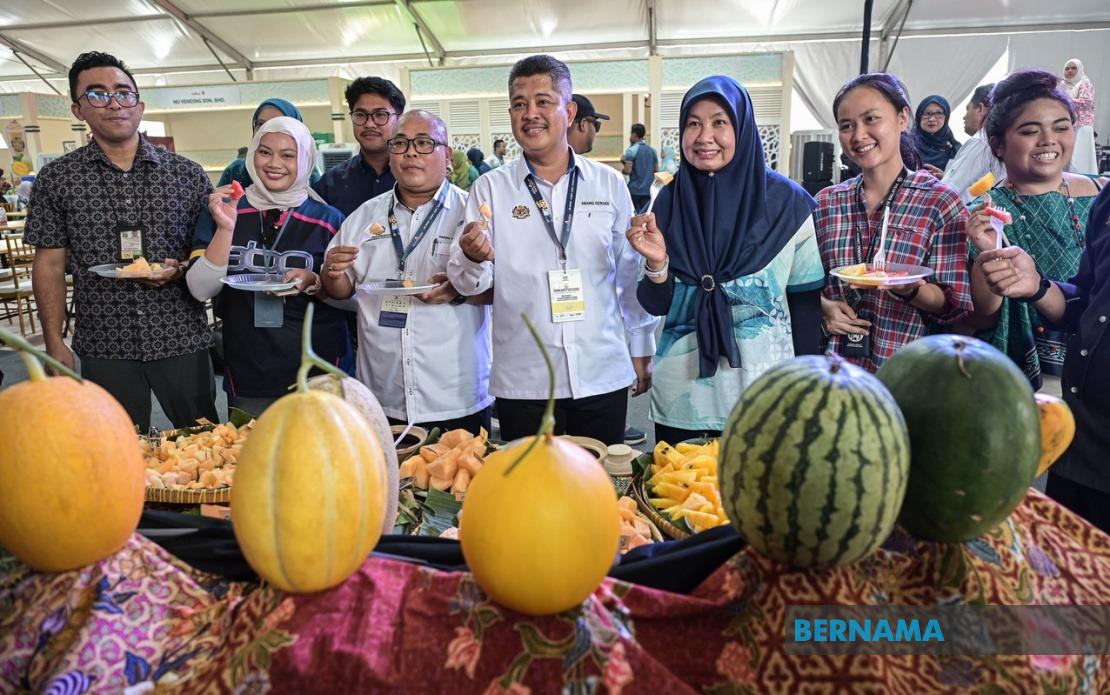
Malaysia's horticulture sector is poised for a significant milestone as the Federal Agricultural Marketing Authority (FAMA) prepares to unveil a newly developed melon variety at the opening ceremony of MAHA 2026 tomorrow. The introduction represents a substantial achievement in domestic agricultural innovation, with the compact fruit designated as the official symbol of this year's Malaysia Agriculture, Horticulture and Agrotourism Exhibition. The formal unveiling will take place at the Malaysia Agricultural Expo Park Serdang (MAEPS), where Minister of Agriculture and Food Security Datuk Seri Mohamad Sabu will officiate the launch and announce the melon's official name.
Developing the new variety has consumed considerable resources and expertise. FAMA collaborated with local entrepreneurs over three years to refine the product, conducting extensive research to ensure it meets both technical specifications and market demands. This extended development cycle reflects the rigorous standards applied to create a melon capable of competing with established international varieties whilst addressing distinctly Malaysian consumer preferences. The partnership model demonstrates how government agencies and private sector players can combine strengths to advance domestic agricultural competitiveness.
The melon's design specifications reveal careful attention to market realities. Weighing approximately 1.3 kilogrammes, the mini variety incorporates a distinctive netted skin pattern and delivers exceptional sweetness, with a Brix rating reaching level 18—a measurement indicating sugar concentration that positions it competitively against imported alternatives. The flesh texture proves notably crunchier than comparable melons currently stocked in Malaysian supermarkets and wet markets, creating a differentiated sensory experience for consumers accustomed to softer varieties.
FAMA chairman Abang Ahmad Kerdee Abang Masagus emphasised that having a signature fruit enriches the MAHA experience whilst strengthening the narrative around domestic agricultural achievement. Without a symbolic produce item, the exhibition lacks an identifiable emblem through which to communicate the industry's progress to visitors and media. The melon's selection as this symbol reflects deliberate positioning strategy, ensuring that the innovation receives prominent attention during the ten-day event running through next Sunday.
Market positioning proves critical to the venture's commercial viability. Priced at approximately RM15 per unit, the melon targets middle-income households seeking convenience without excessive expense. This pricing strategy acknowledges Malaysia's competitive produce market, where consumers routinely compare prices across vendors and increasingly gravitates toward formats requiring minimal preparation. The small portion size eliminates food waste concerns that plague larger melons in smaller households, addressing a genuine friction point in consumer purchasing behaviour.
Director-general Faisal Sulaiman noted that contemporary Malaysian consumers increasingly prefer single-serving or small-household portions, a trend driven by urbanisation, smaller family units, and the rise of convenience-focused purchasing. The mini melon captures this preference precisely, offering practical advantages beyond taste. The compact size makes transportation effortless, whether carried home via public transport or stored in compact refrigerators common in Malaysian urban apartments. The relatively short shelf life concern becomes moot when consumption occurs within days rather than weeks.
MAHA 2026 will showcase this innovation within a broader agri-food context, with FAMA supplying over 150,000 melon units across nearly 100 local and international varieties for exhibition and retail sale. This abundance demonstrates the scale at which Malaysian horticulture now operates, contrasting sharply with perceptions of limited domestic production capability. By displaying diverse varieties alongside the new mini melon, organisers emphasise how domestic innovation complements rather than replaces international offerings, creating choice that benefits consumers.
The economic implications extend throughout the supply chain. Success with the mini melon variety generates demand for seeds, fertilisers, packaging, cold chain logistics, and retail services—essentially stimulating activity across multiple economic layers. Local farmers and entrepreneurs positioned to produce or distribute the variety gain direct revenue opportunities, whilst associated service providers capture secondary benefits. This multiplier effect justifies government investment in horticultural research and development as economic stimulus beyond the primary agricultural sector.
MAHA itself has evolved into Malaysia's premier biennial platform for demonstrating agricultural progress to domestic and international audiences. The exhibition traditionally features agrotech innovations, state-specific pavilions, direct farmer-to-consumer sales channels, and participation from hundreds of domestic and international enterprises. The ten-day format at MAEPS creates extended visibility and sales opportunity, distinguishing MAHA from typical trade shows concentrated into shorter timeframes. For the agricultural ministry and FAMA, the platform provides opportunity to shape narratives around Malaysia's modern, innovation-driven farming sector rather than stereotypical perceptions of subsistence or traditional practices.
The timing of this melon launch reflects strategic thinking about consumer engagement. Introducing the variety during MAHA's opening ceremony generates maximum publicity through ministerial involvement and media coverage. Subsequent availability during the ten-day exhibition period allows consumers to sample, taste, and purchase while enthusiasm peaks. This concentrated sales window provides rapid feedback on market response, enabling producers to adjust volume and distribution strategies before wider rollout beyond the exhibition context.
For Malaysian agricultural entrepreneurs, the melon venture offers instructive lessons about aligning innovation with consumer preferences rather than pursuing purely technical achievements disconnected from market reality. The emphasis on sweetness, texture, portion size, and price demonstrates research-informed rather than assumption-based product development. Scaling this approach across other Malaysian horticultural commodities—from pineapples to papaya to specialty vegetables—could systematically improve competitiveness against imported alternatives whilst creating premium positioning for domestic produce in regional markets.
The MAHA 2026 melon launch ultimately symbolises Malaysia's maturing approach to agricultural transformation. Rather than focusing exclusively on volume production or primary commodity export, the country increasingly emphasises value-added innovation, market research, and branding. The three-year development timeline, collaborative structure, and strategic positioning through a national exhibition reflect sophisticated understanding of how agricultural sectors achieve long-term competitive advantage in contemporary global markets.

