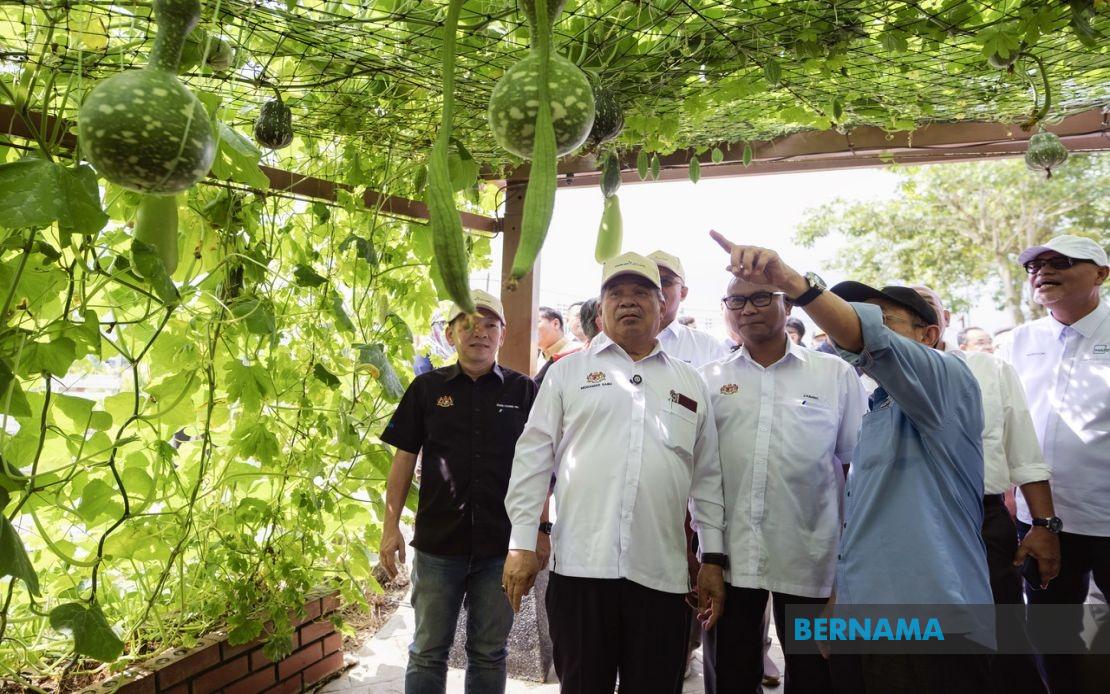
Preparations for Malaysia's flagship agricultural exhibition are advancing on schedule, with organisers expecting to complete all work by August 27, just one day before the Malaysia Agriculture, Horticulture and Agrotourism Exhibition (MAHA) 2026 opens to the public. Agriculture and Food Security Minister Datuk Seri Mohamad Sabu indicated that 80 per cent of the groundwork has already been accomplished during a site visit with media at Malaysia Agro Exposition Park Serdang (MAEPS). The remaining efforts will focus on fine-tuning exhibition displays and installing final fixtures across the venue, positioning MAHA for a polished debut when doors open on August 28.
The bulk of structural work at the sprawling MAEPS complex has already reached completion, representing a significant milestone as the exhibition draws near. This achievement sets the foundation for the remaining logistics, permitting the organising team to concentrate on aesthetic refinements and the strategic placement of exhibitor materials. Minister Mohamad expressed confidence that visitors will be impressed by the transformed venue, underscoring the scale of transformation undertaken across the 10-day event running through September 6.
The 2026 edition will be anchored by the theme 'Penciptaan Nilai Demi Keterjaminan Makanan', reflecting government strategy to strengthen food security through value creation in the agricultural sector. Minister Mohamad will officiate the opening ceremony, while Prime Minister Datuk Seri Anwar Ibrahim will preside over the closing event on September 6. This high-level participation signals the importance placed on agricultural modernisation within Malaysia's broader economic and food security agenda.
A central focus of this year's exhibition involves demonstrating technological advancement in farming practices. The showcase will feature cutting-edge agricultural equipment, autonomous vehicles designed for farm operations, and increasingly prevalent drone technology employed in cultivating crops such as paddy, pineapple, and melon. These innovations mirror approaches already established in advanced agricultural economies like China and the Netherlands, positioning Malaysia within a global context of modernised farming. By bringing these technologies into public view, organisers aim to inspire adoption among domestic farmers and demonstrate Malaysia's capacity to compete internationally in agricultural productivity.
Beyond machinery, MAHA 2026 emphasises a critical but often overlooked dimension of agricultural development: the value chain. Minister Mohamad highlighted how raw material production alone offers limited economic returns for farming communities. Instead, encouraging farmers and livestock breeders to engage in downstream processing—converting milk into dairy products, pineapples into processed goods, or cassava into diverse derivatives—creates substantially higher margins and business opportunities. This philosophy opens pathways for rural entrepreneurs to capture greater wealth within the agricultural sector rather than remaining dependent on wholesale commodity sales.
Cultural and heritage programming forms an equally important pillar of MAHA 2026. Perkampungan Abang Mat, a dedicated village space within the exhibition, will celebrate traditional foodways, communal cooking practices, and indigenous games. The village experience will rotate daily programming to maintain visitor interest throughout the 10-day run, blending education with entertainment. Attractions such as congkak and other traditional games are specifically designed to appeal to older visitors, ensuring the exhibition caters to diverse age groups and creating a family-friendly environment.
Incentive programmes underscore MAHA's ambition to drive attendance and engagement across all demographics. Daily lucky draws will distribute substantial prizes, including two motorcycles given away each day for a cumulative total of 20 motorcycles across the event duration, complemented by electrical appliances offered as consolation prizes. These attractions are deliberately calibrated to encourage repeat visits and broaden the appeal beyond farmers and agricultural professionals to general consumers and family groups.
Projected visitor numbers underscore MAHA's significance as a national event. Organisers anticipate welcoming over four million visitors, with a particular emphasis on attracting approximately 800,000 youths through programmes highlighting automation, technological innovation, and sector modernisation. Minister Mohamad is coordinating with the Education Ministry to integrate school students into MAHA activities through structured co-curricular programmes, positioning agricultural technology and entrepreneurship as educational pathways for younger generations.
The international dimension of MAHA 2026 reflects Malaysia's position within regional and global agricultural networks. Approximately 2,000 exhibitors will participate, sourced from Malaysia and 14 foreign countries. Kenya's inaugural pavilion at MAHA marks an expansion of continental participation, while the broader international presence enables participating nations to showcase proprietary agricultural technologies and explore bilateral cooperation frameworks with Malaysia. For Malaysian exhibitors, this cross-border gathering creates export opportunities and exposure to competing innovations and practices.
For Malaysian businesses and farmers, MAHA 2026 represents a critical platform for market visibility and technology adoption. The convergence of international exhibitors, government officials, and millions of visitors creates networking opportunities rarely available elsewhere. Younger participants, particularly those being introduced through educational programmes, may develop career interests in agricultural entrepreneurship or technological innovation within the sector. This generational engagement could prove transformative for long-term agricultural competitiveness, positioning farming as a modern, technology-enabled profession rather than a traditional or low-status occupation.
The exhibition's emphasis on value chain development directly addresses a persistent challenge within Malaysian agriculture: capturing greater economic returns from production. By showcasing processing technologies, business models, and success stories of farmers who have ventured into downstream operations, MAHA provides tangible examples of pathways toward improved livelihoods. This messaging resonates particularly strongly in rural regions where agricultural income remains modest, offering concrete demonstrations that technology and value addition are achievable investments.
From a regional perspective, MAHA 2026 positions Malaysia as a leader in agricultural modernisation within Southeast Asia. The exhibition's scale, international participation, and focus on technological innovation signal Malaysia's commitment to remaining competitive in an increasingly technology-driven agricultural sector. For neighbouring countries considering their own agricultural development strategies, MAHA serves as both a showcase and an implicit benchmark for contemporary agricultural promotion and innovation dissemination.

