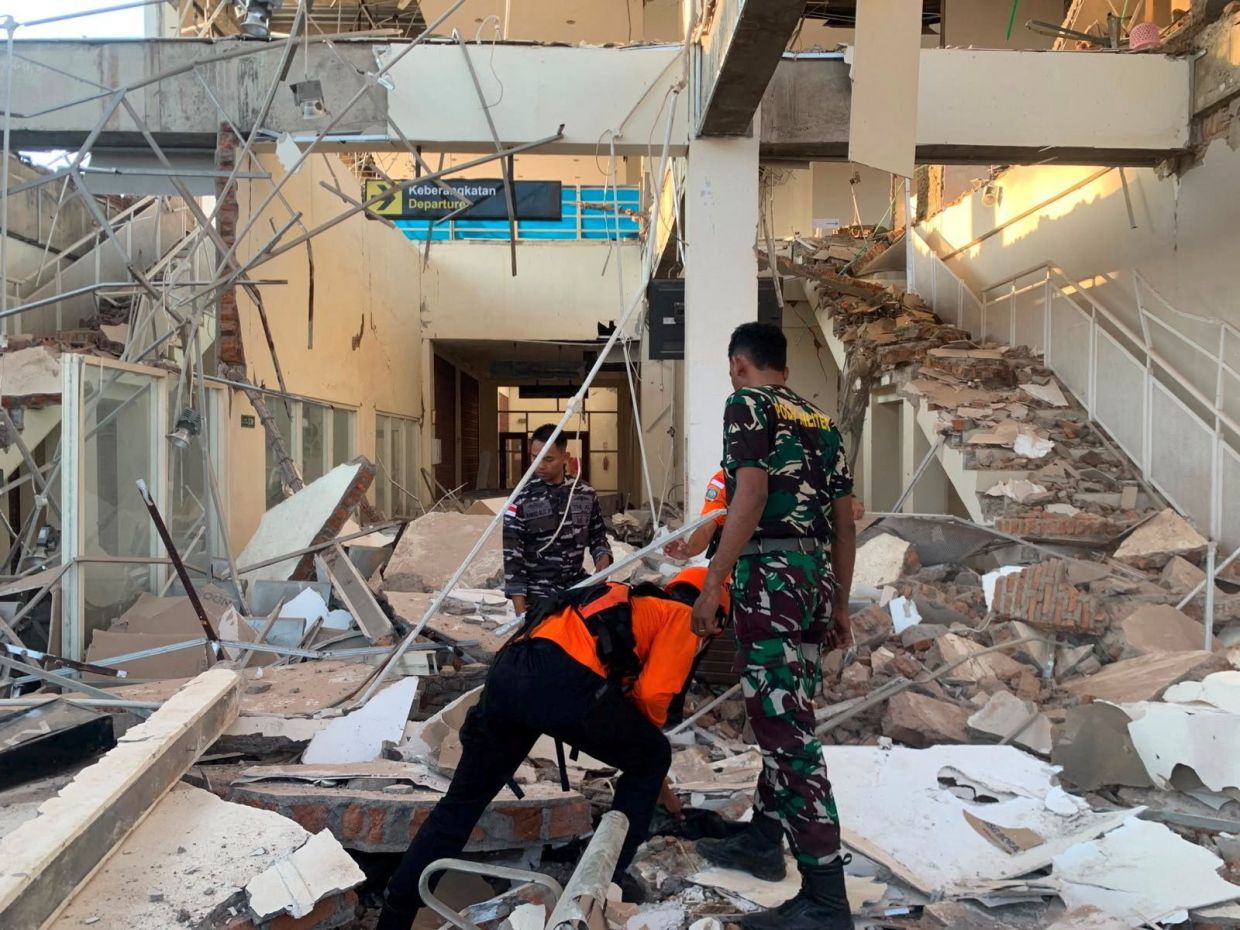
A powerful magnitude 7.7 earthquake rocked Indonesia's Flores region in the early hours of Saturday, August 15, bringing down buildings and homes across the island and claiming at least two lives in a territory long accustomed to seismic upheaval. The tremor, which struck at 5:58 a.m. local time, originated approximately 68 kilometres north-northwest of the city of Ende in East Nusa Tenggara province, with the U.S. Geological Survey recording a depth of just 10 kilometres, contributing to the severity of ground-level damage. The shallow nature of the quake meant its energy dissipated more directly into populated areas, a characteristic that dramatically increased the destruction witnessed across the region.
Initial emergency response reports from the Maumere Search and Rescue Agency documented at least two fatalities and two others injured, though comprehensive casualty assessments were still underway as rescue teams combed through collapsed structures. The earthquake triggered several powerful aftershocks that kept residents in a state of heightened anxiety throughout the morning, with many fearful of further structural failures. The concentrated damage extended across much of Flores island, with reports of severe destruction affecting both residential and commercial buildings throughout the affected provinces.
Witness accounts painted a harrowing picture of the disaster's immediate aftermath. Yohanna Embu, a Sikka resident, recounted how numerous structures sustained critical damage from the violent shaking, with panicked residents instinctively fleeing toward elevated terrain. She specifically noted the collapse of the waiting room at Maumere's port terminal, a facility that would typically have housed a significant number of civilians. Such failures of public infrastructure underscored the quake's destructive force and highlighted vulnerabilities in building standards across the region.
The incident at St. Peter Major Seminary, known locally as Ritapiret Seminary, exemplified the chaos and danger that unfolded during those critical minutes. Students and nuns attending morning Mass in the assembly hall fled in panic as the roof began collapsing around them. Rector Rev. Guidelbertus Tanga reported that at least one priest sustained a broken leg after jumping from a second-floor window during the tremor, a decision made in the desperate moments when the building's structural integrity could no longer be trusted. Such incidents demonstrated how the earthquake transcended merely damaging physical infrastructure; it shattered the sense of safety even within religious sanctuaries.
Medical facilities across the affected region swiftly responded to the emergency by evacuating patients from hospital buildings as a precautionary measure. Hospital staff relocated critical equipment to outdoor spaces, including beds, intravenous stands, and oxygen cylinders, hastily establishing makeshift treatment areas to address injuries sustained during the earthquake and prepare for potential further aftershocks. This rapid improvisation reflected the region's institutional awareness of seismic risks and the protocols institutions had developed to maintain medical care during natural disasters.
Indonesian authorities implemented immediate protective measures, initially issuing a tsunami warning for multiple provinces including East Nusa Tenggara, West Nusa Tenggara, South Sulawesi, and Southeast Sulawesi. Residents received urgent directives to abandon beaches and riverbanks while coastal populations were instructed to move immediately to higher ground. The Meteorology, Climatology and Geophysics Agency established monitoring systems to track potential sea-level changes that might indicate a destructive tsunami was developing. However, after careful observation, authorities determined that sea levels remained stable and posed no threat to coastal communities, prompting the cancellation of the tsunami warning.
Geographically, Indonesia's vulnerability to such catastrophic events stems directly from its position within the Pacific Ring of Fire, an extensive arc of volcanoes and geological fault lines encircling the Pacific Ocean basin. This archipelagic nation, comprising more than 17,000 islands scattered across three time zones, sits atop a particularly active section of the Pacific Ring, where the collision of multiple tectonic plates generates constant crustal stress. The region's complex geological architecture ensures that earthquakes remain not exceptional occurrences but rather regular features of Indonesian life, shaping construction practices, emergency preparedness, and the collective consciousness of residents.
The significance of this latest earthquake acquires added weight when considered against historical precedent. In December 1992, Flores was devastated by a powerful earthquake that unleashed a tsunami, claiming approximately 2,500 lives across the southeastern island. That catastrophe remains seared into the regional memory, influencing how contemporary authorities and residents respond to seismic events. The 1992 disaster underscored how Indonesia's earthquake hazard extends beyond immediate ground shaking; the surrounding seas can amplify initial destruction through tsunami generation, making rapid and accurate monitoring essential for protecting populations across the archipelago.
For Malaysia and other Southeast Asian neighbours, the earthquake serves as a reminder of the region's shared geological instability. While Malaysia itself sits on a more stable portion of the Pacific Ring, the country's extensive maritime trade with eastern Indonesia, coupled with tourism and people-to-people connections, means that major Indonesian earthquakes have direct consequences for Malaysian citizens and regional stability. The incident also highlights disparities in disaster preparedness and building standards across Southeast Asia, prompting regional discussions about coordinated early warning systems and mutual assistance protocols during natural disasters.
The immediate challenge facing Indonesian authorities involves completing damage assessments, accounting for all casualties, and ensuring that displaced residents receive shelter and humanitarian assistance. Simultaneously, authorities must monitor ongoing aftershocks and maintain vigilance for any delayed tsunami signatures that might develop. Recovery efforts will extend well beyond the initial rescue phase, requiring sustained investment in rebuilding infrastructure and reinforcing structures against future seismic events. The earthquake underscores Indonesia's need for continued investment in earthquake-resistant construction standards, particularly in eastern regions where development infrastructure remains less robust than in more economically advanced western areas.

