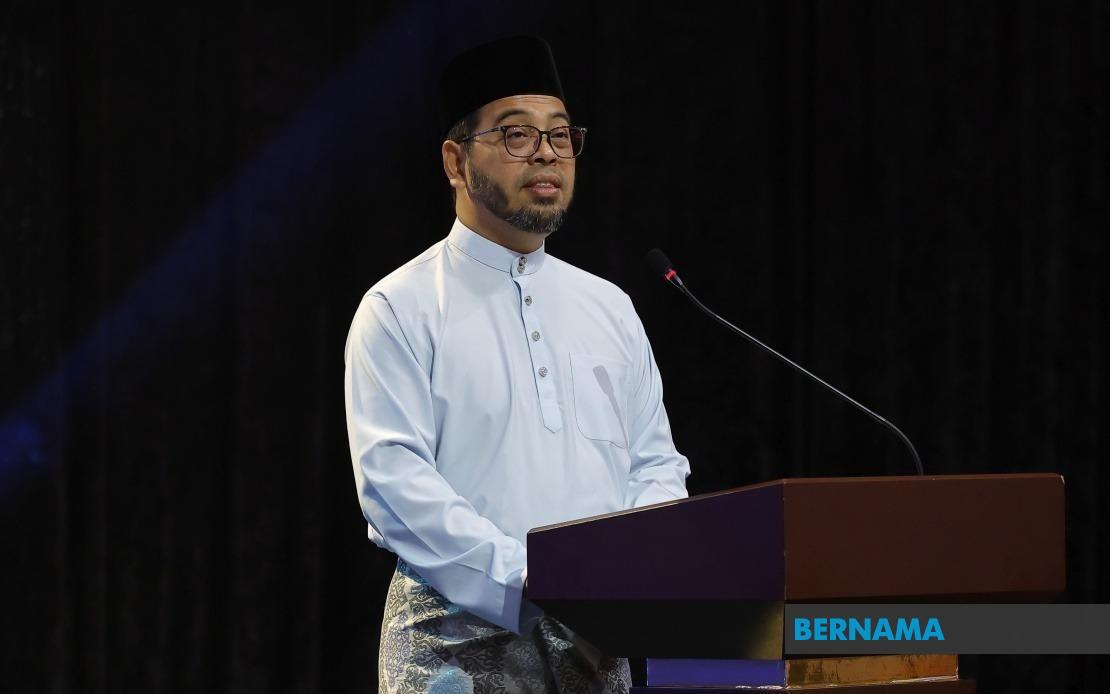
Malaysia's commitment to tahfiz education has received fresh emphasis from the federal government, which views religious schooling as an essential pillar alongside conventional academic pathways rather than as a separate educational stream. Minister in the Prime Minister's Department (Religious Affairs) Dr Zulkifli Hasan articulated this integrated vision during the 34th convocation ceremony of Darul Quran (DQ) JAKIM in Kuala Lumpur, signalling the administration's determination to nurture both systems with equal strategic importance.
The underlying philosophy driving this approach reflects a significant shift in how policymakers conceptualise tahfiz institutions. Rather than positioning these establishments solely as centres for Quranic memorisation, the government now emphasises their role in cultivating fully developed individuals capable of navigating modern professional environments. Dr Zulkifli stressed that tahfiz graduates must embody not only religious expertise but also intellectual rigour, moral fortitude, and practical competencies that enable them to participate meaningfully in the nation's economic and social advancement.
Darul Quran JAKIM's milestone anniversary provided the occasion to measure institutional progress and recalibrate future direction. The institution marked its 60th year since establishment in 1966, a period spanning Malaysia's post-independence development when Islamic education occupied a particular place in the national educational landscape. The Diamond Jubilee represented more than ceremonial recognition; it served as a platform to demonstrate concrete achievements and outline ambitious aspirations for subsequent decades of operation.
The numerical impact of the institution proves substantial by any measure. Over six decades, DQ JAKIM has graduated 12,633 huffaz who have dispersed across diverse professional sectors rather than concentrating exclusively within religious roles. This distribution—spanning education, Islamic jurisprudence, Islamic outreach, scholarly research, public administration, and specialised professional fields—demonstrates the institution's success in producing graduates capable of contributing across multiple dimensions of Malaysian society. The breadth of career pathways undertaken by alumni suggests that tahfiz credentials have acquired increasing relevance to employers beyond traditional religious bureaucracies.
The 34th convocation ceremony produced 700 new graduates across multiple qualification levels, reflecting the institution's capacity to accommodate diverse academic trajectories. The graduate cohort comprised 37 holders of Bachelor's degrees awarded through collaboration with Universiti Sains Islam Malaysia (USIM), indicating formal integration with Malaysia's tertiary education framework. Additionally, 454 graduates completed the Diploma in Quran and Qiraat, a qualification combining Quranic sciences with proper recitation methodologies. The remaining cohort earned Tahfiz certification through the institution's dedicated programme and introductory Basic Tahfiz certificate, catering to students at various developmental stages.
This multi-tier graduation structure illustrates an important reality about contemporary tahfiz education in Malaysia: it no longer represents a monolithic pathway but rather a varied ecosystem accommodating different educational objectives and competency levels. Students can pursue credentials ranging from foundational certification through to university-level qualifications, enabling progression within a comprehensive educational continuum. Such diversification addresses the challenge of accommodating students with varying entry capacities and ultimate professional ambitions, allowing some to develop specialised Quranic expertise while enabling others to integrate Islamic learning with conventional university education.
The government's emphasis on strengthening tahfiz education must be understood within Malaysia's broader educational policy environment. As a Muslim-majority nation with constitutional provisions recognising Islam's position, policymakers face persistent questions about balancing Islamic education with secular subjects, maintaining educational quality across diverse institutional types, and ensuring that religious schooling produces graduates equipped for competitive employment. The MADANI administration's framing addresses these tensions by insisting that tahfiz institutions need not operate in isolation but can develop synergistically with mainstream educational institutions through curriculum coordination, joint qualifications, and aligned pedagogical standards.
For Southeast Asian observers, Malaysia's approach offers a potential model for societies wrestling with similar educational challenges. The region encompasses numerous Muslim-majority and Muslim-minority nations where Islamic education occupies contested space within national systems. By demonstrating that tahfiz credentials can coexist with and enhance conventional qualifications—rather than representing alternative pathways disconnected from mainstream employment—Malaysia potentially provides a template for other jurisdictions seeking to integrate religious learning more seamlessly into comprehensive education systems.
Dr Zulkifli's remarks about using the 60-year legacy as inspiration for future development carried implicit acknowledgement that tahfiz education requires continuous evolution. The vision he articulated rejects stasis, instead envisioning institutional transformation that preserves the spiritual mission of Quranic learning while embracing contemporary skill development relevant to modern economies. This forward-looking orientation suggests that policymakers recognise the sector cannot merely replicate historical approaches but must adapt methodologies and curriculum to maintain relevance and graduate competitiveness.
The selection of USIM as a collaboration partner for bachelor's degree programmes deserves particular attention, as it represents institutional recognition that Islamic universities can credibly award secular and professional qualifications without compromising Islamic identity or educational standards. This partnership model enables DQ JAKIM to offer students a pathway combining intensive Quranic study with formal university credentials, potentially reducing the historical tension some graduates experienced when possessing specialist religious knowledge but lacking conventional academic qualifications recognised in secular employment contexts.
Implementing the government's integrated vision will require sustained attention to curriculum development, teacher training, and inter-institutional coordination. Tahfiz educators must acquire not only religious expertise but also pedagogical skills aligned with contemporary educational standards. Similarly, mainstream schools incorporating Islamic components require teachers capable of delivering these subjects with rigour comparable to conventional academic disciplines. Such capacity-building represents an ongoing challenge extending far beyond ministerial pronouncements or convocation ceremonies.
The government's commitment to strengthening tahfiz education reflects recognition that religious learning institutions serve important functions beyond immediate employment preparation. These establishments contribute to cultural continuity, faith transmission, and community cohesion in ways that extend beyond economic metrics. Simultaneously, the emphasis on integrating tahfiz education with mainstream pathways acknowledges that contemporary graduates require versatility and adaptability to thrive in complex modern environments. This dual recognition—honouring the intrinsic value of Islamic learning while ensuring graduates possess broadly applicable competencies—characterises a mature approach to religious education policy.

