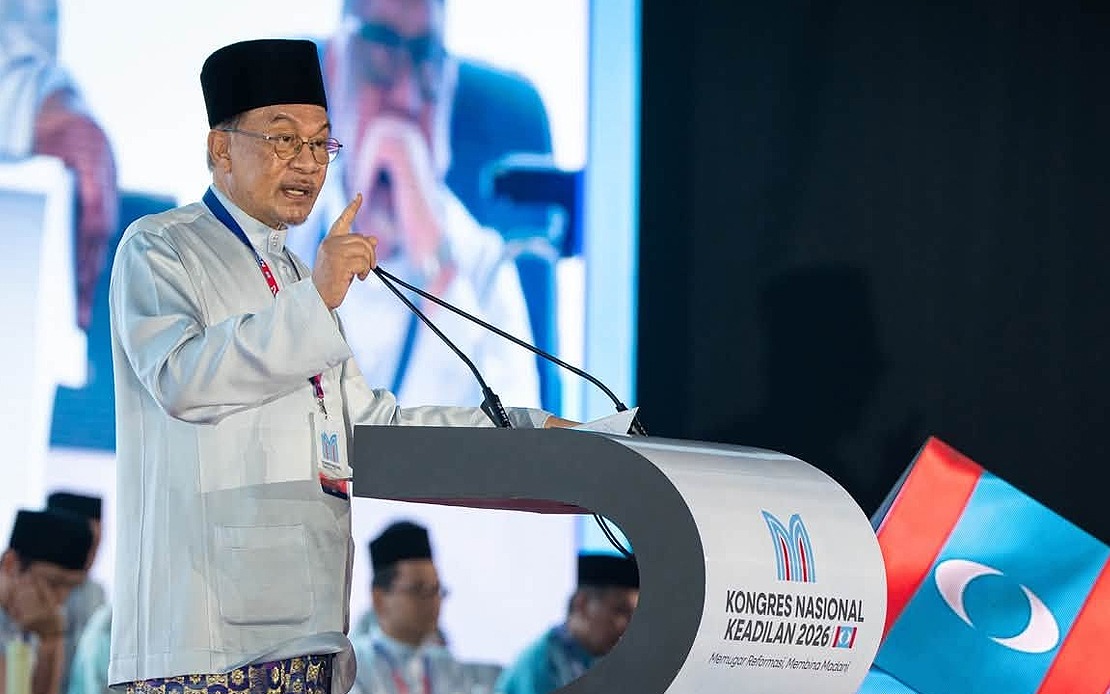
The MADANI Government's reform agenda must move beyond statistics and policy announcements to deliver measurable improvements in the daily lives of ordinary Malaysians, according to Tengku Datuk Seri Zafrul Tengku Abdul Aziz, the Prime Minister's Senior Political Advisor. Speaking at the 2026 PKR National Congress in Melaka, Tengku Zafrul emphasised that economic success on paper means little if citizens fail to experience its positive effects across all levels of society. His remarks at the two-day congress, themed "Reviving Reform, Building MADANI", held at the Melaka International Trade Centre in Ayer Keroh, highlight a growing recognition within government circles that the coalition faces a credibility gap between its achievements and public perception.
The advisor's comments come amid what appears to be a deliberate effort by the ruling coalition to reassess its communication strategy and bridge the gap between policy implementation and citizen awareness. Tengku Zafrul pointed to the nation's six percent economic growth as evidence of sound macroeconomic management that has exceeded forecasts. However, he stressed that such headline figures carry little weight if their benefits do not reach the average household or lift the standard of living for vulnerable populations. This distinction between top-line growth and grassroots prosperity has become increasingly important to Malaysian voters, who increasingly judge governments by concrete improvements in wages, healthcare, education, and affordable housing rather than abstract economic indicators.
A significant portion of Tengku Zafrul's intervention focused on what he characterised as a communication and delivery problem within government ranks. He acknowledged that the MADANI Government has compiled an extensive catalogue of initiatives and policy achievements, but lamented that these accomplishments remain largely invisible to the general public. His observation that the government's own "delivery shortcoming" bears responsibility for public ignorance—rather than any failure on the part of citizens to pay attention—represents an unusually candid admission of institutional weakness. This self-critique suggests that even senior government officials recognise the need for systemic improvements in how policies are explained, marketed, and made accessible to ordinary Malaysians.
During the congress, President Datuk Seri Anwar Ibrahim outlined several flagship initiatives that the government intends to highlight as evidence of its reform credentials. Chief among these is the abolition of the Universities and University Colleges Act, a longstanding demand from civil society and students who viewed the legislation as an obstacle to campus activism and institutional autonomy. The government has also prioritised rehabilitation efforts for critical institutions such as the Federal Land Development Authority, a body whose financial and operational difficulties have symbolised broader governance challenges over the past decade. Additionally, the government signalled that the upcoming budget would contain several economic initiatives designed to address cost-of-living pressures and stimulate growth in key sectors.
Tengku Zafrul's remarks also reflected an attempt to position PKR, the largest component of the Pakatan Harapan coalition, as a party genuinely committed to sustained reform rather than a vehicle for short-term political advantage. He argued that the government's willingness to tackle symbolic issues like AUKU and tackle institutional malaise through bodies like FELDA demonstrates its recognition that the reform struggle remains unfinished and requires continued political will. This framing is particularly important given that the MADANI coalition has now been in power for several years, with initial enthusiasm giving way to voter expectations for concrete results. The party leadership appears to be attempting to revitalise its reform narrative before fatigue and disappointment erode support among its traditional base of younger, educated, and urban voters.
The emphasis on improving party machinery and internal solidarity suggests that PKR and its coalition partners recognise vulnerabilities in their organisational capacity to deliver on promises. Tengku Zafrul stressed that the party's strength depends on its readiness to listen to grassroots concerns and to strengthen internal systems that translate policy decisions into community-level outcomes. This emphasis on listening and institutional improvement reflects lessons learned from the coalition's previous period in government between 2018 and 2020, when internal divisions and communication failures contributed to electoral setbacks. The current focus on party discipline and improved mechanisms appears designed to prevent similar fractures from undermining the MADANI agenda.
For Malaysian voters, particularly those in middle-income and lower-income segments, the challenge posed by Tengku Zafrul's remarks is whether the government can actually deliver on its promises before the next general election, which must be held by 2028 at the latest. The six percent economic growth rate, while respectable, has not necessarily translated into widespread wage increases or cost-of-living relief for ordinary families grappling with housing costs, transportation expenses, and education fees. The government's recognition of this gap suggests internal awareness that more aggressive and visible policy implementation is needed to retain voter confidence and demonstrate that the MADANI agenda serves tangible purposes beyond rhetorical appeals to reform.
The congress debates appear to have reinforced support within PKR for the general direction of Anwar Ibrahim's policy platform, though Tengku Zafrul's comments suggest that party leaders believe more work is required to translate policy intent into public perception. This dynamic is common in multi-party coalitions where internal cohesion can mask divergent priorities and where communication challenges often reflect deeper disagreements about resource allocation and reform pace. The emphasis on improved communication mechanisms may therefore serve a dual purpose: addressing public perception while simultaneously disciplining coalition members to focus on shared priorities rather than factional interests.
Regionally, Malaysia's experience with translating economic growth into broad-based citizen welfare is closely watched by other Southeast Asian governments facing similar challenges of managing growth while ensuring equitable distribution of benefits. The MADANI Government's struggle to communicate its achievements effectively reflects broader difficulties facing centrist coalitions across the region in maintaining legitimacy and voter support against both entrenched opposition forces and populist challengers. How successfully the government addresses Tengku Zafrul's identified gaps in delivery and communication may influence not only domestic political trajectories but also regional perceptions of whether Southeast Asian democracies can effectively combine economic management with inclusive policymaking.

