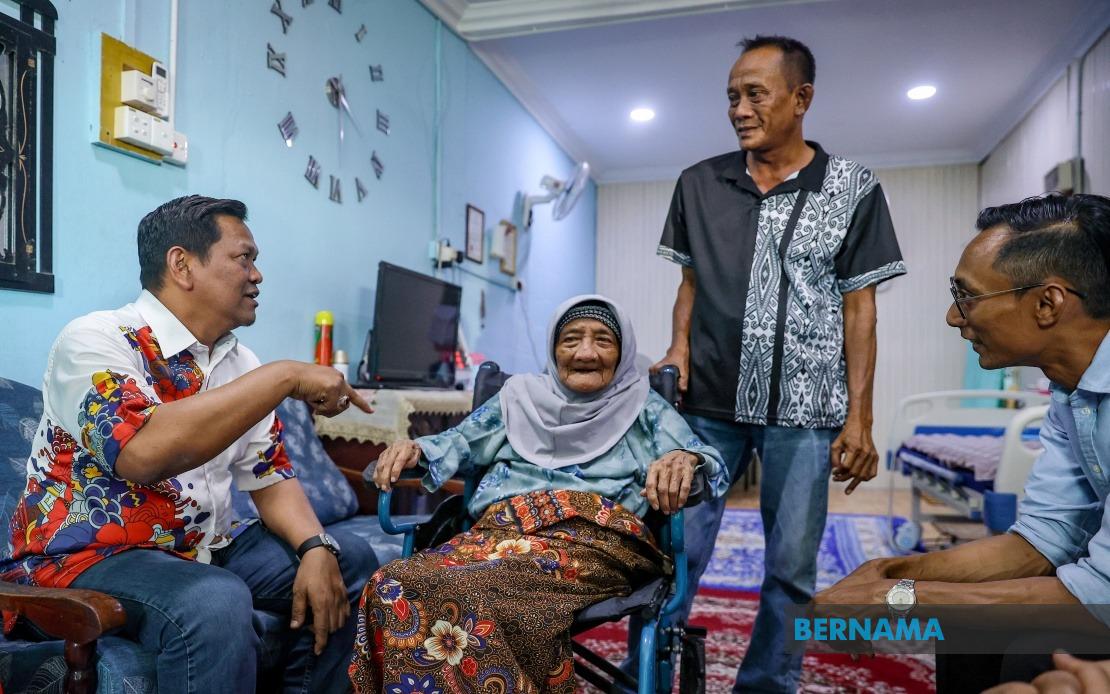
The Malaysian government's commitment to its Ziarah Kasih initiative demonstrates a sustained focus on reaching vulnerable populations through targeted community engagement. During a visit to Mersing in Johor, officials provided direct assistance to elderly residents facing significant health and financial challenges, reinforcing the administration's pledge to make tangible improvements in the lives of marginalised citizens.
Abdullah Izhar Mohamed Yusof, political secretary to the Communications Minister, framed the programme as integral to the MADANI Government's broader strategy of prioritising citizen well-being. By partnering with the Department of Information and Komuniti MADANI, the government has developed a systematic approach to identifying and supporting those facing the most pressing hardships. This methodical identification process suggests an attempt to move beyond ad-hoc charity toward sustainable, data-driven social assistance.
The human dimension of the initiative becomes apparent through the stories of individual recipients. Hamdan Abd Latif and his wife Meriam represent a profile increasingly common in Malaysia: working-class families devastated by health crises that drain financial resources while simultaneously reducing earning capacity. Hamdan's trajectory from a stable career as a firefighter to bedridden dependency following a 2011 fishing accident illustrates how a single incident can cascade into decades of hardship. The subsequent diagnosis of a brain tumour and stroke compounded their vulnerability, yet the couple's determination to maintain dignity despite adversity reflects resilience common among Malaysia's elderly poor.
Meriam's sacrifice carries particular significance for understanding informal care dynamics in Malaysia. Her decision to abandon income-generating work—sewing—to provide full-time care for her husband represents an unpaid labour contribution that rarely registers in economic statistics. For many lower-income households, such arrangements mean the difference between survival and destitution, as professional care facilities remain financially inaccessible. Government assistance programmes like Ziarah Kasih partially offset these invisible costs, though questions persist about whether sporadic aid adequately addresses chronic care needs.
The case of Zainon Ibrahim, age 91, similarly highlights the multi-generational burden of inadequate social safety nets. Her son Jamaluddin's decision to abandon employment two years ago to become a full-time caregiver reflects a common pattern where adult children sacrifice career advancement to support elderly parents. While his siblings contribute support, this arrangement remains precarious, dependent on family cohesion and individual sacrifice rather than institutional guarantees. The assistance provided through Ziarah Kasih represents a supplementary lifeline for such households rather than comprehensive coverage.
The programme's timing and visibility carry political dimensions worth examining. Conducted during the Jiwa@Komuniti MADANI Sembang Santai World Cup Edition programme in Endau, the assistance delivery strategy combines welfare delivery with community engagement and media presence. This approach allows the government to demonstrate responsiveness to citizen needs while simultaneously fostering grassroots connection—a crucial objective as administrations worldwide navigate declining institutional trust and increased demand for visible, tangible government benefits.
For Malaysian readers, the Ziarah Kasih initiative represents both promise and limitation. The programme's existence acknowledges that significant portions of the population struggle to meet basic needs despite official development indicators suggesting middle-income status. That a government must initiate special programmes to visit and assist elderly citizens in their homes underscores persistent inequality and the fragmentation of traditional family support systems that rapid urbanisation and economic change have disrupted.
The initiative's focus on vulnerable groups—the elderly, the chronically ill, the economically displaced—reflects demographic and social pressures distinct to Malaysia's development stage. An ageing population increasingly lives without children nearby, communities have become more dispersed, and medical care expenses consume disproportionate shares of lower-income household budgets. These structural challenges cannot be resolved through periodic assistance visits alone, though such programmes do provide immediate relief and demonstrate governmental awareness of constituent struggles.
Regionally, Malaysia's approach to vulnerable population support through programmes like Ziarah Kasih offers comparative lessons. Unlike purely means-tested systems requiring extensive bureaucratic verification, or universal programmes with high fiscal costs, targeted initiatives using community networks and information departments attempt to balance accessibility with efficiency. Southeast Asian governments grappling with similar ageing populations and social safety net gaps may scrutinise whether this model scales effectively or remains primarily a visibility tool for government engagement.
The sustainability question looms large. Ziarah Kasih appears designed for regular implementation, yet funding levels, beneficiary numbers, and assistance amounts remain undisclosed. Whether the programme represents substantial investment in vulnerable welfare or modest supplementary support fundamentally shapes its actual impact on poverty reduction and inequality. Government statements emphasising continued commitment must be evaluated against resource allocation decisions made in future budgets.
For individual recipients like Hamdan, Meriam, and Zainon, immediate relief takes precedence over systemic questions. Yet scaled across thousands of Malaysian households facing similar circumstances, the true measure of Ziarah Kasih's success lies not merely in assistance delivered but in whether it catalyses broader policy shifts addressing root causes of vulnerability—healthcare access, aged care infrastructure, employment security, and social insurance adequacy. The initiative's continuation signals recognition that significant citizen populations require governmental support, a reality increasingly difficult to ignore as Malaysia navigates demographic transitions and distributional challenges inherent to middle-income societies.

