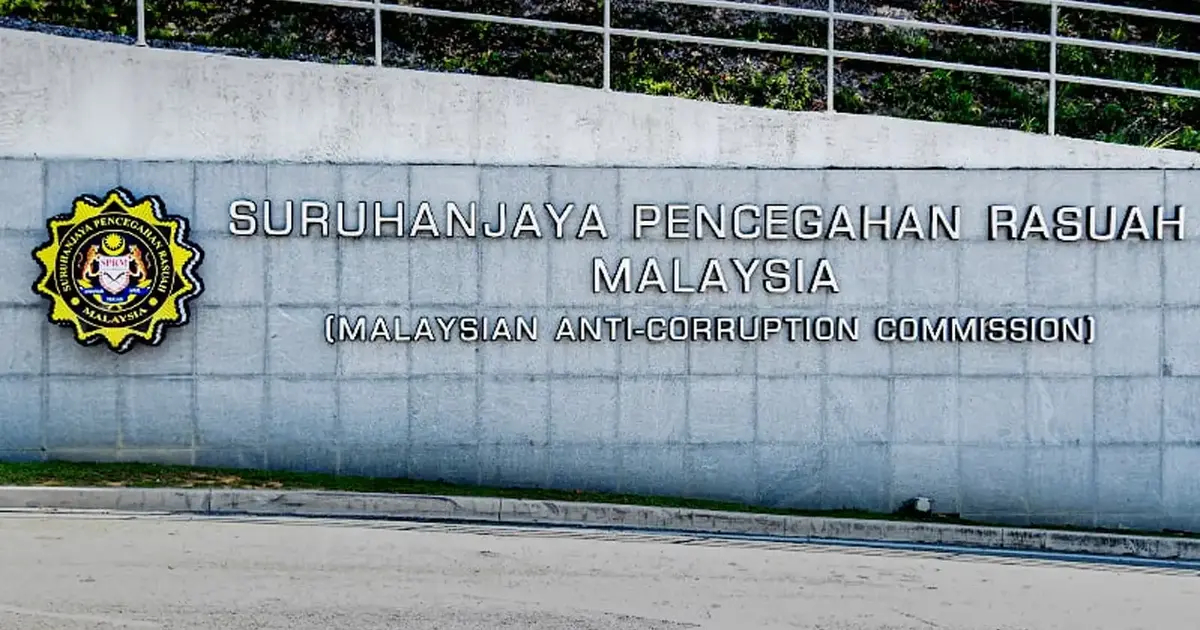
Thirteen business owners are set to face court proceedings initiated by the Malaysian Anti-Corruption Commission (MACC) as the anti-graft watchdog intensifies its enforcement action against those who have exploited government employment initiatives. The cases represent part of a broader investigation into the Daya Kerjaya 2.0 programme, which is designed to create employment opportunities but has instead become the focus of significant misconduct allegations uncovered during the agency's recent compliance review.
The Daya Kerjaya 2.0 scheme forms a critical pillar of the government's broader economic stimulus and employment creation agenda, aimed at supporting workers and enterprises in the post-pandemic recovery phase. When properly administered, the programme channels substantial resources towards businesses willing to hire workers and contribute to the nation's labour force expansion. However, the MACC's investigation has revealed that certain participants have systematically manipulated the programme's mechanisms to extract undeserved benefits, ranging from fraudulent subsidy claims to fictitious hiring arrangements that generated payments without corresponding job creation.
The nature of the irregularities uncovered paints a troubling picture of how government assistance schemes can be compromised when oversight mechanisms prove inadequate. Investigators have documented instances where company owners submitted false documentation, inflated payroll records, or used shell entities to obtain multiple rounds of funding intended for legitimate employment initiatives. These findings underscore the vulnerability of social welfare and employment programmes to organised fraud, particularly when internal controls depend heavily on self-reporting by participating businesses rather than continuous independent verification.
From a systemic perspective, the prosecution of these 13 individuals carries implications far beyond the immediate cases. It demonstrates the MACC's commitment to protecting public funds allocated for job creation, a matter of considerable importance given Malaysia's persistent unemployment challenges and the government's reliance on such programmes to achieve its economic objectives. The enforcement action also signals to businesses considering participation in future government schemes that fraudulent conduct will be detected and sanctioned, potentially deterring similar misconduct in other programmes.
The investigation's outcomes are likely to trigger a broader reassessment of how government administers employment support schemes. Policymakers and programme administrators will face pressure to implement more rigorous verification mechanisms, including real-time monitoring of hiring activities, cross-referencing payroll data with tax records, and surprise audits of participating businesses. Such measures, while administratively demanding and costly, have become necessary to protect programme integrity and ensure that the substantial public investment translates into genuine employment gains rather than enriching dishonest entrepreneurs.
For Malaysian business leaders operating legitimately within government assistance frameworks, the prosecution action offers a degree of reassurance that unfair competition from fraudsters will be curtailed. However, it also raises concerns about compliance costs and regulatory burdens that honest participants must navigate. The cases may prompt businesses to invest in more sophisticated documentation and recordkeeping practices to demonstrate their programme compliance, ultimately shifting some enforcement burdens onto the private sector.
The timing of these prosecutions reflects the MACC's determination to address corruption in programmes that directly impact livelihood and economic participation. Employment schemes such as Daya Kerjaya 2.0 are particularly susceptible to fraud because they involve relatively straightforward claims verification—companies submit hiring records and subsidy applications that, if falsified, are difficult for administrators to detect without dedicated investigative resources. The MACC's proactive investigation indicates that anti-corruption agencies have recognised this vulnerability and are allocating attention accordingly.
Regionally, Malaysia's approach to prosecuting employment scheme fraud aligns with broader Southeast Asian efforts to strengthen governance of social spending. Countries across the region face similar challenges in protecting assistance programmes from exploitation, and the MACC's visible enforcement action contributes to a regional narrative emphasising that government support schemes must be shielded from misconduct through both preventive controls and prosecutorial follow-through. This institutional messaging is particularly important in developing economies where programmes are vital to poverty alleviation and workforce development.
The prosecution's success will ultimately depend on the strength of documentary and forensic evidence presented in court. The MACC will need to demonstrate clear paper trails showing how the accused diverted funds, created fictitious arrangements, or falsified claims—a task requiring meticulous compilation of financial records, correspondence, and hiring documentation. The cases may also rely on witness testimony from company employees or government programme administrators who can speak to discrepancies between claimed and actual business operations.
Looking forward, these prosecutions represent an opportunity for government and regulatory agencies to recalibrate their approach to programme oversight. Rather than treating Daya Kerjaya 2.0 as a standalone initiative vulnerable to exploitation, policymakers should consider how lessons from this investigation can be embedded into the design and administration of future employment schemes. This might include requiring participating businesses to maintain certified accounting records, implementing performance bonds that fund recovery in case of fraud, or establishing dedicated compliance units within programme secretariats.
The 13 cases also highlight the importance of inter-agency coordination in detecting economic crimes. The MACC's investigation likely benefited from cooperation with the Inland Revenue Board, the Immigration Department, and other agencies that possess complementary data on business operations, employment figures, and financial transactions. Building and formalising such institutional relationships can enhance the early detection of programme fraud across multiple government initiatives simultaneously.
Ultimately, the prosecution of these business owners serves multiple purposes simultaneously: holding individuals accountable for misconduct, recovering diverted public funds, and signalling the government's commitment to programme integrity. For Malaysian employees and legitimate businesses, the message is that employment support schemes will be protected from those seeking to exploit them, ensuring that finite public resources reach those genuinely in need of support.

