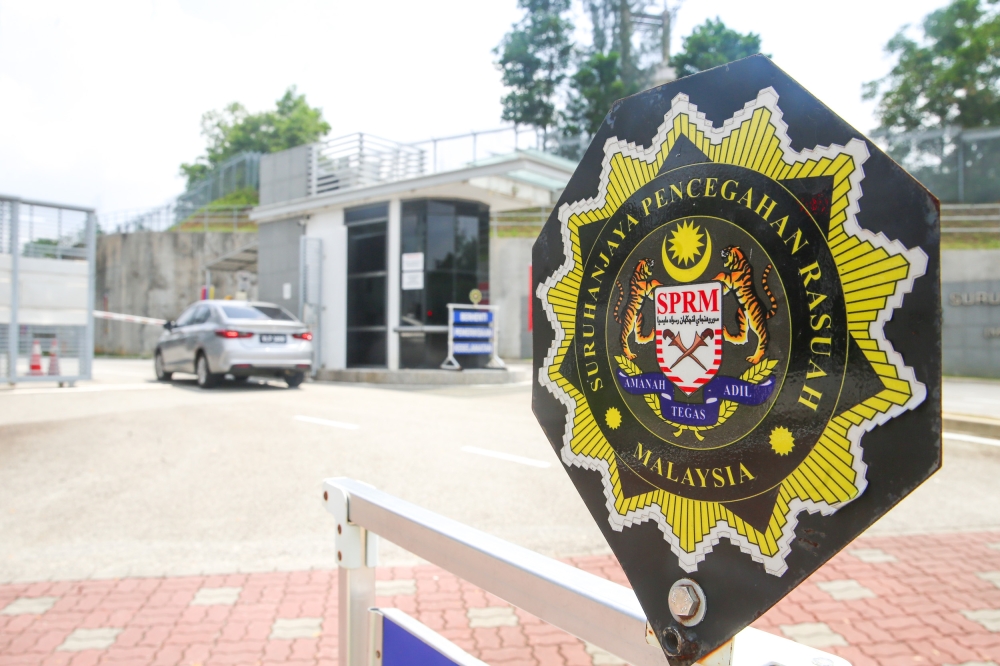
The Malaysian Anti-Corruption Commission has secured a five-day remand order against three individuals in connection with an alleged RM450,000 misappropriation involving penalty payments, according to court proceedings in Putrajaya on August 5. The move signals an intensification of MACC's investigation into what officials suspect may be a broader scheme of financial misconduct affecting penalty collection systems.
The remand period grants investigators additional time to conduct questioning and gather evidence related to the case. Such extensions are typically sought when authorities require more time to interview suspects, examine financial records, and establish the paper trail connecting individuals to the alleged misuse. The decision by the court to grant the full remand request suggests that magistrates found sufficient grounds for the detention to proceed.
Penalty payment systems represent a critical revenue stream for government agencies, and allegations of misappropriation strike at the heart of institutional integrity. When funds collected through penalties—whether traffic violations, licensing breaches, or regulatory infractions—are allegedly diverted or mishandled, it undermines public confidence in official mechanisms. For Malaysian citizens accustomed to paying various government penalties, questions inevitably arise about where such money ultimately goes and whether existing safeguards are adequate.
The MACC investigation reflects the commission's mandate to pursue corruption across both public and private sectors. In recent years, the anti-corruption body has expanded its focus beyond high-profile political cases to examine systemic vulnerabilities in revenue collection processes. This particular probe into penalty payment procedures demonstrates a recognition that corruption often operates through seemingly mundane administrative channels rather than exclusively through dramatic embezzlement at senior levels.
The sum of RM450,000 represents a significant amount in penalty-related fraud contexts. While not comparable to multi-million-ringgit scams that occasionally dominate headlines, the figure suggests either a sustained misappropriation over time or a single major incident. Either scenario raises questions about oversight mechanisms that might have prevented or delayed detection of such activity. Government agencies responsible for collecting penalties should theoretically maintain robust accounting procedures and regular audits to catch discrepancies quickly.
Investigations of this nature typically examine whether the three detainees acted independently or as part of a coordinated scheme involving additional individuals yet to be identified. MACC often finds that financial crimes of this scale involve multiple complicit parties—some handling the actual collection, others processing documentation, and others potentially facilitating the diversion of funds. The breadth of the five-day remand suggests investigators may be pursuing leads that extend beyond the three detained individuals.
For Southeast Asian contexts, such investigations carry particular significance. Across the region, penalty collection systems remain vulnerable to various forms of manipulation and theft. Countries grappling with less-developed digital infrastructure and oversight mechanisms face heightened risks. Malaysia's relatively sophisticated administrative system makes cases like this especially notable, as they demonstrate that even established institutional frameworks cannot guarantee immunity from internal fraud.
The implications for government agencies extend beyond the specific penalty system under investigation. When misconduct occurs within one revenue-collection mechanism, public bodies across the sector face pressure to review their own procedures. This natural follow-on effect, while administratively burdensome, can ultimately strengthen governance if institutions respond by implementing enhanced transparency and digital safeguards. Some agencies may already be moving toward more automated penalty payment systems that reduce human discretion and create permanent digital audit trails.
The MACC's pursuit of these cases reflects broader regional and global trends emphasizing anti-corruption efforts. International organizations routinely place anti-corruption capacity among key governance indicators, and countries' demonstrated commitment to investigating financial crimes influences their standing in corruption perception indices. For Malaysia, visible enforcement actions against penalty-related misappropriation signal seriousness about addressing institutional vulnerabilities, even in less prominent cases.
Citizens and businesses interacting with government penalty systems will likely scrutinize procedures more closely in the investigation's aftermath. Trust in such systems depends partly on visible accountability when breaches occur. The fact that MACC has moved quickly to obtain remand orders and pursue the matter through courts suggests that initial evidence appeared credible enough to justify detention, though final outcomes remain pending as investigations continue.
The five-day remand period represents only an initial phase. Following questioning and evidence review, authorities must decide whether to seek extended detention, recommend bail conditions, or proceed directly to charging. Depending on evidence uncovered during this period, the investigation scope may expand to encompass additional individuals or related transactions. MACC's handling of this case may also establish precedents for how similar penalty-system misconduct allegations are investigated going forward.
Administrative reform typically follows high-profile corruption cases. Whether this investigation prompts systematic changes to penalty collection oversight remains to be seen, but the investigation itself demonstrates that even routine governmental processes face scrutiny. For Malaysian readers and regional observers, such cases underscore that anti-corruption work extends far beyond prosecuting political figures, touching instead the everyday administrative systems that generate revenue and serve the public.

