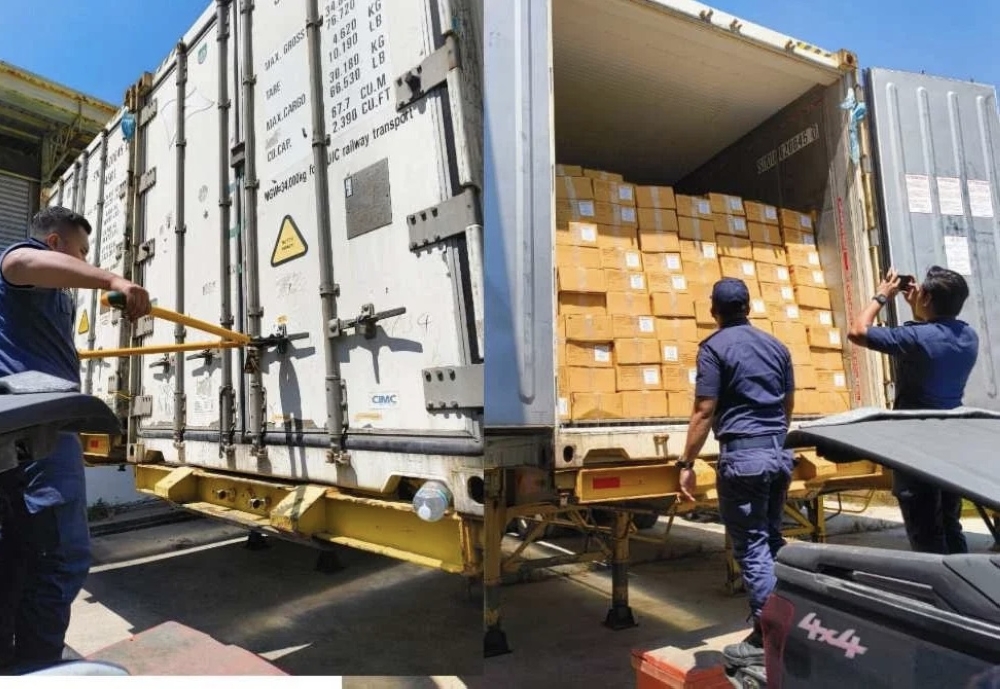
The Malaysian Anti-Corruption Commission launched a significant enforcement operation in Sabah that successfully dismantled a syndicate trafficking illegal frozen chicken shipments sourced from China. Three individuals connected to the smuggling network were apprehended as authorities intensified their crackdown on unlicensed food imports infiltrating Malaysia's supply chain through its eastern ports.
Operation Chick, as the initiative has been designated, represents part of the MACC's broader mandate to combat not only corrupt practices but also the systemic vulnerabilities that allow contraband to flow through Malaysia's ports. The operation underscores growing concerns about the intersection of corruption and public health, where enforcement gaps enable illicit imports that bypass mandatory safety inspections and regulatory compliance procedures. By targeting the organisational structure behind these smuggling activities, authorities aim to disrupt supply chains that profit from circumventing legitimate import channels.
Sabah's geographic position as a maritime hub makes it particularly vulnerable to smuggling operations. The state's long coastline and multiple ports create numerous entry points where coordinated syndicates can exploit inadequate oversight. For Malaysian consumers, the proliferation of undocumented food imports represents a tangible health risk, as these products escape the rigorous testing protocols administered by the Ministry of Health and the relevant food safety authorities. Illegally imported frozen chicken, in particular, raises concerns about disease transmission and contamination, especially given China's status as a major poultry producer and Sabah's significant population of migrant workers who may consume cheaper, unregulated foodstuffs.
The syndicate's operational structure likely involved multiple layers designed to obscure the flow of contraband goods from initial import through to retail distribution. Such networks typically depend on corrupt officials who facilitate customs clearance or deliberately overlook shipment documentation irregularities. By arresting three key figures, the MACC has sought to unravel the network's coordination mechanisms and identify higher-level organisers who may be orchestrating similar operations elsewhere in Malaysia. The investigation will probably examine financial transactions, shipping records, and storage facilities to map the full extent of the illegal trade.
This enforcement action carries broader implications for Malaysia's food security and public trust in the regulatory framework. Domestic poultry producers, who operate within compliance requirements and incur legitimate business costs, face unfair competition from smuggled imports sold at artificially depressed prices. This price undercutting distorts market dynamics and provides economic incentive for consumers and retailers to source illegal products, creating a vicious cycle that undermines legitimate operators. The MACC's intervention serves to restore competitive fairness, though sustained enforcement will be necessary to prevent renewed smuggling attempts.
The incident also highlights coordination challenges between the MACC and other enforcement bodies including the customs authority, port security agencies, and food safety inspectorates. Effective disruption of smuggling syndicates requires intelligence sharing and joint operations that cut across bureaucratic boundaries. Malaysia's success in combating such networks depends on these institutions developing real-time communication protocols and conducting regular joint training exercises. Sabah's distance from federal administrative centres in peninsular Malaysia can sometimes complicate coordination, making local capacity-building investments essential.
China remains a significant source of illicit food imports to Southeast Asia, reflecting both geographical proximity and cost disparities that incentivise smuggling. Malaysian authorities must balance trade relationships with neighbouring countries against domestic enforcement imperatives. The illegal frozen chicken route represents one facet of a broader pattern wherein undervalued Chinese agricultural exports destabilise regional food markets. Addressing this challenge requires both unilateral enforcement action, as demonstrated in Operation Chick, and multilateral engagement with partner nations to establish stronger verification standards and reduce profit margins for smugglers.
For Malaysia's port authorities and customs officials, this operation provides valuable intelligence about smuggling techniques and syndicate structures. Illicit shipments often employ sophisticated concealment methods, false documentation, and strategic timing to evade detection. By studying the modus operandi of busted syndicates, enforcement agencies can refine their risk assessment algorithms and inspection protocols. This intelligence-driven approach proves more cost-effective than blanket inspections and allows authorities to prioritise vulnerable entry points.
The arrests are likely to trigger follow-up investigations examining whether the three detained individuals have connections to other smuggling networks or corrupt officials within government agencies. The MACC may pursue asset seizure proceedings to recover profits derived from illegal activities, a tactic that strikes at the financial foundations sustaining organised smuggling. Such measures complement criminal prosecution and contribute to the long-term deterrent effect necessary to discourage participation in contraband trade.
Moving forward, sustaining progress against smuggling requires public awareness campaigns educating consumers about the food safety risks associated with unverified imports, coupled with consumer protection measures that empower individuals to report suspected illegal products. Retailers face mounting pressure to verify supplier credentials and maintain transparent sourcing documentation. The private sector's cooperation alongside government enforcement creates a more comprehensive defence against contraband infiltration than either actor could achieve independently.
Operation Chick demonstrates the MACC's commitment to addressing corruption's manifestation in food security and public health domains. The operation signals to potential smugglers that Malaysia's enforcement capacity, while imperfect, carries genuine consequences. However, success measured by three arrests will prove temporary unless complemented by systemic reforms in port security, customs professionalism, and inter-agency coordination. Sabah's status as a critical enforcement frontier means continued vigilance and resource allocation to this region will substantially determine whether Malaysia can maintain the integrity of its food supply chain.

