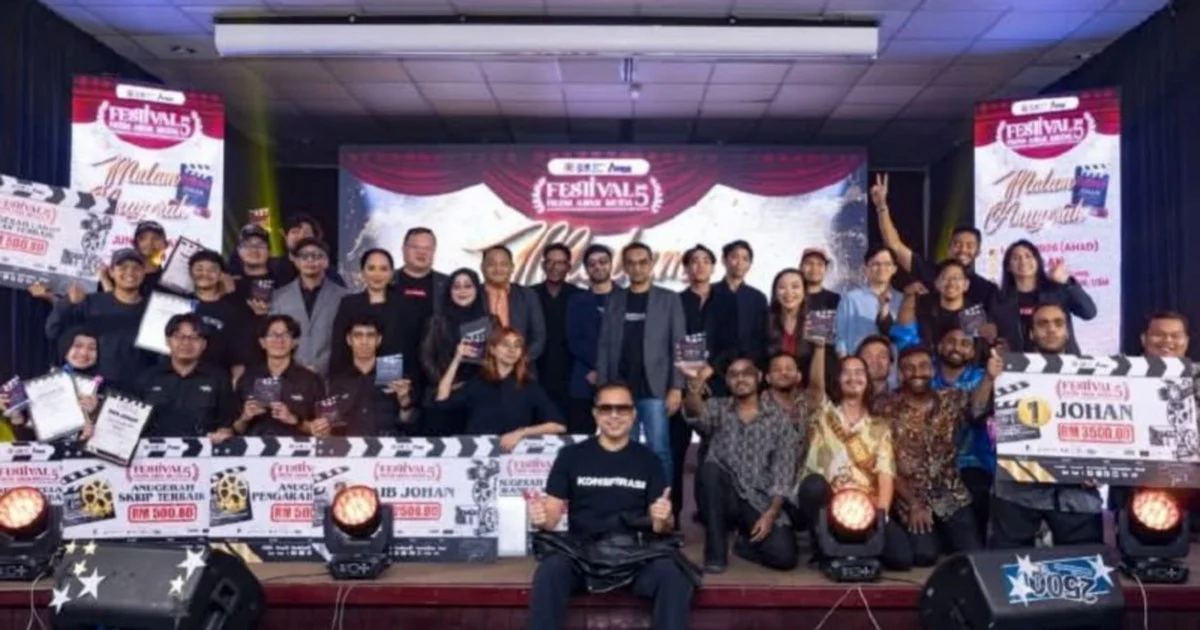
The Malaysian Anti-Corruption Commission (MACC) is expanding its approach to anti-corruption advocacy by turning to the creative arts sector as a vehicle for reaching young Malaysians. Through its involvement in organising the 5th Youth Film Festival (FFAM) at Universiti Sains Malaysia (USM) in Penang, the agency is attempting to forge a deeper connection with the nation's emerging generation of filmmakers, artists, and cultural influencers who shape public discourse and values.
This strategic partnership represents a notable pivot in how Malaysia's top anti-corruption body engages with youth. Rather than relying solely on traditional government communication channels, lectures, or compliance-focused programmes, MACC recognises that film festivals offer authentic platforms where young people congregate around shared creative interests. The medium of film itself—inherently visual, emotionally resonant, and widely consumed—creates opportunities for anti-corruption messaging to embed itself organically into cultural conversations rather than appearing as didactic or top-down instruction.
The collaboration underscores a growing recognition within Malaysian governance structures that integrity and ethical behaviour cannot be imposed through law enforcement alone. Building a culture of transparency and honesty requires cultivating values from within society, particularly among younger demographics who will shape institutional practices, corporate governance, and civic norms for decades to come. By positioning itself alongside USM and the festival organisers, MACC attempts to associate anti-corruption advocacy with creativity, self-expression, and youthful energy rather than authority and punishment.
Universiti Sains Malaysia, as the host institution, brings significant credibility and reach to the initiative. As one of Malaysia's premier research universities with particular strength in the arts and social sciences, USM provides an intellectual anchor that elevates the festival beyond mere entertainment. The university's involvement signals that anti-corruption values merit serious cultural and academic attention, not just legal or regulatory responses. For students and young filmmakers participating in the festival, this linkage between creativity and institutional integrity reinforces the idea that their generation has a central role to play in rebuilding public trust.
The Youth Film Festival itself serves as a natural laboratory for exploring corruption-related themes through cinema. Film remains one of the most powerful mediums for communicating complex social issues—particularly those involving systemic failures, ethical dilemmas, and human consequences. By making anti-corruption a thematic focus of the festival, MACC creates space for young directors and producers to interrogate how corruption manifests in everyday Malaysian life, how it affects communities, and what prevention mechanisms might look like. This artistic examination often generates insights and conversations that purely regulatory approaches miss.
For Malaysia specifically, where corruption remains a persistent concern affecting public confidence in government institutions, courts, and law enforcement, engaging youth through cultural means addresses a critical awareness gap. Younger Malaysians, particularly those born after 2000, have grown up with greater access to information and global standards of governance. Many are increasingly cognisant of corruption scandals and their impacts, yet may feel disconnected from formal anti-corruption mechanisms. A film festival provides an accessible, non-threatening entry point for them to engage with these issues and to see themselves as agents of change.
The initiative also has practical implications for MACC's institutional effectiveness. By building relationships with filmmakers, content creators, and university networks, the agency expands its reach far beyond what conventional enforcement campaigns can achieve. Documentary filmmakers, in particular, have demonstrated repeatedly that they can investigate corruption more compellingly than government communications can, generating public interest and support for institutional reform. Young creators trained or influenced by this collaboration may become amplifiers of anti-corruption messages within their own professional circles and networks.
Regionally, Malaysia's approach through creative partnership reflects broader shifts in how Southeast Asian governments are addressing governance challenges. Other nations in the region have similarly experimented with using arts, music, theatre, and visual culture to communicate public health messages, environmental awareness, and civic values. The Youth Film Festival model, if successful, could serve as a template that other ASEAN countries or their anti-corruption agencies might adapt for their own contexts.
However, the success of such initiatives ultimately depends on execution and authenticity. Young people are particularly attuned to institutional attempts at cultural co-option or manipulation. For the partnership to resonate genuinely, MACC must ensure that anti-corruption messaging within the festival emerges organically from artistic exploration rather than appearing as corporate-sponsored propaganda. The festival organisers and USM must maintain editorial independence and creative freedom for participating filmmakers, allowing them to critique not just abstract corruption but specific, real-world instances where needed.
The timing of this initiative is noteworthy given Malaysia's recent history of high-profile corruption cases and ongoing efforts at institutional reform. Public faith in anti-corruption mechanisms has been inconsistent, fluctuating with political changes and prosecutorial decisions. By investing in long-term cultural change through youth engagement, MACC signals confidence that building institutional legitimacy requires more than legal victories—it requires changing societal attitudes toward dishonesty and building new social norms around integrity.
The 5th Youth Film Festival at USM represents an investment in what might be termed preventive cultural governance. Rather than waiting for corruption to occur and then punishing perpetrators, MACC is attempting to shape the values and ethical frameworks that young people bring into their future professional roles. Whether in business, government, civil society, or media, this generation's commitment to integrity will determine whether Malaysia can sustain institutional reforms and reduce corruption over the coming decade.