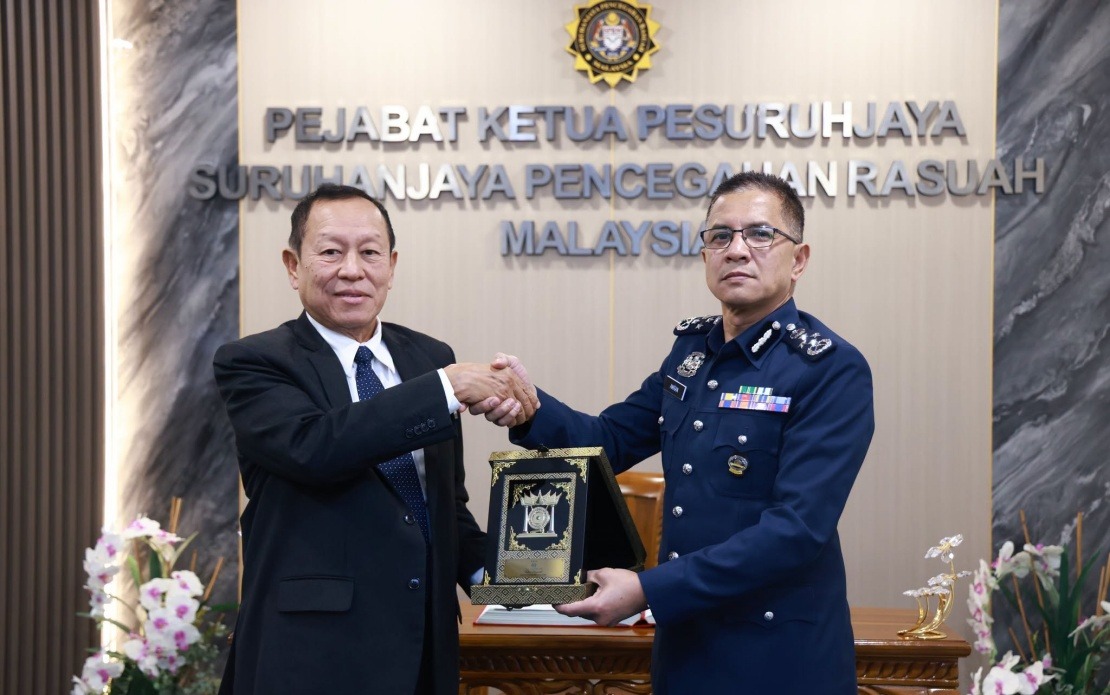
The Malaysian Anti-Corruption Commission (MACC) and the Royal Malaysian Customs Department (JKDM) have announced plans to form a dedicated task force aimed at strengthening monitoring of enforcement activities and tax collection across Malaysia's strategic maritime entry points. The collaborative initiative emerged from high-level discussions between the two agencies, signalling a coordinated approach to tackling systemic vulnerabilities in customs operations that have historically served as conduits for illicit activity and revenue loss.
During a strategic meeting at MACC headquarters in Putrajaya on July 15, MACC chief commissioner Datuk Seri Abd Halim Aman and JKDM director-general Datuk Amran Ahmad identified the need for enhanced oversight mechanisms at ports nationwide. The one-hour session focused on addressing operational and procedural challenges that currently hamper customs inspection protocols and create administrative bottlenecks that corrupt actors exploit.
The proposed task force represents a recognition by both agencies that port security extends beyond traditional customs functions. A significant area of concern involves leakage within container management systems—the systematic loss of tracked goods and revenue through falsification, misdeclaration, or diversion. By pooling investigative resources and intelligence, MACC and JKDM aim to create an integrated enforcement layer that identifies and disrupts patterns of non-compliance before they escalate into organised smuggling networks.
During the meeting, JKDM leadership presented detailed intelligence on the evolving tactics employed by criminal syndicates to evade tax obligations. These methods extend well beyond conventional smuggling. One particularly problematic scheme involves the deliberate undervaluation of currency being brought into Malaysia—importers declare far lower cash amounts than they are actually transporting, creating artificial records that facilitate money laundering and tax evasion simultaneously. Such false declarations undermine both customs revenue and financial transparency mechanisms that regulatory authorities depend upon.
Document and information falsification represents another significant challenge highlighted by JKDM. Syndicates obtain multiple approvals through fraudulent paperwork, enabling goods to circulate through ports under false manifests or classifications. This creates a compliance nightmare for authorities attempting to track goods through the supply chain, while generating substantial revenue loss for the government. The scale of these operations suggests coordination among corrupt officials, logistics providers, and port operators rather than ad hoc smuggling attempts.
The establishment of this task force carries particular significance for Malaysia's regional position. As Southeast Asia's third-largest economy and a crucial hub in global trade routes, Malaysia's port infrastructure handles hundreds of billions of ringgit in annual commerce. Corruption at these chokepoints doesn't merely represent domestic fiscal losses—it facilitates transnational organised crime, drug trafficking, and sanctions evasion. The MACC-JKDM partnership acknowledges that integrity in port operations underpins regional stability and Malaysia's reputation as a reliable trading partner.
For Malaysian businesses engaged in legitimate international trade, the task force potentially offers benefits through streamlined operations. When corruption is minimised, customs processing becomes more transparent and predictable, reducing the informal payments and delays that legitimate traders currently endure. However, the initiative also signals tighter scrutiny, meaning companies must ensure compliance with all documentation requirements and declaration standards.
Datuk Amran Ahmad emphasised JKDM's openness to leveraging MACC's expertise in cultivating organisational integrity culture. This reflects a broader shift in Malaysian governance toward embedding anti-corruption training and protocols throughout public institutions rather than treating corruption control as a peripheral function. MACC integrity talks conducted within JKDM will focus on instilling ethical standards among frontline customs officers who face greatest exposure to corrupt inducements.
The bilateral framework also addresses the challenge of bureaucratic cultures that inadvertently enable corruption. Complex approval procedures, overlapping jurisdictions, and information silos create environments where breaches go undetected. By establishing formal mechanisms for inter-agency intelligence sharing and coordinated investigation, the task force aims to eliminate these institutional gaps.
Implementation of the task force will require clear governance structures, resource allocation, and performance metrics. Success depends on whether the agencies can move beyond occasional high-level meetings toward sustained operational integration. Both organisations must establish regular intelligence briefings, joint enforcement teams, and unified case management systems that allow real-time tracking of suspicious activities across port jurisdictions.
The initiative arrives as Malaysia intensifies focus on economic competitiveness and fiscal sustainability. Customs revenue represents a substantial component of government income, while corruption at ports distorts market competition by allowing well-connected smugglers unfair advantage over compliant competitors. By strengthening enforcement capacity, the task force supports broader policy objectives around business environment improvement and revenue stabilisation.
For Southeast Asian readers, the MACC-JKDM partnership offers a model of how regional economies can address port-related corruption through institutional collaboration. As transnational smuggling networks and trade-based money laundering grow increasingly sophisticated, coordinated responses involving multiple agencies and jurisdictions become essential. Malaysia's initiative demonstrates commitment to maintaining port integrity in an era of rising organised crime.
Looking ahead, the task force's effectiveness will depend on sustained political support, adequate funding, and willingness to pursue investigations regardless of the profile of implicated individuals. Initial focus on container management vulnerabilities and cash smuggling provides concrete starting points, but the partnership must eventually address more complex schemes involving corrupt officials, clearing agents, and port authority personnel. The establishment of this task force marks an important institutional step, though translating it into measurable corruption reduction will require determination and resources over several years.

