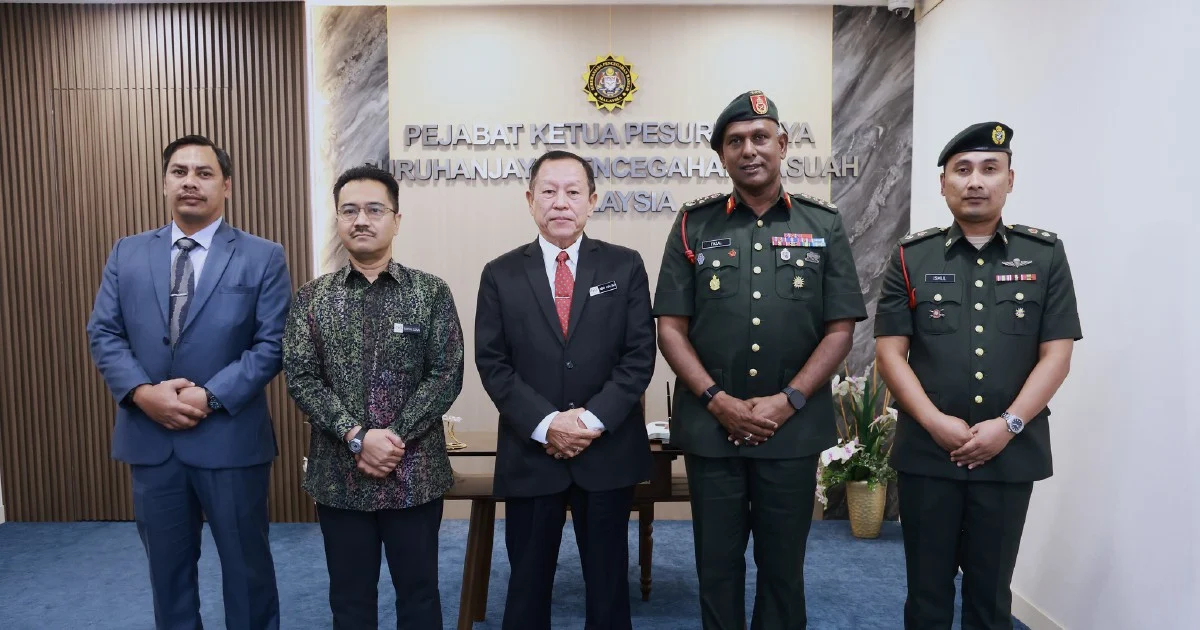
The Malaysian Anti-Corruption Commission and the nation's armed forces are moving to establish a more robust collaborative framework that places particular emphasis on the coordinated exchange of intelligence, according to announcements from Putrajaya. This expanded partnership represents a significant shift in how anti-corruption efforts are approached at the institutional level, bringing together civilian oversight structures with military institutional knowledge to create a more comprehensive protective mechanism against graft.
The initiative underscores growing recognition that corruption within defence and security sectors poses distinct challenges requiring specialised coordination. Military installations, procurement processes, and strategic assets represent substantial targets for corrupt practices, with the potential to compromise operational effectiveness and drain resources that might otherwise strengthen national defence capabilities. By establishing formal channels for intelligence sharing between the MACC and armed forces, authorities aim to detect and investigate suspicious activities more rapidly and thoroughly than either institution could manage independently.
For Malaysia's readers, this development carries practical implications across multiple domains. Corruption within defence procurement has historically resulted in inflated costs, delayed acquisitions, and substandard equipment reaching frontline personnel. By enabling the MACC to work more closely with military investigators, the arrangement potentially creates a deterrent effect for officials and contractors contemplating illicit dealings. The transparency mechanisms being introduced also align with Malaysia's commitments under international anti-corruption frameworks and regional accountability standards.
The information exchange protocols being established will likely facilitate faster identification of patterns that might indicate systemic corruption rather than isolated incidents. Military personnel stationed across the country possess on-the-ground awareness of irregular activities that might escape civilian observers, while the MACC brings investigative expertise and legal enforcement authority. This complementary positioning creates opportunities for a more nuanced understanding of how corruption networks operate within defence contexts.
From a governance perspective, this enhanced cooperation reflects broader institutional maturation within Malaysia's anti-corruption architecture. The MACC has significantly expanded its investigative capabilities over recent years, while the armed forces have increasingly recognised that internal integrity measures strengthen rather than compromise military cohesion. This partnership acknowledges that safeguarding national interests extends beyond operational readiness into the financial and administrative integrity of defence systems themselves.
The arrangement also carries relevance for Malaysia's position within regional security frameworks. South-East Asian nations face mounting pressure to demonstrate robust anti-corruption measures as defence partnerships deepen with international counterparts. Countries like Singapore and Indonesia have made similar institutional moves, and Malaysia's actions bring the nation into closer alignment with regional best practices. This positioning matters as defence relationships with allies increasingly include provisions requiring partners to maintain specified integrity standards.
Implementation will necessarily involve developing clear protocols for information sharing that respect operational security requirements while enabling effective investigation. The MACC must gain sufficient access to identify potential corruption without compromising classified military information, representing a delicate balance that requires well-defined procedures. Training programmes for personnel from both institutions on these protocols will be essential to ensure the partnership functions smoothly without creating bureaucratic friction.
The governance enhancement component of this initiative suggests moves beyond reactive investigation toward proactive systemic improvement. Better record-keeping practices, clearer procurement procedures, and enhanced financial oversight mechanisms within military establishments can reduce opportunities for corruption to flourish. By building these improvements collaboratively, the MACC and armed forces can tailor solutions that address military-specific challenges while maintaining rigorous standards.
For Malaysian businesses operating in the defence sector, this development carries both challenges and opportunities. Companies engaged in legitimate defence procurement face more rigorous scrutiny, but this environment also removes unfair competitive advantages enjoyed by less scrupulous competitors willing to engage in kickbacks or other corrupt practices. Over time, enhanced enforcement should create a more level playing field where contract awards depend primarily on capability and value rather than political connections or illicit payments.
The timing of this initiative reflects broader momentum in Malaysia's anti-corruption agenda. Public and political support for stronger enforcement has created space for institutions like the MACC to expand operations, while reducing the reputational cost to the military of accepting external oversight. This alignment of institutional and political will rarely persists indefinitely, making this a valuable window for establishing robust mechanisms that can survive future shifts in political attention.
Longer-term success will depend on sustained resource allocation and protection from political interference. Intelligence sharing requires trust that information disclosed will be handled appropriately and not weaponised for factional advantage. The military must be confident that cooperation with the MACC will enhance rather than undermine institutional integrity, while the MACC requires assurance that access to defence information will genuinely support corruption investigations rather than serving as pretext for intelligence gathering.
Regional observers will watch this partnership closely as a model for how civilian anti-corruption bodies and military institutions might collaborate elsewhere in South-East Asia. If successfully implemented, the framework could provide a template for other countries seeking to address corruption in defence sectors without creating unnecessary institutional tension. Malaysia's experience may inform how neighbouring nations approach similar challenges as regional security cooperation deepens and international pressure for transparency intensifies.

