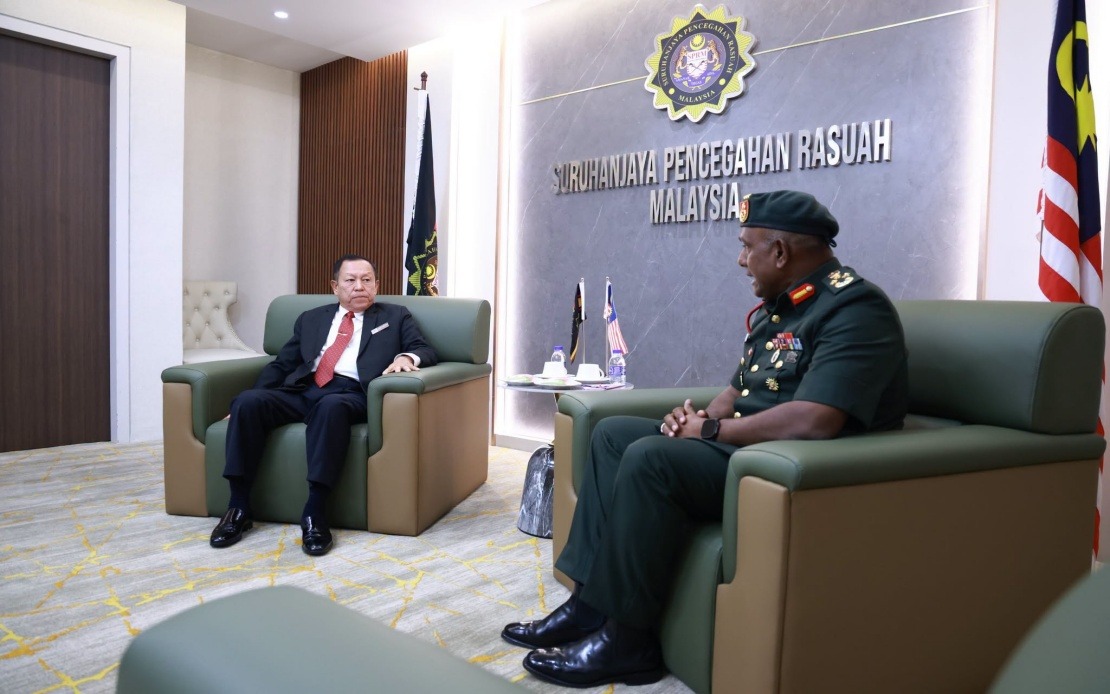
The Malaysian Anti-Corruption Commission (MACC) and the Malaysian Armed Forces (MAF) have moved to solidify their institutional relationship, pledging enhanced cooperation across intelligence channels and administrative oversight to create a more robust defence against corrupt practices within the military establishment. The reaffirmation came during a formal meeting at MACC headquarters in Putrajaya this month, marking a significant moment in the country's governance agenda as both organisations seek to leverage their respective capabilities in pursuit of national integrity.
MACC Chief Commissioner Datuk Seri Abd Halim Aman underscored the strategic value of the partnership, noting that the commission has long recognised the Armed Forces as an essential ally in the broader anti-corruption mission. The collaborative framework addresses not merely the detection and prosecution of individual infractions, but represents a systemic approach to embedding ethical standards throughout military operations and administration. By institutionalising information-sharing protocols and governance improvement initiatives, the two agencies aim to create multiple accountability layers that discourage malfeasance before it occurs.
The timing of this announcement carries particular significance given ongoing global scrutiny of defence procurement and military spending in Southeast Asia. Malaysia, like its regional neighbours, faces sustained pressure to demonstrate that public resources allocated to security are deployed transparently and efficiently. The MACC-MAF agreement signals to international partners and domestic stakeholders that the country takes governance seriously, potentially influencing investment decisions and bilateral defence relationships that depend on demonstrable institutional integrity.
Lieutenant General Datuk Fazal Abdul Rahman, newly appointed director-general of the Malaysian Defence Intelligence Organisation (MDIO), emphasised that the Armed Forces remain steadfastly committed to the highest standards of professional conduct and disciplinary rigour. His remarks underscore a recognised vulnerability within defence establishments globally: the concentration of resources, classified decision-making, and hierarchical command structures can, without vigilant oversight, create environments where misconduct flourishes. The MDIO's closer alignment with MACC represents an attempt to address this structural risk through institutional design.
Intelligence sharing between the two organisations carries implications that extend beyond simple information exchange. The MACC can now access defence sector insights that may reveal patterns of financial irregularity, procurement manipulation, or resource misallocation that would otherwise remain hidden within classified military channels. Conversely, the Armed Forces gain access to MACC's sophisticated analytical frameworks and cross-agency intelligence networks, enabling them to identify internal threats more effectively. This bidirectional flow creates synergies that neither organisation could achieve independently.
The governance enhancement component of the agreement merits particular attention, as it suggests both parties recognise that anti-corruption requires more than reactive investigation. By working collaboratively on systemic improvements—whether through revised procurement procedures, enhanced personnel vetting, or transparent budget allocation mechanisms—the organisations position themselves as agents of preventive governance rather than merely punitive bodies. For the Malaysian Armed Forces, this represents an acknowledgment that institutional credibility depends on demonstrable commitment to self-improvement.
Regional observers will note that this partnership reflects broader patterns within Southeast Asia, where defence establishments increasingly recognise that military effectiveness depends partly on public confidence in institutional integrity. Nations that tolerate widespread military corruption face recruitment challenges, operational inefficiencies, and damaged international standing. The MACC-MAF agreement thus serves multiple strategic objectives simultaneously: it addresses corruption directly, strengthens institutional legitimacy, and signals regional stability to international partners concerned about governance standards.
The presence of senior personnel from both organisations—including MACC Intelligence Division senior director Datuk Saiful Ezral Arifin and MAF Security and Counter Intelligence Directorate director Lt Col Muhamad Zainol Md Yusof—indicates that the agreement reflects genuine operational commitment rather than mere ceremonial protocol. These individuals command significant resources and operational authority, suggesting the collaboration will translate into substantive institutional changes rather than rhetorical flourishes.
For Malaysian citizens and taxpayers, this deepened cooperation carries practical implications. Military budgets represent substantial national expenditure, and corruption within defence procurement directly diminishes operational capability while diverting resources from frontline needs. Enhanced MACC scrutiny, supported by access to military intelligence channels, creates accountability mechanisms that protect public investment and ensure defence funds translate into genuine security benefits rather than enriching corrupt officials or their associates.
The agreement also reflects evolving understanding of corruption as a phenomenon requiring multi-institutional approaches. No single agency possesses all tools necessary to combat sophisticated misconduct that may involve collusion between military and civilian officials, complex financial engineering, or international dimensions. By formally institutionalising cooperation, MACC and the Armed Forces acknowledge that their respective jurisdictions overlap in ways that demand coordinated response frameworks and information-sharing protocols.
Looking forward, the sustainability of this partnership will depend on maintaining institutional relationships that transcend individual personalities and political cycles. Malaysian governance history demonstrates that inter-agency cooperation sometimes atrophies when key personalities depart or political priorities shift. For the MACC-MAF agreement to deliver sustained benefits, both organisations must embed collaborative mechanisms into standard operating procedures and institutional culture, rather than relying on the goodwill of current leadership.
The broader significance extends to Malaysia's international positioning. Demonstrable anti-corruption commitment, particularly within defence establishments, influences how the country is perceived by international development institutions, military partners, and investors evaluating governance risk. As Southeast Asian nations compete for defence partnerships and foreign investment, institutional integrity becomes a competitive advantage. The MACC-MAF agreement thus contributes to Malaysia's soft power and economic interests, extending the implications of anti-corruption work beyond the moral and civic imperatives that first animate such initiatives.

