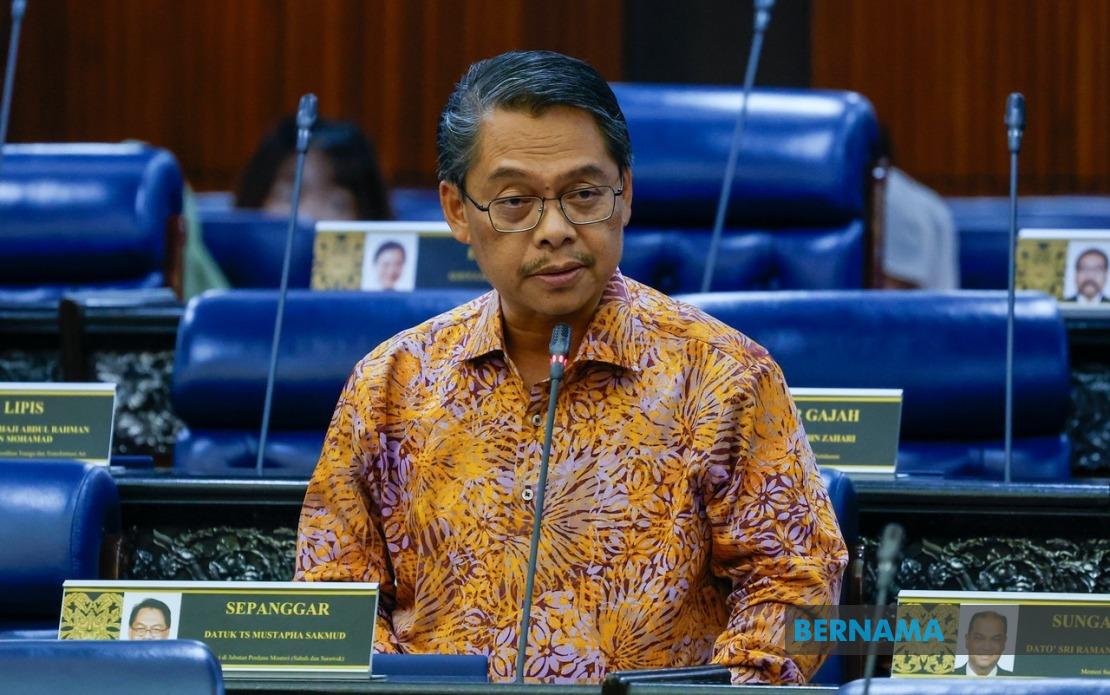
Progress on the Malaysia Agreement 1963 (MA63) has reached a significant milestone, with Datuk Mustapha Sakmud, Minister in the Prime Minister's Department overseeing Sabah and Sarawak Affairs, announcing that 13 of the 29 negotiated matters have now been fully resolved. Speaking during parliamentary proceedings on June 25, Sakmud detailed the state of ongoing discussions between federal authorities and the East Malaysian states, providing the most comprehensive update to date on the long-running reform initiative that emerged from heightened political pressure in both Sabah and Sarawak for greater recognition of the original 1963 constitutional agreement.
The resolution of these 13 matters represents tangible headway in what has become an increasingly complex negotiating process. Beyond the fully settled items, Sakmud indicated that five additional issues have reached an interim or partial resolution stage, achieved following a Technical Committee meeting convened on March 2. This tiered approach to dispute settlement reflects the nuanced nature of constitutional and administrative reform, where some matters require further deliberation before final adoption while others can move forward on a provisional basis pending subsequent ratification or implementation steps.
Four of the five interim matters carry particular significance for public administration in the two states. These touch upon the expansion of state public service positions under Article 112 of the Federal Constitution, a crucial issue affecting employment opportunities and local administrative capacity. In parallel, the discussions have also encompassed health service arrangements, educational jurisdiction, and the critical matter of Borneonisation—the preferential employment of locals in federal public service positions operating within Sabah and Sarawak. The Borneonisation principle holds especial importance in East Malaysia, where residents have long felt that federal appointments disadvantaged local talent and perpetuated dependence on peninsular bureaucrats.
The remaining eleven outstanding matters continue to occupy the attention of multiple stakeholders. The Sabah and Sarawak Affairs Division, operating as the official secretariat for these negotiations, continues coordinating between federal and state government bodies to move these items toward resolution. This ongoing engagement indicates that while substantial progress has been achieved, the process remains incomplete and demands continued political will from all parties involved. The complexity of these outstanding issues likely stems from their intersection with broader constitutional questions or resource implications that require careful consideration.
One of the most contentious unresolved questions concerns parliamentary representation. Isnaraissah Munirah Majilis, representing Warisan and the Kota Belud constituency, raised demands during the parliamentary session for increased parliamentary seats for Sabah and Sarawak to constitute 35 per cent of total Dewan Rakyat representation. This proposal, which has gained traction among East Malaysian political parties and civil society groups, seeks to restore what proponents view as the proper constitutional balance between peninsular and non-peninsular Malaysia inherent in the 1963 agreement.
Sakmud's response to the parliamentary seats question underscored the procedural and constitutional hurdles surrounding any such redistribution. The Election Commission holds exclusive authority to conduct electoral redelineation exercises, and these can only be undertaken following the completion of an eight-year boundary cycle. This technical constraint means that even if political consensus existed, the electoral machinery cannot simply be reset on demand. The current eight-year period determines when such an exercise becomes available, making immediate expansion impossible regardless of political appetite.
Beyond the procedural timeline, the parliamentary composition question intersects with constitutional amendment requirements. Article 46 of the Federal Constitution governs the composition of the Dewan Rakyat, and any modification to seat allocations would necessitate amending this provision. Constitutional amendments in Malaysia demand a two-thirds supermajority in parliament—a threshold that has historically proven difficult to achieve on contentious issues, particularly those affecting the balance between states. This requirement explains why even straightforward-seeming reforms often languish in the legislative pipeline.
The convergence of these procedural, constitutional, and political barriers illustrates why the parliamentary representation issue remains categorised as unresolved despite years of discussion. Neither technical pathway can be expedited without fundamental changes to electoral law or constitutional procedure that would require broader parliamentary consensus. This reality has likely influenced the strategic calculation of East Malaysian political actors, some of whom may be pursuing the 13 resolved and five interim matters as achievable wins while the parliamentary representation question remains deferred.
From a broader Southeast Asian perspective, Malaysia's approach to addressing MA63 reflects an attempt at managing historical grievances and constitutional tensions through institutional negotiation rather than unilateral revision. Unlike some regional peers that have experienced constitutional crises or political upheaval over federalism questions, Malaysia has maintained a framework for structured dialogue. However, the slow pace and the persistence of difficult outstanding matters also reveal the structural challenges inherent in amending multi-state constitutional arrangements once they have calcified into practice.
For Malaysian readers, particularly those in Sabah and Sarawak, the distinction between fully resolved, interim, and outstanding matters carries real implications. Resolved matters can potentially move toward implementation, while interim issues may require further negotiation or policy work before becoming operational. The unresolved questions, meanwhile, remain potential pressure points in federal-state relations. How these negotiations conclude will partly determine whether East Malaysian constituencies view the MA63 process as delivering meaningful restitution of constitutional intent or as a limited concession that fails to address structural inequalities.
The ongoing nature of these discussions also reflects the political costs of delay. Political movements in both states have mobilised constituencies around MA63 as a focal point for demanding recognition of East Malaysian interests. Extended negotiation timelines risk either fatigue with the process or radicalisation of demands if visible progress stalls. The government's announcement of interim resolutions on some matters may therefore serve both the pragmatic function of demonstrating momentum and the political function of maintaining confidence in the negotiating process itself.

