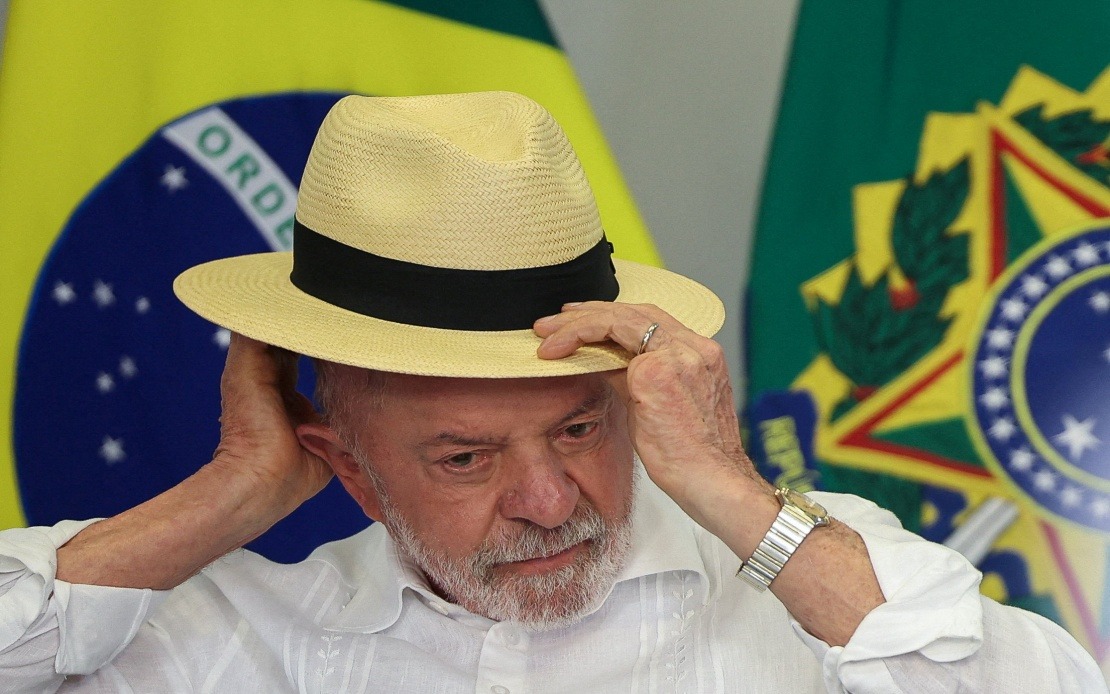
Brazilian President Luiz Inácio Lula da Silva is clinging to a slender polling lead as the South American nation gears up for its October presidential election, with newly released survey data suggesting the contest has tightened considerably. According to a Quaest poll commissioned by media giant Globo and fielded between August 10 and 13 among 2,004 respondents, Lula commands 43 per cent support in a runoff scenario against Senator Flavio Bolsonaro's 40 per cent—a margin that falls within the survey's two-point error band, effectively rendering the race virtually tied at this stage of campaigning.
The polling trajectory reveals momentum shifting towards Bolsonaro's challenger. Just five days earlier, on August 5, Lula held a more comfortable 44-39 lead in comparable measurements, indicating that the Bolsonaro camp has made incremental gains over the intervening period. Should a first-round ballot proceed without either candidate securing an outright majority—a realistic scenario under Brazilian electoral mechanics—Lula currently attracts 38 per cent support against Bolsonaro's 31 per cent, with lesser-known contenders Renan Santos and Ronaldo Caiado each capturing four per cent and Romeu Zema drawing two per cent.
Flavio Bolsonaro, the eldest son of former President Jair Bolsonaro, has emerged as the Right's standard-bearer only after his father's political fortunes collapsed spectacularly. The elder Bolsonaro was ruled ineligible by Brazil's Supreme Electoral Court following findings that he abused executive power, and subsequently faced conviction for orchestrating a scheme to overturn his 2022 election loss to Lula. The succession of disqualifications has elevated Flavio, a sitting senator, into the leadership vacuum, transforming him into the leading right-wing alternative as the October vote approaches.
Lula's campaign strategy has pivoted squarely towards nationalist themes and resistance to external pressure, particularly from the United States. The incumbent president formally launched his re-election bid on August 2 at a Workers' Party convention in São Paulo, framing the contest as a battle for Brazilian sovereignty in an era of intensifying geopolitical competition. His messaging deliberately invoked protection of the nation's resource wealth, warning that Brazil would not surrender control of its rare earth minerals and other strategically critical commodities to foreign powers regardless of their economic or diplomatic influence.
In particularly pointed rhetoric, Lula articulated a vision of Brazilian independence that directly addressed concerns about American and Chinese competition for resource access. He declared that China, the United States, and France would not gain unchecked access to Brazil's mineral reserves without demonstrating respect for Brazilian sovereignty. The language deployed—"In Brazil, we do not accept anyone sticking their nose where it does not belong"—represented a transparent jab at the Trump administration, with which the Bolsonaro family maintains historically close relations dating back to the previous American president's first term.
Lula's warnings about foreign interference carry particular salience given the geopolitical context surrounding the election. In June, the Brazilian leader directly cautioned Trump against meddling in Brazil's domestic political process, employing a tit-for-tat argument that American elections should similarly remain beyond Brazilian commentary or influence. The statement reflected growing anxiety within Brasília that a Trump administration, should it return to power, might actively support Bolsonaro-aligned candidates or seek to constrain Lula's independent foreign policy approach, particularly regarding Brazil's relationship with China and its role in international forums like BRICS.
For Southeast Asian observers, Brazil's electoral dynamics carry implications extending beyond South America. As a major developing economy and member of regional groupings that challenge Western dominance, Brazil's direction influences the broader architecture of global economic and political alignment. A Lula victory would likely reinforce the non-aligned positioning that characterizes Brazilian foreign policy, maintaining distance from American pressure on matters ranging from technology standards to trade arrangements—dynamics that resonate across the developing world, including Malaysia and other ASEAN members navigating similar pressures from major powers.
Conversely, a Bolsonaro-aligned government would presumably tilt more explicitly toward American foreign policy preferences, potentially altering the balance within forums where Brazil and Southeast Asian nations coordinate. The narrowing of Lula's polling lead therefore carries consequences that ripple beyond Brazilian borders, shaping the international environment within which countries like Malaysia conduct diplomacy and economic strategy.
The statistical near-parity between the candidates—separated by merely three percentage points within the margin of error—underscores the unpredictable nature of the contest despite Lula's nominal advantage. The incumbent possesses institutional resources and the benefit of incumbency, yet faces potential headwinds from economic conditions and fatigue among electorate segments. The Bolsonaro campaign, meanwhile, appeals to conservative voters wary of Lula's historical association with the Workers' Party and the corruption scandals that tarnished its previous administrations, even as Jair Bolsonaro himself remains politically toxic owing to his conviction and ineligibility.
With approximately two months remaining before Brazilians cast their ballots, the campaign enters its decisive phase. Debates, advertising buys, and ground mobilization will intensify as both camps seek to consolidate their bases and persuade undecided voters. The current polling equilibrium suggests that relatively small shifts in voter sentiment or campaign effectiveness could prove decisive, making the October election genuinely competitive rather than a coronation of either candidate.

