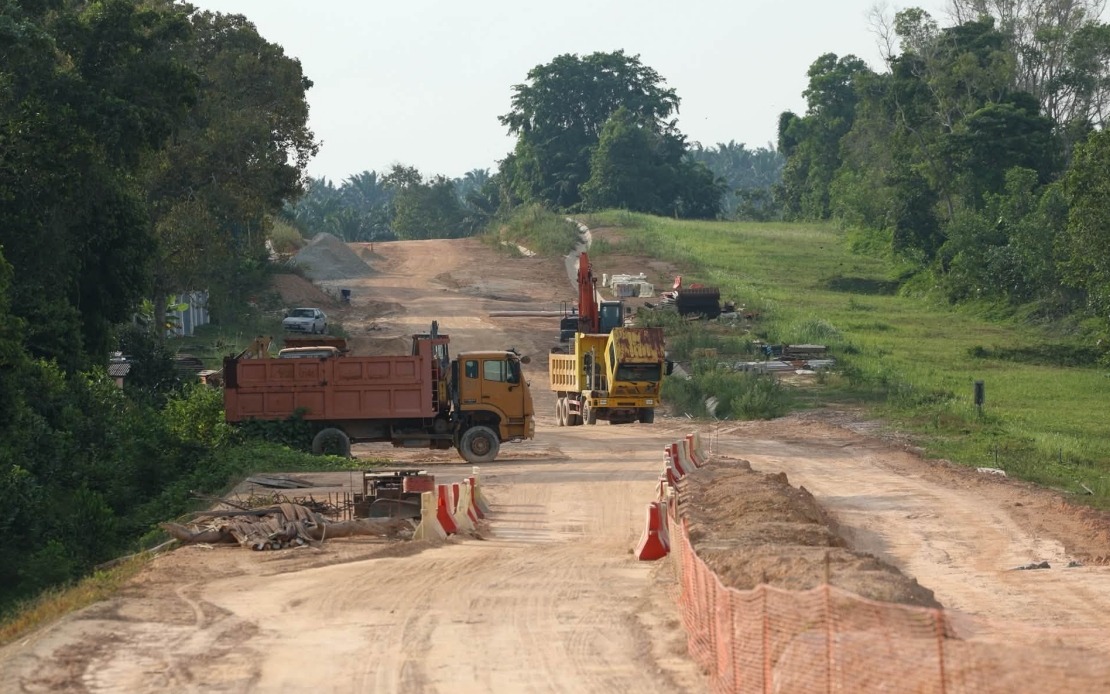
The construction of a new road linking Lukut to Kampung Sirusa through Kampung Paya and Kampung Bagan Pinang in Port Dickson has made significant strides, with works now more than half complete and running markedly ahead of the originally planned timetable. At 60.57 per cent physical progress, the RM81.92 million undertaking has already surpassed expectations by advancing 43 days faster than the contract schedule anticipated, with final completion targeted for August 10, 2027.
The initiative falls under the purview of the Ministry of Rural and Regional Development and received backing through the Federal Government's development allocation, with the Public Works Department acting as the implementing authority. This positioning reflects the broader strategic importance assigned to Port Dickson's infrastructure development, signalling federal-level commitment to improving regional connectivity across Negeri Sembilan's coastal districts.
The ten-kilometre stretch represents a comprehensive engineering undertaking that extends well beyond simple road surfacing. The project encompasses full-scale infrastructure development in line with Public Works Department R2 specifications, incorporating slope stabilisation works, sophisticated drainage frameworks, sewerage installations, structural elements, utilities integration, and ancillary support systems. This holistic approach ensures the new corridor will function as modern infrastructure capable of handling contemporary traffic volumes and environmental demands.
Deputy Works Minister Datuk Seri Dr Ahmad Maslan visited the project site to assess construction progress and verify compliance with contractual schedules, technical specifications, and quality standards. Such ministerial oversight underscores the government's intention to maintain rigorous supervision of major infrastructure investments, with particular attention to addressing any on-site complications that might otherwise compromise timely delivery.
For Port Dickson residents, the road completion will translate into tangible quality-of-life improvements through multiple dimensions. Journey times between settlements will compress substantially, traffic movement will become smoother and more predictable, and overall route safety will improve through modern road design standards. The enhanced accessibility will particularly benefit communities previously reliant on inadequate or circuitous pathways, fundamentally reshaping how residents access essential services and economic opportunities.
The connectivity enhancements carry particular significance for local public service provision. Schools, clinics, and tourism attractions throughout Port Dickson will become more accessible to surrounding populations, reducing barriers to education, healthcare, and leisure activities. This improved access patterns represents the infrastructure investment's human dimension—infrastructure becomes meaningful only when it genuinely addresses community needs and removes practical obstacles to service utilisation.
Beyond immediate accessibility gains, the project functions as a deliberate catalyst for economic transformation across the Port Dickson region. The enhanced road network will lower distribution costs for businesses, reduce travel time for workforce commuting, and eliminate geographic impediments that previously constrained commercial activity. These advantages create favourable conditions for expanded trade activities, increased tourism flows, expanded employment opportunities, and attraction of investment capital into previously underconnected areas. The corridor will link economic activity centres more efficiently, enabling businesses to operate across larger geographic markets and encouraging entrepreneurs to establish operations in the locality.
The project's infrastructure quality and technical specifications position it to generate multiplier effects throughout the surrounding districts. As connectivity improves and transport costs decline, businesses serving Port Dickson and neighbouring communities can expand operations with reduced logistics burdens. The efficiency gains translate into competitive advantages that extend beyond the immediate project area, potentially stimulating broader development patterns across Negeri Sembilan's coastal regions.
The 43-day acceleration ahead of schedule carries operational significance extending beyond simple timeline metrics. Faster-than-planned completion suggests effective project management, robust contractor performance, and absence of major implementation obstacles. Early delivery means communities access the infrastructure benefits sooner than anticipated, businesses can capitalise on improved connectivity without prolonged delays, and government resources tied to project oversight become available for alternative priorities. The ahead-of-schedule performance also demonstrates practical capability for delivering major infrastructure investments efficiently—a reassuring indicator for larger regional development ambitions.
From a Malaysian infrastructure perspective, the Port Dickson project illustrates how federally-backed regional development initiatives can translate into concrete improvements for communities beyond major urban centres. The initiative reflects recognition that economic potential extends across multiple regions and that strategic infrastructure investments can unlock development opportunities in secondary cities and towns. As Malaysia pursues more diversified geographic growth patterns and seeks to reduce Kuala Lumpur-centric development concentration, projects like the Lukut-Kampung Sirusa corridor demonstrate practical mechanisms for channelling resources toward regional advancement.
The road's completion timeline places it within Malaysia's broader infrastructure development trajectory, where multiple major projects are advancing simultaneously across different regions. The ahead-of-schedule progress offers insights into construction sector capability and project management standards that inform expectations for comparable undertakings elsewhere. Successful delivery of this scale of infrastructure investment builds technical capacity and contractor experience that supports more ambitious future regional development initiatives.

