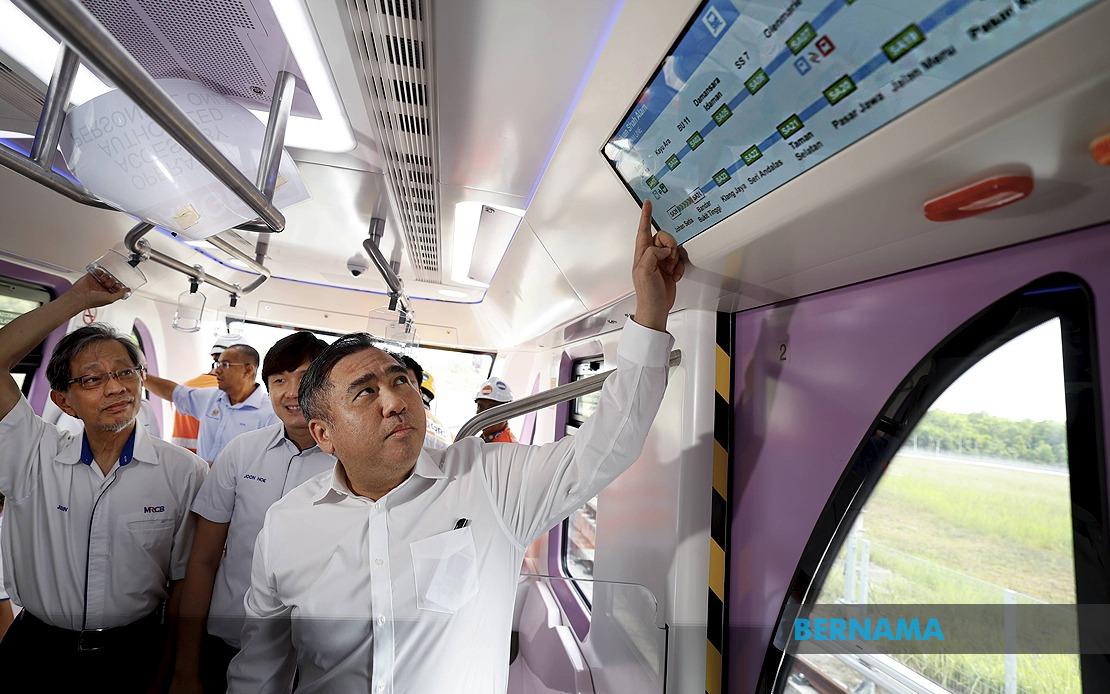
Malaysia's newest rapid transit corridor is set to transform commuter travel across the Klang Valley next week, with Transport Minister Anthony Loke confirming that the Light Rail Transit 3 (LRT3) will launch commercial operations on Monday, June 29. The announcement marks the culmination of a major infrastructure project aimed at easing congestion and improving mobility across one of the country's most densely populated regions.
Prime Minister Datuk Seri Anwar Ibrahim will officiate the official launch ceremony on Sunday, June 23, signalling government commitment to the project's completion. Loke made the announcement on June 22 while opening a new branch of the Road Transport Department at Terminal Bersepadu Selatan, underscoring the government's broader focus on transportation infrastructure across the Klang Valley corridor.
The 37.8-kilometre railway line stretches from Bandar Utama in the north to Johan Setia in Selangor, creating a vital transport artery that addresses long-standing mobility challenges in the western Klang Valley. The route has been specifically designed to connect major population centres that have historically suffered from inadequate public transport options, making the launch particularly significant for commuters in sprawling suburban areas.
The new service is projected to serve approximately two million residents across its operating corridor. This substantial beneficiary base reflects the strategic placement of the line through key residential zones, suggesting planners invested considerable effort in maximising the project's social and economic impact. For residents in Shah Alam and surrounding municipalities, the opening represents a significant shift in how they navigate daily commutes and access employment, educational, and commercial opportunities.
LRT3's route encompasses diverse land-use categories, passing through established residential neighbourhoods, emerging commercial precincts, and industrial parks. This mixed-use approach means the line will not simply serve commuters but also facilitate economic activity by improving connectivity between employment centres and residential areas. Small and medium-sized enterprises in industrial zones along the corridor stand to benefit from enhanced workforce accessibility and improved supply chain logistics.
The western Klang Valley has experienced rapid urbanisation over the past two decades, yet public transport development has struggled to keep pace with residential and commercial expansion. Roads in areas like Shah Alam, Selayang, and surrounding districts have become increasingly congested during peak hours, leading to significant time losses for commuters and increased vehicle operating costs. The introduction of LRT3 addresses this infrastructure deficit by offering a faster, more reliable alternative to road-based transport.
From a regional perspective, LRT3's opening strengthens Kuala Lumpur's overall rapid transit network, which has expanded considerably since the initial KL Monorail and Kelana Jaya Line opened decades ago. The city's integrated transport system now comprises multiple rail lines operating in parallel, though previous gaps in coverage—particularly affecting western suburban areas—have limited the network's comprehensive reach. LRT3 represents a deliberate effort to fill these geographic blind spots.
The timing of the launch comes amid broader discussions in Malaysia about sustainable urban development and reducing private vehicle dependency. Kuala Lumpur and the Klang Valley region face persistent air quality challenges during certain periods, with transportation contributing significantly to pollution. Shifting commuters from private vehicles to rail-based mass transit aligns with national sustainability objectives and regional air quality management strategies, though the actual modal shift will depend on factors such as service frequency, journey times, and affordability.
Operational success will depend substantially on integration with existing transport networks and last-mile connectivity solutions. Commuters travelling on LRT3 will need convenient access to bus services, park-and-ride facilities, and pedestrian infrastructure at stations to maximise ridership and system utility. The management authority will face ongoing challenges in coordinating with municipal councils and transport operators to ensure seamless transfers across different modes of transport.
Economically, LRT3's opening may catalyse property development and business growth along its route, a pattern observed with previous rapid transit projects in Southeast Asia. Land values in station vicinities typically appreciate as accessibility improves, potentially benefiting property owners whilst simultaneously raising housing costs in previously affordable areas—a tension planners and policymakers will need to navigate carefully. Commercial interest along the corridor has likely already begun reflecting anticipation of the service's launch.
The project's successful completion within this timeframe demonstrates Malaysia's capacity to deliver large-scale infrastructure despite regional challenges. However, maintaining operational excellence, passenger safety, and service reliability from day one will be critical in building public confidence and encouraging sustained patronage. The government has positioned LRT3 as essential infrastructure for the region's continued development, making its performance outcomes symbolically important beyond purely utilitarian considerations.
For Malaysian business leaders and urban professionals, LRT3 represents a tangible improvement in the Klang Valley's competitive positioning as a regional economic hub. Enhanced connectivity supports foreign investment attraction, skilled worker recruitment, and business efficiency. The line's opening signals that Malaysia continues investing in modern infrastructure despite economic headwinds, potentially reassuring international stakeholders about the nation's development trajectory.

