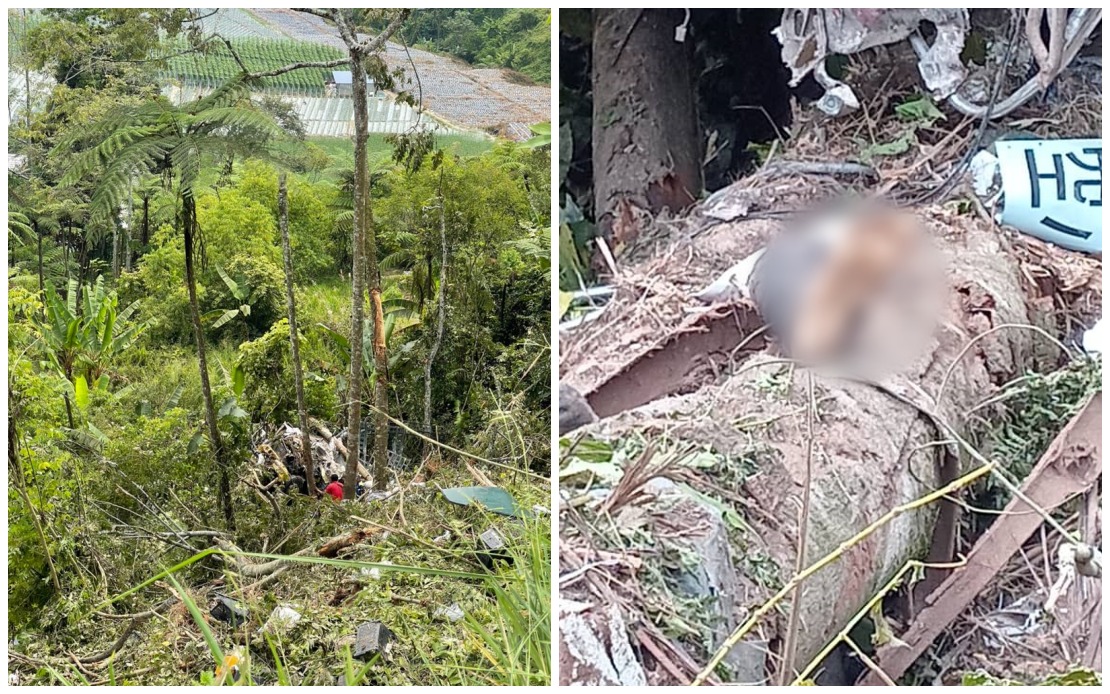
A fatal road tragedy unfolded in Gua Musang today when a 10-tonne lorry careered off the road near Pos Blau-Lojing Bridge and plummeted into a deep ravine, claiming the life of its driver. The incident, which occurred in the remote highlands of Kelantan, highlights the ongoing dangers facing heavy vehicle operators navigating the region's challenging terrain and winding mountain routes.
Emergency services received notification of the crash at 11.58 am, but the response operation proved challenging due to the location's distance from the nearest fire station. The Gua Musang Fire and Rescue Station, approximately 98 kilometres away, dispatched a firefighting team that arrived on scene just before 2 pm. By the time rescuers navigated the lengthy journey to the accident site, initial efforts to locate and recover the victim had already begun through other channels.
Firefighters who reached the ravine discovered a scene of devastation. The 10-tonne lorry had plunged deep into the ravine adjacent to an orchard, and the driver, a man believed to be in his 40s, had become trapped beneath fallen timber at the crash site. What began as a recovery operation transformed into a challenging rescue requiring specialised equipment and careful handling to avoid further injury or complications.
According to Assistant Senior Fire Superintendent Muhammad Azrul Izzham Zulkifli, the chief of Gua Musang Fire and Rescue Station, the extraction process demanded significant effort. Firefighters had to carefully remove a large tree trunk that had pinned the driver beneath it. Despite their swift and methodical work, the damage sustained in the fall had proven fatal. Once rescuers successfully freed the man from beneath the debris, medical assessment confirmed he had already succumbed to his injuries, and he was pronounced dead at the scene.
The recovery operation concluded with police taking custody of the body for formal documentation and further procedures. Gua Musang district police chief Superintendent Sik Choon Foo confirmed the incident upon contact with media representatives, acknowledging that law enforcement personnel had assumed investigative responsibility following the rescue team's initial response.
Investigators are now examining the circumstances surrounding the lorry's departure from the roadway. The preliminary cause remains undetermined as police conduct a comprehensive investigation into how the vehicle lost control and plunged into the ravine. Such inquiries typically examine multiple factors including vehicle mechanical condition, driver fatigue, weather conditions at the time, road surface conditions, and potential mechanical failure.
The Pos Blau-Lojing area is part of a highland corridor that connects several towns and villages in the northern Kelantan region. Routes through this terrain are notorious for steep gradients, sharp curves, and limited visibility in certain sections, particularly during adverse weather. Heavy lorries transiting these roads face considerable operational challenges, and accidents involving commercial vehicles can prove especially catastrophic given the distances involved and rescue complexity.
This fatal accident adds to the concerning pattern of road fatalities involving commercial vehicles in peninsular Malaysia. The remoteness of the Pos Blau-Lojing location—nearly 100 kilometres from emergency services—underscores how geographic isolation can complicate rescue efforts and potentially contribute to poorer outcomes in accident scenarios. The extended response time, while unavoidable given infrastructure limitations, highlights gaps in emergency service accessibility across rural highland regions.
For the transportation industry and road safety authorities, the incident raises questions about monitoring and preventive measures for heavy vehicles traversing challenging terrain. Commercial vehicle operators, logistics companies, and regulatory bodies continue grappling with how to enhance safety standards, driver training, vehicle maintenance protocols, and route management for lorries operating on difficult highland passages.
The loss of another driver emphasises the human cost of commercial transport operations and the inherent risks workers face daily. Family members and colleagues of the deceased will now confront the tragedy, whilst the broader logistics sector confronts uncomfortable questions about safety culture, risk management, and whether adequate measures are deployed to protect those who operate heavy vehicles on Malaysia's most demanding roadways.
As investigations proceed, the Gua Musang police will determine whether factors such as mechanical defect, operator error, road conditions, or other causes contributed to this preventable tragedy. The findings may inform future safety recommendations affecting how commercial vehicles are operated, maintained, and monitored on high-risk routes throughout the region.

