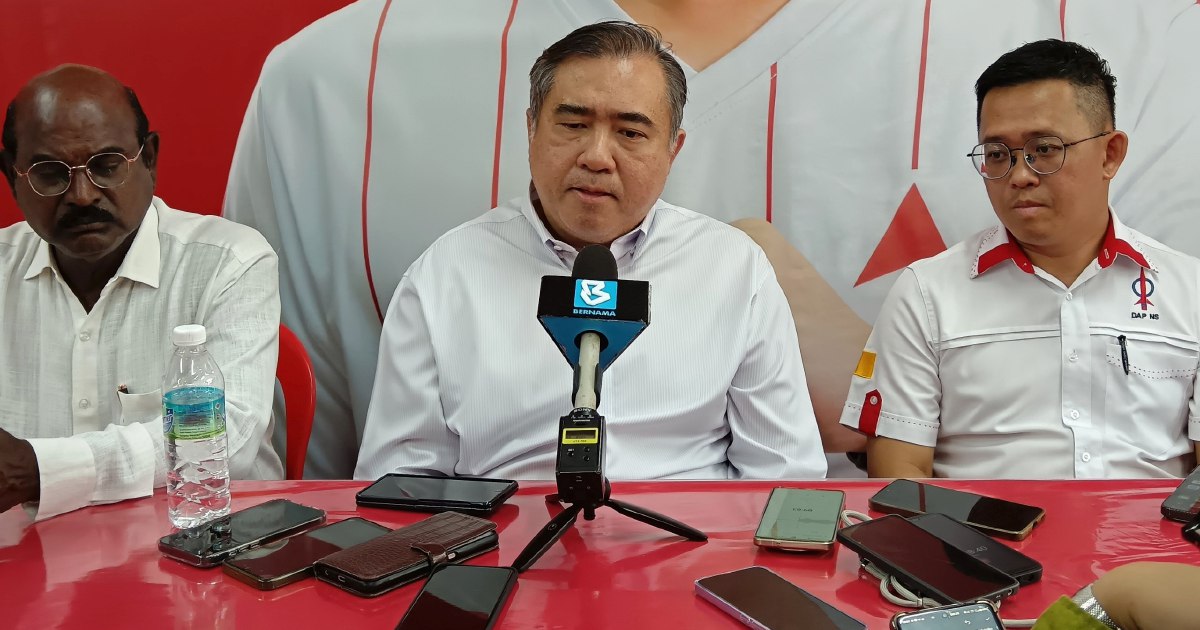
DAP secretary-general Anthony Loke has characterised recent questioning of his eligibility as Pakatan Harapan's menteri besar candidate for Negeri Sembilan as nothing more than coordinated political attacks from the opposition Umno party. Speaking in Jempol on Tuesday, Loke dismissed the concerns raised by Umno secretary-general Datuk Dr Asyraf Wajdi Dusuki as deliberate misinformation designed to undermine the ruling coalition's standing in the state ahead of forthcoming electoral contests.
The controversy centres on whether Loke satisfies the constitutional and legal requirements to hold the position of chief minister in the eastern peninsular state. While Loke declined to elaborate extensively on the specific objections, his curt rejection suggests confidence that his candidacy meets all necessary statutory thresholds. The timing of Umno's intervention appears calculated to create doubt among voters about PH's preparation for leadership transition in a state where the coalition currently holds the chief executive position.
Loke's dismissal of the criticism reflects broader tensions between the ruling Pakatan Harapan alliance and the Umno-led opposition bloc. Negeri Sembilan has emerged as a pivotal battleground in Malaysia's fractious coalition politics, where control of the state assembly carries significant implications for the balance of power in Kuala Lumpur. The state's relatively compact electorate makes it particularly susceptible to sustained campaigns that can shift voter sentiment through concentrated effort and messaging.
The DAP leader's response underscores the party's confidence in its electoral positioning within the state. DAP has strengthened its institutional presence across multiple constituencies in Negeri Sembilan, building organisational capacity that extends beyond its traditional urban strongholds. This geographic expansion has been critical to PH's ability to compete effectively across the peninsula, moving beyond the concentration of support that characterised earlier coalition iterations.
Umno's invocation of constitutional eligibility requirements points to a pattern whereby opposition parties exploit procedural and technical arguments to question the legitimacy of ruling coalition figures. Such challenges, while ostensibly grounded in constitutional law, serve primarily as political positioning devices that allow opposition figures to establish narratives of impropriety without necessarily having substantive legal weight. The strategy capitalises on public unfamiliarity with the detailed statutory requirements governing chief ministerial appointments across different states.
For Malaysian readers unfamiliar with the specific constitutional framework, chief ministerial candidates must typically satisfy residence requirements and maintain standing within state legislative assemblies. These provisions vary across the thirteen states, reflecting the federation's constitutional arrangement whereby state governments retain considerable autonomy over electoral and administrative matters. Negeri Sembilan's particular requirements form part of this differentiated landscape, though the fundamentals remain consistent with conventions established across Malaysian federalism.
Loke's invocation of partisan motivation highlights how opposition parties frequently weaponise procedural questions to create political friction without necessarily believing substantive obstacles exist. This approach allows parties to maintain pressure on ruling coalitions while retaining deniability about the seriousness of their concerns. The strategy has become increasingly prevalent in Malaysian politics as institutional mechanisms for parliamentary opposition have weakened relative to the executive authority of ruling coalitions.
The controversy also reflects deeper anxieties within Umno about its own political trajectory. The party's position as head of a fractured opposition alliance has constrained its ability to present a unified alternative to PH governance. Internal divisions within the broader opposition bloc have complicated efforts to mount coherent campaigns that might persuade voters to shift their support away from the incumbent coalition. Umno's intervention in Negeri Sembilan can be read partly as an attempt to maintain relevance within state-level politics despite diminished influence at the national level.
For Negeri Sembilan voters, the controversy illustrates how technical constitutional questions frequently become subject to political contestation in Malaysia's polarised environment. Rather than permitting independent institutional bodies to adjudicate eligibility questions, parties tend to raise such matters through media channels designed to influence public opinion. This approach reflects broader concerns about the independent functioning of Malaysia's constitutional institutions, which have come under strain as political competition has intensified.
Looking forward, Loke's confident rejection of the criticism will likely encourage PH activists and supporters within Negeri Sembilan to treat the Umno challenge as unfounded scaremongering. The willingness to dismiss such concerns outright, rather than engaging substantively with specific legal arguments, suggests the ruling coalition possesses sound legal advice regarding candidacy requirements. This confidence may translate into electoral advantage if voters perceive Umno as engaging in desperate tactics rather than raising legitimate constitutional concerns.
The broader implications extend to how Malaysian coalition politics manages succession planning and leadership transitions at state level. As demographic changes and electoral dynamics reshape the peninsula's political landscape, questions about leadership eligibility and constitutional compliance will become increasingly salient. How parties and institutions navigate these questions will significantly influence public confidence in Malaysia's constitutional order and the legitimacy of elected governments at state and federal levels.

