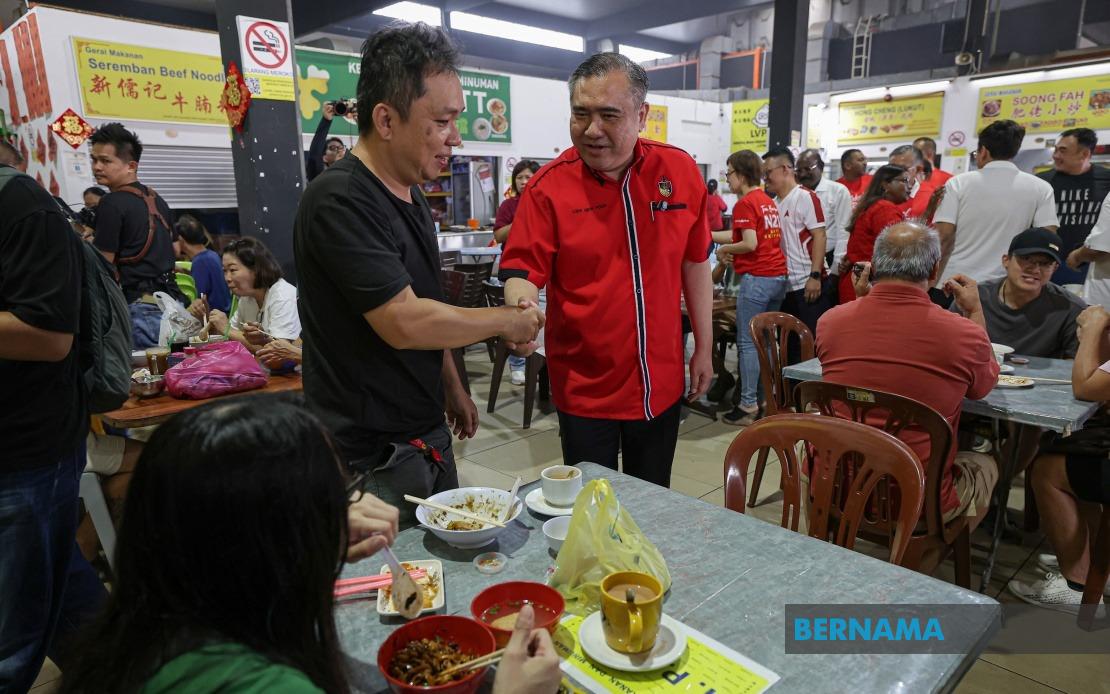
Transport Minister Anthony Loke has declared that rigorous compliance with traffic regulations and road safety standards must be maintained throughout the ongoing 16th Negeri Sembilan state election campaign, framing such measures as non-negotiable safeguards against accidents and disruptions. Speaking in Seremban after a campaign walkabout with Pakatan Harapan candidates, Loke underscored that maintaining public order and preventing mishaps on campaign trails should take precedence over electoral ambitions, regardless of which party is competing.
The DAP secretary-general has personally issued directives to his party's campaign machinery requiring all personnel to wear helmets whenever operating motorcycles during the campaign period. This initiative reflects a broader push to normalise safety practices among political supporters and volunteers who often participate in high-energy campaign activities involving road travel. Loke illustrated his commitment by enforcing the helmet requirement during a convoy that travelled from Pekan Titi to Kuala Klawang on nomination day, explicitly stating that participants without protective headgear would not be permitted to join the motorcade.
Beyond motorcycle safety, Loke issued a pointed warning against a particularly dangerous practice he observed during campaign activities: supporters standing or riding on the tailgates of moving four-wheel-drive vehicles. This habit, which has become common during election campaigns across Malaysia, poses serious injury risks to participants and endangers other road users. By calling the practice reckless, Loke sought to shift campaign culture towards more responsible conduct and discourage candidates from tacitly endorsing such behaviour through silence or participation.
The minister's emphasis on leading by example carries significant weight in the Malaysian political context, where public figures' conduct often shapes supporter behaviour. Election campaigns typically generate intense street activity, with convoys, rallies, and processions becoming focal points of political expression. However, this visibility also creates opportunities for accidents and traffic violations to occur under the banner of political activity, potentially undermining traffic enforcement efforts and public safety. Loke's call for all parties and campaign leaders to model compliance aims to break this cycle.
The Negeri Sembilan state election, the 16th such contest in the state, began following the dissolution of the state assembly on June 5. The Election Commission scheduled polling day for August 1, with early voting set for July 28. These compressed timelines mean campaign activities are likely to intensify over the coming weeks, increasing road traffic and the potential for accidents if safety protocols are not rigorously observed. The campaign period thus represents a crucial window for establishing and maintaining higher standards of traffic behaviour.
Approximately 889,490 registered voters are eligible to participate in this state election across multiple categories. The electorate comprises 867,151 ordinary voters, alongside 16,884 military personnel and their spouses, and 5,455 police officers who are designated as early voters. This substantial voter population means campaigns will traverse multiple constituencies and engage numerous communities, multiplying the opportunities for traffic-related incidents if discipline is not maintained. The geographic spread of campaign activities across Negeri Sembilan makes centralised messaging about traffic compliance particularly important.
Loke's statement carries additional weight given his portfolio as Transport Minister, a position that grants him credibility and authority in matters of road safety. His dual role as both a cabinet member responsible for national transport policy and Seremban's Member of Parliament creates a platform from which to advocate for behaviour change during election periods. This convergence of ministerial responsibility and local electoral engagement allows him to frame traffic compliance not merely as a campaign-specific issue but as a broader societal concern worthy of sustained attention.
The specific candidates mentioned in Loke's campaign walkabout—Ho Weng Wah in Temiang, Lee Kai Yet in Mambau, Siau Meow Kong in Rahang, Nicole Tan in Bukit Kepayang, S. Mugunthan in Seremban Jaya, and Chew Seh Yong in Lobak—represent Pakatan Harapan's slate in the election. Their presence alongside Loke at a market in central Seremban demonstrated the coalition's efforts to engage voters directly while simultaneously receiving messaging about campaign conduct standards. This staging allowed Loke to address both supporters and observers about the expectations for the campaign period.
The emphasis on traffic compliance during election campaigns reflects a documented pattern in Malaysian electoral politics where road accidents have occasionally marred campaign activities. By intervening proactively, Loke seeks to prevent such incidents before they occur and establish a precedent that safety considerations supersede the intensity of electoral competition. This approach acknowledges that while campaigns generate legitimate excitement and mobilisation, these activities must occur within frameworks that protect public welfare.
For Malaysian voters and observers, Loke's stance signals an attempt to elevate standards of campaign conduct beyond what has historically been normalised during election periods. The specific focus on helmet use and dangerous vehicle practices addresses visible, measurable behaviours that can be monitored and enforced. By making these expectations explicit and backing them with ministerial authority, Loke created a benchmark against which both Pakatan Harapan and potentially other parties can be evaluated during the Negeri Sembilan campaign.
The implications extend beyond this particular state election. If Loke's traffic compliance standards are successfully implemented and maintained throughout the Negeri Sembilan campaign, they could establish a model for future elections across Malaysia. Such precedents, once accepted, often influence campaign culture in subsequent contests. Conversely, if violations occur without consequences, the messaging loses credibility and future appeals for compliance become harder to justify.
As the campaign intensifies toward August 1, observers will assess whether the transport minister's pronouncements translate into observable changes in candidate and supporter behaviour on Negeri Sembilan's roads. The extent to which parties enforce these standards internally and whether regulatory authorities implement traffic laws more rigorously during campaigns will determine the practical impact of Loke's initiative. This period thus represents both a test case for election-period safety management and a potential inflection point in how Malaysian campaigns balance political enthusiasm with public responsibility.

