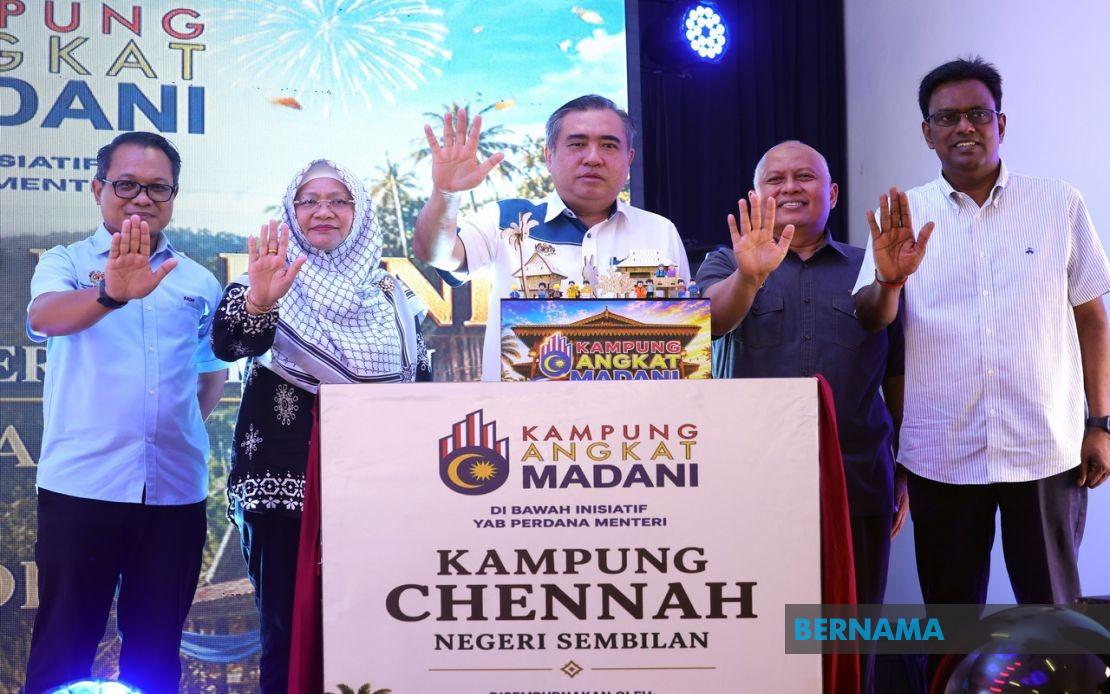
Transport Minister Anthony Loke Siew Fook has moved to clarify that the Kampung Angkat MADANI programme, which focuses on upgrading rural infrastructure and services, operates entirely separately from any electoral calendar and represents a standing commitment by his ministry to community welfare across the nation.
Addressing reporters in Jelebu after launching the Land Public Transport Agency's project at Kampung Chennah, Loke underscored that the initiative predates recent electoral activity and follows a predetermined timeline established long before any current campaign period. The programme was first implemented approximately two years ago and now operates through a systematic phased rollout designed to ensure that remote and underserved communities receive tailored development support based on their specific needs.
The minister acknowledged that such timing questions naturally arise during election seasons but insisted the government remains bound by strict protocols governing the conduct of officials during campaign periods. Under current administrative guidelines issued by the Prime Minister as part of a renewed ethical framework for governance, formal government programmes and official events must conclude before nomination day commences in affected constituencies. This restriction applies regardless of ministerial portfolio, meaning Loke himself will refrain from attending official government functions in constituencies undergoing elections throughout the formal campaign phase, even as he maintains his regular ministerial duties.
Loke's emphasis on procedural compliance reflects broader concerns within Malaysia's political establishment about maintaining clear distinctions between development initiatives and electoral activity. The government has established firm boundaries to prevent the perception that public resources serve electoral purposes, a distinction that carries particular weight in rural areas where development projects carry significant symbolic and material importance. By executing necessary development work before the official campaign begins, the government positions itself as observing both the letter and spirit of electoral conventions.
The selection of Kampung Chennah for this year's Kampung Angkat MADANI intervention demonstrates the targeting criteria that guides the programme's expansion. APAD identified the village specifically because of its geographic isolation from urban centres and the corresponding deficiencies in basic amenities and infrastructure that accompany rural remoteness. Such communities frequently lack adequate library facilities, recreational infrastructure, and essential services like proper drainage systems, gaps that development initiatives can meaningfully address.
The government has committed RM500,000 towards five distinct projects intended to transform the village's physical environment and service provision. These interventions span the library building's upgrade, comprehensive refurbishment of the futsal court, drainage system improvements around the mosque, and related infrastructure enhancements. The implementation timeline spans approximately two to three months, reflecting the scale and complexity of coordinated rural development work. Loke indicated that his ministry would maintain active oversight throughout execution to ensure projects advance according to schedule and budget, acknowledging the importance of accountability in public spending.
From a strategic perspective, the Kampung Angkat MADANI programme illustrates an evolving understanding of ministerial responsibility that extends well beyond traditional regulatory and operational functions. The Transport Ministry's conventional remit encompasses port management, airport operations, railway development, and public transport systems administration. Yet Loke positioned the programme as a natural expansion of ministerial purpose, arguing that infrastructure and transportation officials bear genuine responsibility for community engagement and broader quality-of-life improvements beyond their core operational mandate.
This conceptualisation of ministerial roles reflects a broader shift in Malaysian governance rhetoric toward whole-of-government approaches to rural development. Rather than confining transport and public works ministries to narrowly defined technical functions, policymakers increasingly expect such departments to contribute directly to community welfare and socio-economic advancement in their respective regions. This expanded mandate requires transport officials to understand rural communities' actual development needs and coordinate resources across multiple government agencies to deliver comprehensive improvement packages.
The phased implementation approach that characterises Kampung Angkat MADANI acknowledges the practical reality that simultaneous nationwide rollout would overwhelm existing implementation capacity and monitoring systems. By distributing the programme across multiple phases and geographic locations, the government ensures that each intervention receives adequate attention and resources while maintaining quality control. Previous phases have included Orang Asli communities like Lenggeng, demonstrating the programme's attention to Malaysia's indigenous populations and their particular development challenges.
For Malaysian readers, particularly those in rural constituencies, the programme's expansion carries both immediate and symbolic significance. Immediate benefits flow through infrastructure improvements that enhance daily life and access to services. Symbolically, the initiative signals government responsiveness to rural needs and willingness to direct resources toward communities often marginalised in discussions of national development priorities. The RM500,000 allocation to Kampung Chennah represents meaningful investment for a village setting, though such sums illuminate the broader resource constraints within rural development budgets.
The minister's careful framing regarding electoral propriety reflects sensitivity to criticism that development initiatives sometimes become tools for political advantage during election campaigns. By pre-emptively addressing these concerns and establishing clear procedural distinctions between programme implementation and electoral activity, Loke attempts to position the government as operating within established ethical frameworks. However, the programme's timing in relation to ongoing state elections will inevitably invite closer scrutiny from opposition observers and electoral watchdogs concerned about maintaining distinct boundaries between governance and politics.
Looking forward, the Kampung Angkat MADANI model suggests that Malaysian development policy increasingly emphasises targeted interventions in specific villages rather than broad regional or sector-wide approaches. This granular focus potentially allows for more responsive development planning but also raises questions about equity and whether selection criteria adequately reflect actual need across competing communities. The programme's continuation likely depends on sustained political support and demonstrated capacity to deliver meaningful improvements that justify continued public investment and ministerial attention.

